

Bubble Pop! Puzzle Game Legend
- Reviews
- 4.6
- Version
- 2616.0.2
- Installs
- 10,000,000+

Screenshots


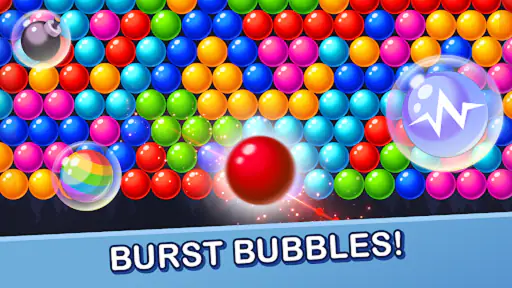
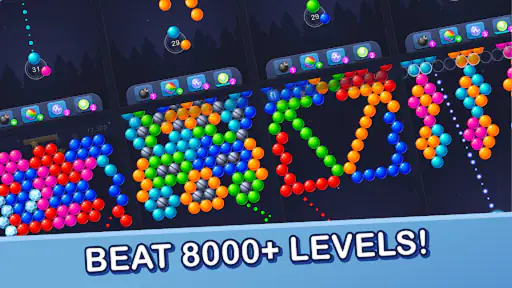
 Analysis by Frivlyz
I picked up Bubble Pop! Puzzle Game Legend expecting a simple way to fill a few spare minutes, and that is still where I think it works best. It is a free puzzle game from BitMango built around bubble-shooter play: aim, match colors, clear groups, and decide whether to take a safe shot or attempt a more ambitious chain. The idea is familiar, but the execution makes it easy to understand within seconds.
That simplicity is both its strongest quality and its main limitation. I do not need to learn a complicated control system or remember a story before playing. At the same time, anyone looking for a deep strategy game, a long narrative campaign, or a completely interruption-free experience may find the format too narrow. My recommendation depends less on whether you enjoy puzzle games in general and more on what kind of puzzle session you want.
How I would decide whether it fits
The first question is how much attention you want to give a game. This title suits short, focused sessions because each shot asks for a small decision. I can play while waiting for an appointment, take a break between tasks, or finish a few stages before putting my phone away. It does not demand the long uninterrupted commitment that a story-driven adventure or a complex strategy game usually expects.
The second question is whether you enjoy aiming as much as matching. The colored bubbles are not simply removed by tapping them. I have to consider the angle, the available space, and what will happen after the first group disappears. A shot that looks attractive can leave an awkward arrangement, while a less obvious move may open a much better route. That gives the game more thought than its cheerful presentation initially suggests.
I also pay attention to how a puzzle game handles failure. Here, a missed shot is not just wasted movement; it can change the shape of the board and make later decisions harder. I found that useful because it encourages planning without turning every stage into a demanding calculation. Still, players who prefer puzzles with unlimited experimentation may dislike the pressure created by limited opportunities or stage-specific obstacles when they appear during play.
The game is free to install and carries an Everyone content rating, so it is approachable for a broad audience. Its listed minimum operating-system requirement is Android 6.0, which makes it relevant to people using older compatible Android devices. The current version is 2616.0.2. I would still check how comfortably it runs on a particular phone, especially if the device is old or storage is tight, but the basic entry barrier is modest.
Its popularity gives some useful context without deciding the question for me. The game has an average rating of 4.6 from around 247 thousand ratings, with roughly 30 thousand written reviews, and it has passed 10 million installs. Those figures suggest that the format has broad appeal, but they do not tell me whether it matches my preferred pace. A popular casual game can still be the wrong choice for someone who wants a richer progression system or a quieter interface.
Gaming Stories You May Enjoy

Dancing Road Turns Short Breaks Into a Test of Rhythm and Timing

Super Stylist Makes Every Outfit a Test of Taste and Patience

Dominoes on Your Terms: Who Should Play and Who Should Pass

Pokémon GO Makes the Familiar World Feel New

Chess.com Turns Rematches Into Rivalries, but Community Has Its Costs

Archery Battle 3D Review: Sharp Aiming, Unclear Feedback
What I look for during the first session
In my first session, I would not rush through the opening stages just to see how quickly the game progresses. I would use them to learn the aiming behavior and notice how the next bubble affects my choices. That next color is more important than it first appears: it can turn an ordinary shot into a setup move, or make a tempting target less useful than a supporting match.
I also recommend watching the upper structure of the board rather than focusing only on the bubbles directly in front of the launcher. Clearing a supporting section can remove a larger group indirectly. This is one of the more satisfying parts of the game because the best result often comes from understanding what holds the arrangement together, not merely matching the largest visible cluster.
Another practical habit is to use the walls deliberately. Bank shots can reach spaces that a direct line cannot, and they are particularly helpful when a target is tucked behind another group. I do not use a rebound just because it looks clever. I use it when the angle creates a better setup or avoids damaging a useful cluster. That distinction saves shots and makes the aiming feel intentional rather than decorative.
Where Bubble Pop! Puzzle Game Legend wins
The biggest win is accessibility. I can hand the game to someone who rarely plays mobile games and explain the basic action almost immediately. The visual language is clear, the objective is easy to recognize, and the controls do not require a tutorial-heavy commitment. That makes it a good shared choice when one person wants something casual but still wants more involvement than a passive time-killer.
It also works well as a reset between demanding activities. I sometimes prefer a game that gives my mind one small problem at a time instead of presenting a large system to manage. The act of lining up a shot, checking the next color, and accepting the result creates a compact mental break. It is not the same as relaxation for everyone, though: players who become frustrated by missed shots may find the same loop more tense than calming.
The aiming adds a useful layer of skill. Matching colors alone would make the experience feel automatic, but the angle gives me room to improve. I can learn from a poor shot, adjust the next attempt, and gradually become more deliberate. That is a better fit for me than a puzzle where the correct move is found only by scanning a static grid for a match.
I especially like the moments when a careful setup produces a larger clearance than expected. Those moments reward patience, but they do not require an advanced guide to understand. The game communicates its central pleasure through play: create the right connection, remove a supporting section, and watch the board change. That immediate feedback is a major reason the title remains easy to return to.
Small habits that improve the experience
I try not to spend every turn chasing the largest group. A smaller match can be better if it exposes a useful angle or preserves a color that I will need later. This is a simple change in mindset, but it prevents many of my avoidable mistakes. The best shot is often the one that improves the next two turns rather than the one that produces the biggest instant pop.
When the board becomes crowded, I pause before aiming. The game is casual, but the launcher does not benefit from hurried decisions. I check whether a direct shot will attach to the wrong side, whether a rebound can reach a protected area, and whether removing a lower support will affect several bubbles above it. This quick inspection makes the game feel more like a puzzle and less like repeated tapping.
I also treat difficult stages as planning exercises rather than tests of speed. If I fail, I try to identify the first decision that reduced my options. Often the problem began several turns earlier, when I used a color for a convenient match instead of keeping the board flexible. That approach is more useful than simply repeating the same opening and hoping the result changes.
For a short session, I set a natural stopping point before I begin. The game is easy to continue because another stage is always tempting, but a quick puzzle can quietly become a longer break than intended. I find it works best when I decide whether I am playing one stage, a handful of stages, or simply until a particular puzzle is solved.
Where another kind of puzzle game may fit better
This game is not my first choice when I want a quiet, slow puzzle with no aiming element. A traditional match-three title may suit someone who prefers swapping pieces on a fixed board and thinking through combinations without trajectory control. A word puzzle may be better for a player who wants vocabulary practice, while a logic game may offer more satisfaction to someone who enjoys deduction rather than visual matching.
It is also less suitable for players who need a strong narrative reason to keep playing. The bubble-shooter structure provides its own motivation through stages and improving decisions, but it does not replace a story campaign for everyone. If character development, exploration, or a sense of place is the main reason you play on a phone, an adventure game will probably offer a more rewarding long-term fit.
Players who dislike free-to-play design should consider that carefully. The game is free, but in-app purchases range from $0.49 to $99.99 per item. I would approach it with a fixed personal rule: play without buying anything unless I have already decided that the game deserves optional spending. That keeps the decision under my control and prevents a casual session from turning into an unplanned purchase.
The purchase range also changes how I compare it with paid puzzle games. A paid alternative may feel preferable to someone who wants a clearly defined upfront cost, even if its initial download decision is harder. On the other hand, the free entry here makes it easier to test the aiming and pacing before committing. For me, that is valuable because the bubble-shooter format is enjoyable only if the physical act of lining up shots feels satisfying.
I would also look elsewhere if I wanted a game that rewards long, uninterrupted concentration above all else. The short-stage structure is convenient, but it can make the experience feel repetitive to players who want increasingly complex rules. This title is strongest when I value immediate readability and compact decisions, not when I am searching for a puzzle system that constantly reinvents itself.
What switching from another casual puzzle feels like
Moving from a match-three game is not difficult, but the mental habit changes. In a grid-based game, I usually scan for a swap. Here, I think in lines, support points, and future angles. The transition is quick, yet the first few stages can feel less predictable because a shot may attach in a way that changes the next opportunity.
Coming from a word or number puzzle requires a bigger adjustment. Bubble Pop! Puzzle Game Legend is more visual and spatial, and success depends partly on timing the order of colors and partly on placing the shot accurately. I would recommend trying it when I want a more tactile break, not when I am specifically looking for language or calculation practice.
The cost of switching is low in terms of learning, but the real trade-off is routine. If another puzzle already gives me the exact pace and challenge I want, this game does not automatically replace it. I would keep both if they serve different moods: one for deliberate, quiet reasoning and this one for quick aiming decisions. The free installation makes that experiment straightforward, while the purchase options are a reason to keep spending boundaries clear.
Who should play it and who should skip it
I recommend it to casual players who enjoy colorful matching, light spatial planning, and stages that can be approached in short bursts. It is a particularly sensible choice for someone who wants to try a bubble-shooter without paying at the start. Families may also appreciate the Everyone rating, although I would still set expectations around optional purchases if a shared device is being used.
It is a good fit for commuters, people taking short breaks, and players who like improving through small adjustments. The useful skill is not just recognizing colors; it is learning when to bank a shot, when to preserve a color, and when to clear a supporting section instead of attacking the most obvious group. Those details give the simple format enough depth for repeated casual play.
I would skip it if I become impatient with repeated matching, dislike aiming controls, or want every session to feel substantially different. I would also choose another category if my priority is a strong story, competitive depth, or a puzzle experience built around words and numbers. The game knows what it is, and that clarity is positive, but it also means its appeal has a definite boundary.
My practical recommendation
My advice is to install it when I want an approachable bubble-shooter that can be learned quickly and played in small pieces. During the first few sessions, I would focus on aiming, bank shots, and support structures rather than trying to clear everything immediately. I would also decide in advance whether I am playing entirely for free, because the available in-app purchases make that boundary worth setting early.
After that trial, the decision should be easy. If the satisfaction of planning a shot and watching a chain open feels rewarding, the large audience and strong average rating make sense, and the game can become a dependable casual option. If the loop already feels repetitive after a short test, I would not force it; a match-three, word, logic, or story-focused alternative will serve that mood better.
My final view: choose it for quick, visual puzzle sessions with a little aiming skill, not for a deep all-purpose game. BitMango keeps the central action approachable, while the board structure gives careful players reasons to think before firing. Its free entry is convenient, the Everyone rating broadens its audience, and its mature release history is reflected in the current 2616.0.2 version. I would recommend giving it a fair trial, playing thoughtfully rather than rushing, and keeping optional spending firmly within a limit that feels comfortable.
Bubble Pop! Puzzle Game Legend Pros and Cons
Pros
- Simple tap-to-pop controls are easy for players of all ages.
- Short levels make it convenient for quick breaks or casual play.
- Colorful bubble effects give the game a cheerful
- polished appearance.
- Gradual challenges help new players learn the mechanics comfortably.
- Offline play is useful when you are traveling or have limited connectivity.
Cons
- Later stages can feel repetitive once the core popping mechanic is mastered.
- Some levels may depend on lucky bubble layouts rather than careful planning.
- Frequent ads can interrupt the flow
- especially after completing levels.
- Power-ups may encourage spending or require extra time to unlock.
- Small text and icons can be difficult to read on compact screens.
This Game in Other Languages
Frequently Asked Questions
What is Bubble Pop! Puzzle Game Legend?
Bubble Pop! Puzzle Game Legend is a casual match-three style puzzle game in which you aim, shoot, and combine colorful bubbles to clear them from the board. Its simple controls make it easy to start, while progressively harder layouts, limited shots, obstacles, and level objectives add more challenge. It is designed for short sessions, making it suitable for quick entertainment on Android or iOS.
How do you play Bubble Pop! Puzzle Game Legend?
Gameplay is based on matching bubbles of the same color. You control a launcher, choose the direction of your shot, and fire bubbles toward groups on the board. Matching enough bubbles causes them to pop, while larger combinations can create useful chain reactions. Each level normally has a specific goal, so planning your shots is important rather than simply shooting as quickly as possible.
Can Bubble Pop! Puzzle Game Legend be played offline?
Many levels in Bubble Pop! Puzzle Game Legend can generally be played without a constant internet connection, which is convenient for travel or areas with weak signal. However, some features may depend on connectivity, including advertisements, cloud saving, leaderboards, special events, or in-app purchases. Availability can also vary by version, so it is worth checking the game’s store description and testing the features you need.
Is Bubble Pop! Puzzle Game Legend free to download and play?
The game is typically available as a free download, allowing players to begin without paying an upfront purchase price. Like many casual puzzle games, it may include advertisements, optional boosters, extra lives, or other in-app purchases. You can usually progress without spending money, but difficult levels may encourage the use of power-ups or additional attempts. Review the purchase settings before handing the device to children.
Is Bubble Pop! Puzzle Game Legend suitable for children and all players?
Bubble Pop! Puzzle Game Legend is generally easy to understand because it uses colorful visuals, straightforward aiming, and familiar puzzle mechanics. It can suit children, adults, and players looking for a relaxed game, although later levels may require patience and careful planning. Parents should still check the age rating, advertising content, data practices, and purchase options listed for the specific Android or iOS version.


