

Brain Test: Tricky Puzzles
- Reviews
- 4.7
- Version
- 2.759.2
- Installs
- 100,000,000+

Screenshots
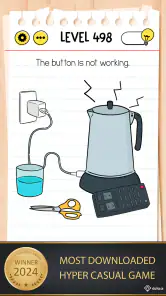
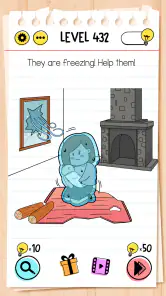
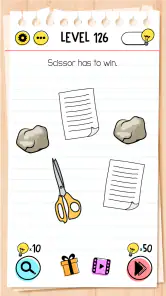
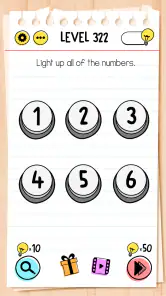
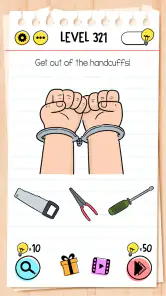
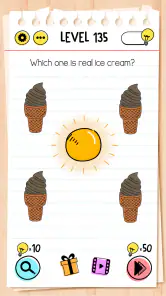
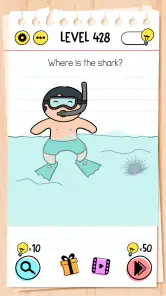

 Analysis by Frivlyz
My first impression of Brain Test: Tricky Puzzles is that it wants to make puzzling feel playful rather than like a test you have to pass. I came to it expecting familiar logic exercises, but its appeal is the way a small, ordinary-looking scene can invite an unexpectedly sideways answer. That makes it a handy game for a short break: I can try a puzzle, laugh at a wrong assumption, and put my phone away without needing to settle into a long session.
A quick game for the gaps in your day
The best time to play, in my experience, is when I have a few spare minutes and want something more active than scrolling but less involved than a long strategy game. A queue, a quiet coffee break, or the pause before heading out can all suit its bite-sized puzzle format. I would not choose it when I want a carefully plotted story or a sustained challenge that builds through complex rules; its pleasures are more immediate and episodic.
It can also work as a shared game. Passing a puzzle to a friend or family member turns the odd wording and visual clues into a small conversation: one person proposes the obvious move, another notices a detail, and the solution becomes part of the joke. That is a more natural fit than treating every level as a serious measure of intelligence. The game’s humor matters because it makes being wrong feel light, not embarrassing.
Our Stories on Brain Test: Tricky Puzzles
How Brain Test: Tricky Puzzles Redefines Trivia Gaming
NewsBrain Test: Tricky Puzzles – A Cultural Phenomenon in Mobile Gaming
NewsThe Allure of Who is? Brain Teaser & Riddles: A Game of Curiosity
NewsHow Brain Test 2: Tricky Stories Redefines Trivia Gaming
NewsHow Plants vs. Zombies™ Heroes Redefines Mobile Strategy Gaming
NewsDancing Road Turns Short Breaks Into a Test of Rhythm and Timing
NewsWhat kind of thinking it rewards
Many conventional trivia games ask players to recall facts, while familiar logic apps tend to reward applying a stable set of rules. This game is closer to a collection of visual riddles: I have to inspect what is on screen and question whether the apparent task is the whole task. If a solution seems stubbornly out of reach, I find it useful to pause and ask what assumption I am making about the wording, the objects, or the way the scene can be read. That reset is often more productive than tapping randomly.
This approach is also its main trade-off. A trick answer can feel clever when the visual clue makes the twist fair, but arbitrary when I cannot see a convincing path to it. The experience is therefore less suitable for someone who wants every puzzle to follow formal logic or to have one clearly teachable method. If you prefer measured difficulty and consistent rules, a conventional logic-puzzle game may be a better match; if you enjoy surprise answers and playful misdirection, the unusual solutions are much of the point.
Hints, patience, and how to keep it enjoyable
Hints can help when I have been staring at one screen too long, but I try to give each puzzle a genuine attempt first. A practical routine is to read the prompt again, look over the whole scene instead of focusing on its most obvious object, and consider whether the task is inviting an unconventional interaction. Only then do I reach for help. That preserves the small satisfaction of solving a riddle while keeping a single stubborn level from spoiling a short session.
There is a useful limit to that strategy: if I am tapping everywhere without a reason, I stop rather than turn the game into a search for a hidden trick. The charm depends on the surprise landing; forcing an answer by trial and error can make the same moment feel like busywork. This is not a deep training plan or a reliable way to measure IQ, despite the brain-teaser framing. I would choose it for amusement and flexible thinking, not as a substitute for structured study or a serious cognitive assessment.
Gaming Stories You May Enjoy

Super Stylist Makes Every Outfit a Test of Taste and Patience

Dominoes on Your Terms: Who Should Play and Who Should Pass

Pokémon GO Makes the Familiar World Feel New

Chess.com Turns Rematches Into Rivalries, but Community Has Its Costs

Archery Battle 3D Review: Sharp Aiming, Unclear Feedback

Should You Switch to Geometry Dash Meltdown? A Test of Timing and Patience
If I were recommending it to a particular person, I would start with anyone who likes joke riddles, visual puzzles, or quick games that are easy to share. It is less likely to satisfy players who dislike unconventional answers, want a continuous narrative, or prefer long sessions with steadily increasing strategic depth. Parents can also treat its Everyone age rating as a broad indication of audience suitability, while still deciding for themselves whether its particular humor and puzzle style suit the child playing.
The Quirky World of Brain Test
From the get-go, Brain Test: Tricky Puzzles throws you into a world where the puzzles aren’t just about numbers or words, but about thinking outside the box. The app challenges your cognitive abilities by presenting puzzles that often have unexpected solutions. It's like taking a deep dive into the realm of riddles where the answers are not always straightforward. You might find yourself laughing at how absurdly simple yet tricky some solutions are. The developers have done a splendid job of marrying humor with brain teasers, which keeps the content fresh and engaging.
Why It Stands Out
One of the key elements that make this app stand out is its whimsical design and creative puzzle scenarios. Each level is designed to be a little story in itself, often with a humorous twist. Whether it’s figuring out how to click on an invisible button or solving a math problem that defies traditional rules, the app encourages you to look at problems from a different angle. It’s not just about solving puzzles; it’s about enjoying the process and the unexpected laughter that comes along with it.
Visual clues and a focused screen
The light, uncluttered presentation helps each puzzle read like a compact little stage. Rather than asking me to manage a busy interface, it lets the scene and its wording carry the joke. I get more from looking carefully than from rushing: a seemingly decorative object, an odd placement, or a phrase that sounds too obvious may be the detail worth reconsidering. That is a small but useful habit the game encourages, and it makes the visual style part of the puzzle rather than mere decoration.
There is a trade-off in keeping the presentation simple. The art does not aim for a rich, realistic world, and players looking for elaborate environments or character-driven storytelling may find it spare. Here, simplicity serves clarity and comic timing. When a scene is deliberately silly, the clean framing helps me notice what the puzzle wants me to question without competing visual clutter.
The user interface is another highlight. It’s clean, intuitive, and easy to navigate. The graphics are simple yet effective, allowing you to focus on the puzzles without unnecessary distractions. The sound effects add a nice touch, enhancing the playful atmosphere of the app. It’s these little details that contribute to a smooth and enjoyable user experience.
Sound that supports the joke
The audio feels like accompaniment rather than the main event. Its role is to underline the game’s light mood and give interactions a bit of feedback; the visual puzzle remains the focus. I would keep the sound at a comfortable level if I were playing around other people, or mute it if I needed a quiet moment. The game still makes sense as a visual activity, so its core appeal does not depend on listening closely.
That modest use of sound suits the short-session format, though it is not the sort of audio-led experience I would pick for music or a dramatic score. The atmosphere comes chiefly from the mismatch between an ordinary scene and an unexpected solution. The effects help that mood along without asking me to treat each level as a high-stakes event.
Engagement and Replayability
With a plethora of levels and regular updates, the app ensures you’re never short of puzzles to solve. Each level is unique, which adds to the replayability factor. The app cleverly integrates hints for when you’re stuck, ensuring you don’t feel frustrated for too long. It’s an excellent balance between challenging and rewarding, which is crucial for keeping users engaged over time.
How it fits into the trivia shelf
Although it sits in the trivia space, I would not approach it like a quiz built around memorizing dates, names, or general-knowledge answers. Its identity is much more about interpreting a prompt and interacting with a visual situation. That distinction matters when choosing between it and a conventional quiz: pick a fact-based alternative if you want to test recall or compete over what you already know; choose this one when you want the question itself to be a playful trap.
The rhythm is flexible rather than demanding. You can give a level your attention, take a break, then return when you feel like another small puzzle. That makes it a comfortable option for casual play, but it may not provide the long-term structure that players seek from a campaign with a continuous plot or from a competitive trivia format. I see it as a pocket-sized source of surprises, not an all-purpose replacement for every kind of brain game.
For a typical everyday session, I might open it while waiting for a drink, try a few puzzles, and stop when I reach one that deserves more thought. If I am playing with someone else, I can read the prompt aloud and let us compare interpretations before either of us asks for a hint. The useful tip is to agree not to tap at random: taking turns explaining what each person thinks the puzzle is asking keeps the interaction social and often exposes a hidden assumption. It also avoids turning the game into a contest over who can poke the screen fastest.
Moreover, the app is suitable for all ages. Whether you’re a kid looking for a fun challenge or an adult wanting to keep your mind sharp, the app caters to a wide audience. It’s a perfect blend of fun and learning, making it a versatile choice for anyone seeking mental stimulation with a side of humor.
Practical details before you install
Unico Studio developed the game, and it is free to download, with optional in-app purchases priced from $1.99 to $7.99 per item. The current version is 2.759.2, and it requires Android 7.0 or later. Its average rating is 4.7 from around 8.8 million ratings, with about 115,000 written reviews and over 100 million installs. Those figures point to a widely played puzzle, but they do not mean its humor or trick-answer style will suit everyone; I would judge it by whether you enjoy the first few surprises.
Because the game is free to start and offers optional purchases, I would check the purchase prompts before handing a device to a child, and use the device’s usual purchase controls if that matters in your household. The Everyone age classification makes it broadly approachable, but a rating is not a personal recommendation for every family. If your main concern is avoiding interruptions or spending, take a moment to understand the in-app purchase choices before settling into a longer play session.
When the mood is not right
I would skip it if I were in the mood for an intellectually rigorous puzzle with transparent rules, a story that unfolds across chapters, or trivia that rewards broad factual knowledge. Its playful misdirection can occasionally make the intended solution feel less like deduction and more like guessing what the designer had in mind. On the other hand, if I notice myself smiling at the premise even when I get it wrong, that is a good sign the game is working for me. It succeeds most when I treat each level as a joke to unpack, rather than a scorecard for how smart I am.
Final Thoughts
In a world where many puzzle games can feel repetitive, Brain Test: Tricky Puzzles manages to carve out its niche by offering something refreshingly different. It’s a testament to the developers’ creativity and understanding of their audience. If you’re tired of the same old puzzles and are looking for something that will not only test your brain but also make you chuckle, then this app is a must-try. It’s more than just a game; it’s an experience that challenges your intellect while ensuring you have fun along the way.
The atmosphere verdict
What stays with me is the way the spare scenes, playful sound, and compact pacing reinforce one another. The presentation does not try to make every puzzle grand; instead, it makes room for a quick moment of confusion and a punchline when the answer clicks. That coherent mood is a real strength, provided you enjoy jokes built around misdirection. If you want a calm, low-commitment diversion and can accept the occasional solution that feels deliberately odd, I think this is an easy game to keep on hand. If you need fairness to mean one consistent logic system, I would choose a more traditional puzzle instead.
Brain Test: Tricky Puzzles Pros and Cons
Pros
- Engaging and challenging puzzles
- Visually appealing graphics
- Encourages creative thinking
- Regular updates with new levels
- Suitable for all age groups
Cons
- Ads can be intrusive
- Some puzzles are too easy
- Occasional app crashes
- Requires internet for some features
- In-app purchases can be pricey
This Game in Other Languages
Frequently Asked Questions
What is Brain Test: Tricky Puzzles and what makes it unique?
Brain Test: Tricky Puzzles is a mobile puzzle game designed to challenge your thinking with its unique and tricky questions. Unlike traditional puzzle games, it offers mind-bending puzzles that require unconventional solutions. Each level presents a new and unexpected challenge that will test your creativity and problem-solving skills, making it a fun and engaging way to exercise your brain.
Is Brain Test: Tricky Puzzles suitable for all age groups?
Yes, Brain Test: Tricky Puzzles is suitable for all age groups. It is designed to be family-friendly, with puzzles that are appropriate for both children and adults. The game encourages players to think outside the box, making it an enjoyable and educational experience for everyone. However, younger children might need some guidance to solve the more complex puzzles.
Do I need an internet connection to play Brain Test: Tricky Puzzles?
No, you do not need an internet connection to play Brain Test: Tricky Puzzles. The game can be played offline, which makes it a great option for those who want to enjoy the puzzles without relying on a constant internet connection. This feature allows you to play anytime and anywhere, whether you're traveling or simply in an area with poor connectivity.
Are there any in-app purchases in Brain Test: Tricky Puzzles?
Yes, Brain Test: Tricky Puzzles offers in-app purchases. While the game is free to download and play, there are optional purchases available such as hints or to remove ads. These purchases are not necessary to enjoy the game but can enhance the experience by making it easier to progress through challenging levels without interruptions.
How often are new levels or updates added to Brain Test: Tricky Puzzles?
The developers of Brain Test: Tricky Puzzles frequently update the game with new levels and features to keep the content fresh and engaging. Updates are typically released every few weeks, providing players with new challenges to solve. This ensures that players always have something new to look forward to, maintaining their interest in the game over time.


