

Blossom Blast Saga
- Reviews
- 4.4
- Version
- 100.228.0.0
- Installs
- 50,000,000+

Screenshots
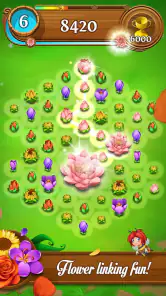


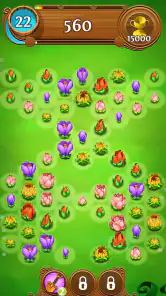


 Analysis by Frivlyz
I first approached Blossom Blast Saga as a quick casual game, expecting short rounds and a simple way to pass time. That is still its strongest use, but the flower theme gives the familiar match-three format a gentler personality than the usual candy, jewel, or jewel-like alternatives. You connect matching flower buds so they bloom, clear space, and work toward the objective of each level. The basic idea is easy to understand within moments, yet the board can become surprisingly demanding when several possible links compete for attention.
What makes it worth considering is not that it reinvents the genre. It does not. Its appeal comes from how comfortably it fits into small breaks, how readable the board feels, and how the growing garden gives ordinary puzzle progress a little more charm. I would recommend trying it if you want a free, approachable match-three game from King that can be played casually rather than learned through a complicated tutorial. I would be more cautious if you dislike energy systems, repeated level structures, or the temptation to spend on extra help in a free-to-play game.
How I Decide Whether This Flower Puzzle Is Worth Your Time
My first decision criterion with a game like this is the quality of its basic interaction. If linking pieces feels imprecise, even attractive artwork cannot save it. Here, the central action is direct: I look for adjacent buds of the same color, drag through the available chain, and release to make them bloom. That simplicity is useful when I am playing one-handed on a phone, especially during a short wait or while taking a break from work.
The second criterion is whether the game rewards thought without demanding full concentration for every second. Blossom Blast Saga sits in a comfortable middle ground. Early boards are easy to read, while later situations ask me to examine the whole arrangement instead of immediately taking the longest visible chain. The best move is not always the most obvious one. Sometimes I hold back a possible link because blooming a different group first creates more useful space or leaves a better color arrangement for the next turn.
I also look at how well a puzzle game communicates its goals. A match-three board can feel frustrating when I am unsure whether I should chase a score, clear obstacles, collect items, or simply survive within a move limit. In this game, the flower garden presentation makes the task feel more concrete than an abstract grid, but I still need to pay attention to the level objective rather than playing on autopilot. That small habit makes a noticeable difference once the layouts become less forgiving.
The game is free to download and play, which makes it easy to test without making an immediate purchase. Optional in-app purchases range from $0.99 to $94.99 per item, so I would treat the free entry point and the potential spending path as two separate decisions. Someone who wants a completely cost-free experience should decide on a personal limit before starting, because the desire to finish a difficult stage can make a small purchase feel more attractive than it did at the beginning.
Its audience is broad. The content rating is Everyone, and the controls are simple enough for players who do not usually spend time with puzzle games. At the same time, “easy to start” does not mean “only for children.” I can see adults using it as a low-pressure distraction, while younger players may enjoy the colorful garden theme. The important question is whether the player likes repeating a familiar puzzle loop and gradually improving at board reading.
Gaming Stories You May Enjoy

Dancing Road Turns Short Breaks Into a Test of Rhythm and Timing

Super Stylist Makes Every Outfit a Test of Taste and Patience

Dominoes on Your Terms: Who Should Play and Who Should Pass

Pokémon GO Makes the Familiar World Feel New

Chess.com Turns Rematches Into Rivalries, but Community Has Its Costs

Archery Battle 3D Review: Sharp Aiming, Unclear Feedback
The first few sessions and the learning curve
The opening experience is intentionally gentle. I do not need to memorize a complicated control scheme or understand a large collection of characters before playing. The flower links are visually clear, and the bloom effect gives immediate feedback that my action worked. That makes the game suitable for a first session lasting only a few minutes, but it also means experienced match-three players may find the initial stages too relaxed.
My useful adjustment was to stop treating every turn as a race to make a match. I began scanning for areas where a bloom could open the board, then checking whether the resulting space would expose a longer chain. This is a small change, but it turns the game from random tapping into a more deliberate puzzle. It also helps conserve opportunities when a stage gives me a limited number of moves or asks me to achieve several goals at once.
The garden setting supports that learning process because the board is not visually harsh. Colors and shapes are pleasant rather than aggressive, and the blooming animation makes progress feel satisfying without requiring a complicated story. I would not choose this game for a deep narrative, character development, or strategic world-building. Its atmosphere is there to make the puzzle loop inviting, not to compete with it.
Where the game is strongest
The clearest strength is accessibility. I can hand the phone to someone who has never played a mobile puzzle game and explain the main action quickly. That matters in a category crowded with games that add layers of boosters, events, currencies, and side activities before the player has learned the central mechanic. Blossom Blast Saga keeps the flower-linking idea at the center, so the first decision is usually about the board in front of me rather than about managing a large menu.
It is also well suited to fragmented time. A realistic example is a commute with several pauses: I can play a stage while waiting, put the phone away, and return later without needing to remember a long sequence of story events. The same applies to a lunch break or a few minutes before bed. The game works best when I want a contained mental activity, not when I want an open-ended adventure that demands a long uninterrupted session.
Another strength is the way the flower theme softens familiar match-three tension. When a stage goes badly, the presentation feels less noisy than many alternatives in the same broad category. That does not remove frustration, but it makes repeated attempts easier for me to tolerate. The visual identity is specific enough to give the game its own mood, while the rules remain familiar enough that I never feel lost.
The large existing audience also tells me something practical about its role in the market. It has more than 50 million installs, an average rating of 4.4 from around 1.3 million ratings, and roughly 82 thousand written reviews. Those figures do not guarantee that I will enjoy every stage, but they show that the format has reached well beyond a niche puzzle audience. I would read the rating as evidence of broad appeal rather than proof of a flawless experience.
Small decisions that improve difficult boards
My first concrete tip is to inspect the edges before making a move. A long chain in the center may look attractive, but clearing or blooming near a boundary can change the shape of the remaining board more effectively. I try to notice whether a move leaves isolated buds behind. If it does, I consider a shorter link elsewhere that keeps more colors connected for the next turn.
My second tip is to avoid spending help immediately after one unlucky board state. A failed attempt often reveals the level’s rhythm: which area becomes crowded, which colors tend to remain stranded, and where a chain is likely to open useful space. On a second attempt, I can use that information instead of repeating the same first move. This is especially valuable for players who want to keep the game free and do not mind learning through retries.
My third tip is to check the whole board after every bloom rather than planning several moves in advance. The arrangement can change enough that an attractive link appears or disappears. I find that flexible play works better here than following a fixed sequence. The exception is when a special objective clearly rewards preparing one area; in that case, I may accept a less impressive immediate move to preserve the setup.
A fourth practical insight is about attention. If I am tired, I tend to choose the first long chain I see and then blame the level when the board worsens. Playing more slowly for the first few turns usually gives me a better sense of the available routes. That makes the game a reasonable wind-down activity, but not necessarily a good choice when I want something completely mindless.
Where another casual puzzle may suit you better
Blossom Blast Saga is not automatically the best match-three choice for every player. If you prefer a game built around a strong ongoing story, a large cast of characters, or a more elaborate collection system, another title in the category may hold your attention longer. This game’s garden presentation is pleasant, but it is not a substitute for a role-playing game or a narrative adventure.
Players who want direct competition may also prefer a different format. The appeal here is personal board solving and gradual progress, not the pressure of facing another person in real time. Likewise, someone who wants a pure score-attack puzzle with minimal progression may find the level-based structure less satisfying than a dedicated arcade puzzler.
The free-to-play model is another dividing line. I appreciate being able to begin without paying, but optional purchases can change how a difficult stage feels. If you strongly dislike any game that places purchase options near moments of failure, a paid puzzle game or a simpler offline alternative may be a better fit. On the other hand, if you are comfortable playing patiently, retrying stages, and ignoring optional spending, the free format can work well.
I would also skip it if I need a game with a clearly finite ending. The attraction is continued casual play through a sequence of flower puzzles, so the experience is better understood as an ongoing pastime than as a short campaign with a final conclusion. That distinction matters for people who prefer buying one complete game and finishing it once.
Device expectations, age, and the cost of changing games
The listed minimum operating system is Android 7.0, which keeps the technical entry point relatively accessible for compatible Android phones. The current version is 100.228.0.0, so I would install the latest available release rather than relying on an old copy. For an iOS user, I would still check the current store compatibility details on the device before downloading, but the broader experience to expect is the same: a mobile-first puzzle designed around short interactions.
Because the controls are uncomplicated, switching to the game from another casual puzzle should be easy. The real cost of switching is not learning the controls; it is leaving behind progress, habits, and any spending already made in a different title. If I have already invested time in a game with a story or a competitive community, Blossom Blast Saga may feel too quiet. If I am simply looking for a fresh board to fill spare minutes, the transition is almost effortless.
King is the developer, and the game was released on October 28, 2015. That history gives it the feel of an established mobile puzzle rather than a new experiment. I see that as a benefit for players who want a familiar, polished style, although it also means the core concept is intentionally traditional. People searching for a radical new puzzle mechanic should set their expectations accordingly.
The age rating of Everyone makes it a reasonable family-friendly option in terms of its stated content classification, but I would still pay attention to how a child uses optional purchases. The game’s simple controls make it easy to start, and the purchase range means an adult should handle payment settings on a shared device. That is less about the puzzle itself and more about making the free-to-play structure fit the household.
Who should install it, and who should pass
I think it is a strong choice for someone who wants colorful, low-barrier puzzle sessions with enough decision-making to stay interesting. It is particularly suitable for players who enjoy linking patterns, improving through retries, and taking a calm approach to progression. It can also work for a family member who finds more complex games intimidating, provided the device owner manages purchase controls.
I would recommend it less enthusiastically to players who need constant novelty. The central action remains consistent, and its pleasure comes from better choices within that framework. If repeating a recognizable structure feels boring after a short time, the garden theme may not be enough to keep you engaged. I would also point competitive players toward a game designed specifically around head-to-head matches rather than asking this one to provide a type of excitement it was not built around.
For me, the most important trade-off is patience versus convenience. Patient players can approach difficult stages as small logic problems and enjoy the satisfaction of finding a better route. Players who want immediate completion may feel pushed toward retries or optional assistance. Neither response is wrong, but knowing which type of player you are will tell you more than the colorful presentation does.
My recommendation after weighing the alternatives
Blossom Blast Saga earns my recommendation as a dependable casual match-three game, especially for short sessions and players who like a softer visual theme. I would install it free first, play long enough to see whether the board decisions remain enjoyable, and set a spending boundary before any difficult level creates pressure. That approach lets the game prove its value through play rather than through the promise of its presentation.
I would choose it over a more elaborate alternative when I want a straightforward flower puzzle that I can understand immediately and return to without studying a complicated system. I would choose something else when I want a complete paid experience, a strong story, direct multiplayer competition, or a radically different puzzle mechanic. Those are not failures of this game; they are signs that the category contains several different kinds of fun.
My final view is positive but measured. The garden setting gives the familiar linking mechanic a distinct identity, the controls are welcoming, and the game fits naturally into everyday gaps in my schedule. Its limitations are equally clear: the loop may become repetitive, difficult stages can test patience, and optional purchases mean “free” requires some self-control. If that balance sounds acceptable, this is an easy casual game to try and a reasonable one to keep.
Blossom Blast Saga Pros and Cons
Pros
- Colorful flower-themed graphics with smooth animations.
- Simple controls make it easy for new players to pick up.
- Level goals add variety beyond simply clearing tiles.
- Short stages fit well into quick gaming sessions.
- Regular events can provide extra challenges and rewards.
Cons
- Energy limits may interrupt play during longer sessions.
- Some later levels depend heavily on favorable tile layouts.
- Boosters and extra moves can become costly over time.
- Frequent notifications may feel intrusive to some players.
- Progress may be less convenient when switching devices.
This Game in Other Languages
Frequently Asked Questions
What is Blossom Blast Saga, and how is the gameplay structured?
Blossom Blast Saga is a colorful match-three puzzle game from King. Instead of swapping individual pieces, you connect groups of matching flowers by drawing a path between them. Completing a chain makes the blossoms bloom and clears them from the board. Each level has objectives such as removing flowers, reaching a target score, or defeating weeds, with limited moves adding an important strategic challenge.
Is Blossom Blast Saga free to download and play?
Yes, Blossom Blast Saga can be downloaded and played for free on supported Android and iOS devices. However, the game includes optional in-app purchases for items such as extra moves, boosters, or other advantages. You can progress without spending money, but some later levels may require patience, careful planning, or waiting for additional lives if you do not want to purchase anything.
Does Blossom Blast Saga require an internet connection?
An internet connection may be needed for downloading the game, synchronizing progress, receiving updates, displaying certain advertisements, and accessing features connected to online services. Some puzzle levels may remain playable offline, but functionality can vary depending on the device and version. Connecting regularly is recommended if you want reliable progress synchronization and access to events or other live features.
Are there lives, boosters, or difficulty increases in Blossom Blast Saga?
The game uses a lives system, so failing a level can temporarily prevent you from starting another attempt until lives refill or you use an available option to continue. Boosters can help with difficult boards, but they are limited unless earned through gameplay or obtained through purchases. As the map progresses, levels generally introduce more obstacles and tighter objectives, making thoughtful flower connections increasingly important.
Is Blossom Blast Saga suitable for children and casual players?
Blossom Blast Saga is easy to understand and suitable for casual players who enjoy short, colorful puzzle sessions. Its cheerful presentation and simple controls make it approachable, although later stages can become challenging and may encourage repeated attempts or optional purchases. Parents should also review the store rating, advertising, in-app purchase settings, and privacy information before allowing younger children to play.


