

Black Border Patrol Simulator
- Reviews
- 4.2
- Version
- 1.6.01
- Installs
- 100,000+

Screenshots



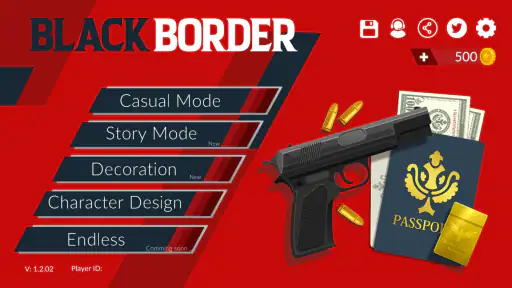
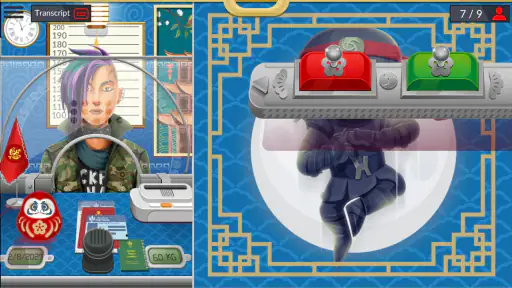
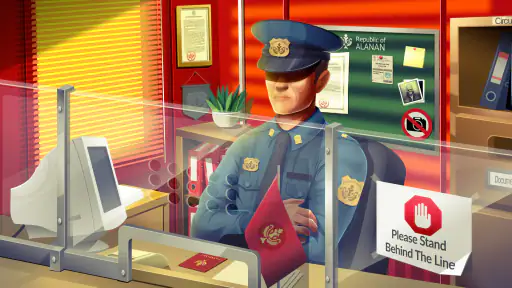
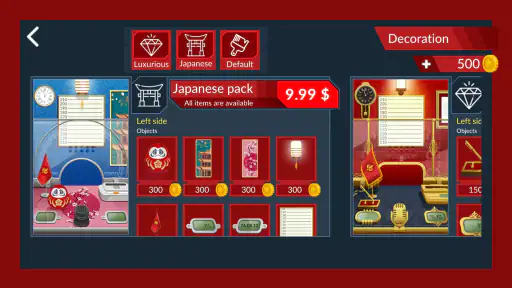
 Analysis by Frivlyz
I enjoy simulation games that turn ordinary-looking work into a string of difficult choices, and border inspection is a particularly good fit for that idea. Black Border Patrol Simulator puts document checks at the center of play, so the tension comes less from action than from noticing a detail, weighing a traveler’s case, and deciding what to do next. That makes it appealing if you want a focused, decision-led game rather than a broad sandbox or a fast combat experience.
How the checkpoint plays now
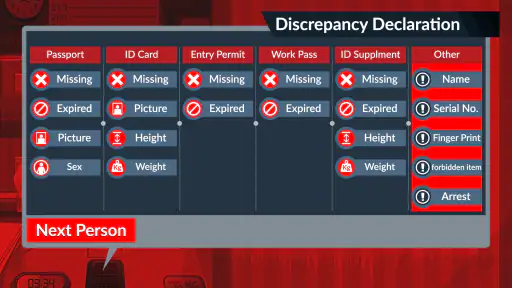
At its core, this is a border-police simulation from Bitzooma Game Studio. You inspect travelers’ papers and decide whether the information holds together. The premise is easy to understand, but the work asks you to stay attentive: a mismatch or suspicious detail can change how you read a case, while a hasty decision can have consequences inside the game.
The gradual rise in complexity is a useful part of the experience. Early checks give you room to learn what to look for; later ones ask you to compare details more carefully and keep several considerations in mind. I found that rhythm more engaging than simply repeating one uncomplicated check. It also means the game rewards a deliberate approach, especially when a document initially looks convincing.
Attention matters more than speed
It is tempting to treat each traveler as a quick yes-or-no puzzle, but I had a better time when I slowed down and read the papers in a consistent order. Checking the visible details first, then pausing over anything that does not fit, helps reduce careless calls. This is a practical habit for new players, not a guarantee that every case will be obvious; the pressure is part of the challenge.
The game’s moral dimension gives those checks more weight. You are not only looking for suspicious documents; you are also deciding how to treat people who may be legitimate travelers. That tension makes the role more interesting than a simple pattern-matching exercise, though anyone who prefers clear-cut right answers may find the uncertainty frustrating.
Atmosphere, story, and consequences
The visuals are detailed enough to establish a checkpoint setting without aiming for photorealism. Passport stamps and traveler chatter help sell the routine, and the sound adds texture to what could otherwise feel like a sequence of menus. I would describe the atmosphere as functional and immersive rather than cinematic: its main job is to keep the inspection work feeling grounded.
There is also a storyline tied to your decisions, with multiple endings shaped by the choices you make. That gives a reason to think beyond the immediate result of one inspection. If you care about seeing how different judgments affect the broader outcome, it is worth paying attention to the human side of a case rather than approaching every traveler as a suspect to catch.
Gaming Stories You May Enjoy

Dancing Road Turns Short Breaks Into a Test of Rhythm and Timing

Super Stylist Makes Every Outfit a Test of Taste and Patience

Dominoes on Your Terms: Who Should Play and Who Should Pass

Pokémon GO Makes the Familiar World Feel New

Chess.com Turns Rematches Into Rivalries, but Community Has Its Costs

Archery Battle 3D Review: Sharp Aiming, Unclear Feedback
That structure also makes replaying appealing for players who want to explore alternate outcomes. I would not assume that every choice produces a dramatic change, but the possibility of different endings gives decisions a longer shadow than a score alone. For me, that is the game’s strongest distinction from more casual management simulations, where a poor call may feel like nothing more than lost efficiency.
Progression and the cost of mistakes
Successful days bring in-game currency that can be spent on upgrades to tools and efficiency. This gives the inspection routine a sense of progression: you are not only learning to make better judgments but also working toward improvements. The useful trade-off is that upgrades offer a goal between cases, while the core appeal still depends on whether you enjoy examining documents and making decisions.
The learning curve can be steep, and the demand for quick, accurate calls may feel stressful. When I found myself rushing, I was more likely to overlook the careful comparison that makes the game work. Treating each shift as a sequence of small checks, rather than trying to power through it, is a better fit for the design. If you want a relaxed game to play without paying attention, this checkpoint routine may feel more like a chore than a comfort.
Who will enjoy this checkpoint routine
I would recommend it to players who like observation, procedural tasks, and choices with ethical consequences. It suits a short session when you want to focus on one demanding activity, and it can also work for a longer stretch if you enjoy learning the pattern of inspections and seeing where your decisions lead. The Teen content rating is useful context for families deciding whether its themes are suitable.
It is less suited to someone looking for a large open world, constant action, or a simulation built around free-form construction. Compared with the usual life, vehicle, or city-management simulations, this one narrows the scope sharply: you spend your attention on travelers, papers, and judgment calls instead of building a sprawling system. That narrow focus is a strength when you want a distinctive job-based challenge, but it limits variety if you need several different activities in one game.
A realistic everyday use case is a commute or a quiet break when you have enough time to concentrate but do not want to begin a complicated campaign. I would avoid starting a difficult stretch while distracted or in a hurry. The point is to compare details and accept responsibility for a decision, so interruptions can make the central task less satisfying.
One practical tip is to resist deciding from a traveler’s first impression. Give the papers your attention before committing, and make a deliberate pause whenever something seems inconsistent. Another is to think about upgrades as support for the routine, not as a replacement for careful inspection: improved tools may help efficiency, but judgment remains the player’s job. These habits make the pressure easier to manage without removing the challenge.
Price, access, and current build
The game costs $2.49, with optional in-app purchases ranging from $0.99 to $74.99 per item. I would weigh that upfront cost against how much you enjoy focused inspection games, and look carefully at the purchase options before spending beyond the base price. The core appeal is the checkpoint decision loop; players who are unsure about that loop should not assume optional purchases will make the game a better fit.
It has a 4.2 average from around 8.9 thousand ratings, with about 432 written reviews and over 100 thousand installs. Those figures suggest that it has found an audience, but they do not tell you whether its particular mix of pressure and document checking will suit you. I would use them as context, then decide based on whether you enjoy deliberate, detail-focused play.
The current version is 1.6.01, and the game was released on December 28, 2020. Those facts establish the version and release history, but they do not by themselves show what changed between builds, so I would not read them as proof of a particular new feature or overhaul. For an existing player, the sensible question is whether the current checkpoint routine still holds your interest and whether its progression gives you enough reason to return.
On Android, it requires version 6.0 or later. That makes the minimum operating-system requirement a straightforward compatibility check before installing. I would also consider the Teen rating alongside the game’s themes of suspicion, authority, and decisions affecting travelers, especially when choosing a game for a younger player.
What to expect from its evolution
For returning players, a version number is not a substitute for a change log. I would separate what is clear—the game is currently at version 1.6.01—from what a player might hope to see in future development. More variety in inspection situations or clearer feedback after a decision could be welcome, but those are preferences, not claims about what the developers have added or promised.
The same caution applies to long-term appeal. The branching outcomes and upgrade loop offer reasons to continue, but the central activity remains document review and judgment. If that process is what you came for, the focused design can keep its appeal; if you are waiting for a completely different mode or a wider simulation, it is better to choose a game already built around that variety rather than expect this one to become something else.
Questions worth settling before you play
Is it more about action or careful thought? In my experience, the appeal is the latter: examining details, spotting inconsistencies, and deciding how to handle a case. The pressure can make it feel urgent, but it is not the same kind of excitement as a reflex-heavy action game.
Can you play casually? You can approach it in short sessions, but casual does not mean effortless. If you are tired or frequently interrupted, the need to pay attention may turn a quick play into a frustrating one. I would save it for a moment when you can give the papers and choices your focus.
Does it have replay value? The multiple endings create a reason to make different decisions and see how the story changes. Whether that is enough to bring you back depends on how much you enjoy revisiting the same central inspection work; players seeking entirely new activities may find the loop familiar sooner.
Is it a good choice for someone new to simulation games? The basic task is easy to grasp, and the early stages ease players into more complex checks. Still, the moral decisions and rising demands mean it is not a purely passive introduction. I think it can work well for a newcomer who likes puzzles and responsibility, but not for someone who wants a gentle, consequence-free first simulation.
My recommendation
For players drawn to procedural simulation, Black Border Patrol Simulator offers a specific kind of tension: the satisfaction of catching inconsistencies balanced against the risk of treating an innocent traveler unfairly. Its atmosphere, story consequences, and upgrade progression support that central idea, while its narrow scope and occasionally demanding pace are real limitations rather than minor details to overlook.
I would choose it when I want a focused game that rewards patience and careful observation, and skip it when I want variety, open-ended building, or low-pressure play. The best way to approach it is to slow down, inspect each case methodically, and treat every decision as more than a quick score opportunity. If that sounds engaging to you, this border checkpoint may be worth your time.
A closer look at the original experience
If you've ever been curious about what it’s like to stand at a border checkpoint, scrutinizing documents and making crucial decisions, then Black Border Patrol Simulator might just be the game you’re looking for. I decided to dive into this intriguing simulation game, and let me tell you, it's quite the ride!
From the moment you launch the game, you're thrown into the shoes of a border patrol officer. Your job? To ensure the safety of your country by verifying the legitimacy of incoming travelers’ documents. Sounds simple, right? But trust me, every decision carries weight. One wrong move, and you might let a dangerous individual into the country, or worse, deny entry to an innocent person.
The game does an excellent job of gradually easing you into the complexities of the task. In the early stages, the documents are straightforward, and the information is easy to verify. However, as you progress, the game introduces more layers of intricacy. Fake passports, altered visas, and suspicious behavior all start to challenge your attention to detail.
A Realistic Experience
What struck me the most was how realistic the game felt. The graphics, while not photorealistic, are detailed enough to make you feel like you're really at a border control office. The sound effects, from the stamping of passports to the chatter of anxious travelers, add a layer of immersion that’s hard to shake off.
Moreover, the game’s storyline adds depth to the routine of document checking. There are multiple endings based on the choices you make, which means every decision can significantly impact the course of the game. It’s not just about catching the bad guys; it’s about making ethical decisions that affect the lives of virtual people.
Challenges and Rewards
If you’re a fan of strategy and decision-making games, then you’ll appreciate the challenges presented in the game. It constantly tests your ability to remember details, spot inconsistencies, and deal with the moral dilemmas that come with the job.
Each successful day at the border earns you in-game currency, which you can use to upgrade your tools and improve your efficiency. This progression system keeps you engaged, as you strive to become the best border officer out there.
However, the game is not without its frustrations. The learning curve can be steep, and the pressure to make quick, accurate decisions might feel overwhelming at times. But hey, that’s part of the charm, isn’t it? It’s a simulation, after all, and real-life border officers don’t have the luxury of taking their time.
“Every decision matters. Every choice counts. Welcome to the border.”
In conclusion, Black Border Patrol Simulator is more than just a game; it's an experience. It offers a unique blend of strategy, realism, and ethical decision-making that’s both challenging and rewarding. Whether you’re a seasoned gamer or someone looking for a fresh experience, this game is worth checking out. Just remember, in this game, you hold the power and responsibility of the border in your hands.
Black Border Patrol Simulator Pros and Cons
Pros
- Realistic border control simulation
- Engaging storyline and character development
- Challenging puzzles and scenarios
- Regular updates with new content
- User-friendly interface
Cons
- Limited customization options
- Repetitive tasks can become tedious
- Requires internet connection
- Occasional bugs and glitches
- In-app purchases can be costly
Frequently Asked Questions
What is Black Border Patrol Simulator?
Black Border Patrol Simulator is a simulation game where players take on the role of a border officer. The game challenges players to inspect vehicles, check documents, and make critical decisions to maintain border security. It's available on both Android and iOS platforms, offering a realistic experience with engaging gameplay mechanics.
How does the gameplay of Black Border Patrol Simulator work?
In Black Border Patrol Simulator, players are tasked with inspecting vehicles and documents to prevent illegal activities at the border. The game uses realistic elements and situations, requiring players to use strategic thinking and keen observation skills. As the game progresses, players face increasingly complex scenarios that test their ability to maintain order and security.
What are the main features of Black Border Patrol Simulator?
Black Border Patrol Simulator boasts a variety of features including realistic graphics, detailed vehicle and character models, and an immersive storyline. Players can enjoy different levels of difficulty, numerous scenarios, and a progression system that rewards accuracy and efficiency. The game also includes various upgrades and tools to help players enhance their border control skills.
Is Black Border Patrol Simulator free to play?
Black Border Patrol Simulator offers a free version with basic features, but there are in-app purchases available for players who want to unlock additional content or remove ads. This allows players to experience the game without any initial cost, but they can choose to invest in enhancements if they wish to deepen their gameplay experience.
What devices are compatible with Black Border Patrol Simulator?
Black Border Patrol Simulator is designed for both Android and iOS devices. It requires a stable internet connection for certain features and updates. The game is optimized for a wide range of smartphones and tablets, ensuring smooth performance and high-quality graphics across different devices. Users should ensure their device meets the minimum system requirements for optimal gameplay.


