

Birdy bird - Game Original
- Reviews
- 4.6
- Version
- 5.2.8
- Installs
- 1,000,000+

Screenshots
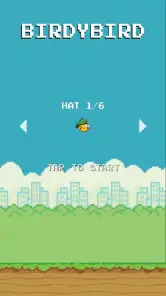




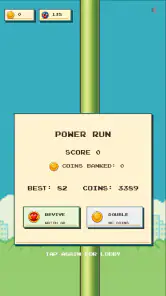


 Analysis by Frivlyz
I spent time with Birdy bird as a deliberately simple arcade game, and its appeal became clear almost immediately: there is one central action, one familiar obstacle pattern, and very little standing between opening the game and making an attempt. You guide a small bird through gaps in pipes, trying to keep its flight under control for as long as possible. That sounds basic, and it is, but the simplicity is also the reason the game can be surprisingly difficult to put down.
This is the kind of title I would recommend when I want a quick challenge rather than a long gaming session. It works well in short bursts while waiting for a bus, taking a break, or trying to reset my attention after a demanding task. It does not ask me to learn a large map, manage equipment, follow a story, or understand a complicated menu. I can start, make a run, fail, and try again without losing time to preparation.
How the one-touch challenge feels in practice
The core loop is built around timing. The bird rises when I flap and begins to fall when I stop, so every pipe requires a small decision about when to act and when to leave the screen alone. The important skill is not frantic tapping. In fact, tapping too quickly can be just as damaging as waiting too long. I found that the most reliable approach was to watch the bird’s vertical position and make controlled inputs instead of reacting emotionally to the next gap.
That distinction matters because the game creates pressure through repetition. The first few attempts are mostly about understanding the rhythm of movement. After that, the challenge becomes mental: I know what to do, but I still have to execute it without rushing. A run can end because I tap a fraction too early, misread the space ahead, or continue playing after my concentration has already faded.
The pipes also make the screen easy to read. There is no clutter competing with the obstacle, and the objective remains obvious from the first second. This clarity is one of the strongest parts of the experience. I never felt that a failure came from not understanding the rules. When I made a mistake, it was usually my timing, which makes the next attempt feel meaningful rather than random.
At the same time, the narrow design has a clear limit. Once the basic movement is familiar, the game’s variety comes mainly from the changing challenge of navigating the pipes. Players who need new mechanics, different objectives, or a sense of character development may find the experience too repetitive. I enjoyed the repetition because I treated each attempt as a small test, but I would not present it as a broad arcade collection.
A useful way to build consistency
My best improvement came from changing how I played rather than simply playing faster. I stopped staring at the bird itself and began looking slightly ahead, using the next opening as the main reference point. That gave me more time to decide when to flap. I also found it helpful to keep my tapping pattern calm after passing through a pipe, because a successful passage can create overconfidence and lead to an unnecessary input immediately afterward.
Gaming Stories You May Enjoy

Dancing Road Turns Short Breaks Into a Test of Rhythm and Timing

Super Stylist Makes Every Outfit a Test of Taste and Patience

Dominoes on Your Terms: Who Should Play and Who Should Pass

Pokémon GO Makes the Familiar World Feel New

Chess.com Turns Rematches Into Rivalries, but Community Has Its Costs

Archery Battle 3D Review: Sharp Aiming, Unclear Feedback
Another practical habit is to stop after a short group of failed attempts. Because each run is brief, it is tempting to continue automatically, but frustration changes timing. When I noticed myself tapping before I had actually judged the gap, taking a short pause produced better results than forcing another run. This is a small game, yet it rewards the same discipline used in larger precision-based arcade titles.
For younger players, the straightforward control makes the game approachable. The content rating is Everyone, and the premise is easy to understand without reading a long explanation. Still, approachable does not mean effortless. A child may enjoy the immediate feedback, while a parent should expect the difficulty to come from repeated timing rather than from progression or exploration.
What keeps the pressure alive
The strongest source of motivation is the desire to improve a personal result. Every successful pipe feels like a small extension of control, and every failure invites a quick explanation: I mistimed the flap, I reacted too late, or I lost focus. That kind of pressure is clean and understandable. There is no need to remember a complicated objective; surviving longer is enough to make the next attempt worthwhile.
However, this also means the game depends heavily on the player’s relationship with repetition. If I am in the mood for a score-chasing arcade test, the short loop feels focused. If I want progression that unlocks new content or a campaign with changing goals, the same loop can feel thin. The game is better understood as a compact reflex exercise than as a complete adventure.
I would also avoid judging it by the standards of a large modern mobile game. Its value is not in the amount of content on screen. The attraction is the immediate restart and the fact that one small improvement can make a session satisfying. That makes it particularly suitable for people who like classic arcade structure, where mastery matters more than collecting a large inventory of rewards.
Fairness, spending, and what I could judge
Birdy bird is free to play, which removes the most obvious barrier to trying it. I could approach it as a quick download rather than a purchase decision, and that suits the game’s lightweight format. The free entry point is especially useful for families or casual players who want to see whether a simple arcade challenge fits their habits before committing to anything.
When it comes to spending, I prefer to separate what is clear from what is not. The game is listed as free, but I would not make claims about optional purchases, advertising behavior, or payment advantages without seeing those elements directly in the version being used. The important practical point is that the core decision is easy: install it if the central flying challenge appeals to you, and do not expect the free label alone to explain every possible part of the experience.
From a fairness perspective, the basic challenge feels naturally skill-based. Success depends on controlling the bird through the pipe gaps, not on understanding a complicated economy. That makes the game easy to evaluate: if another player performs better, the visible reason is likely stronger timing and concentration. I appreciate that clarity because it keeps the competition focused on execution rather than on preparation.
There is also a trade-off here. A pure timing challenge can feel fair because the rules are simple, but it can become unforgiving when a run ends after one small mistake. Players who prefer forgiving checkpoints or several ways to recover may find the design harsh. I personally see that strictness as part of the arcade identity, although it is worth knowing before recommending the game to someone who dislikes repeating the same opening sequence.
Using it in an ordinary day
A realistic use case is a five-minute break between tasks. I can open the game, play several attempts, and stop without needing to remember a story or leave a match unfinished. That makes it more convenient than a longer arcade game when I only have a small window of free time. It also works as a quick concentration reset: the moment I begin, my attention moves toward the bird’s height and the next opening.
I would not choose it for a social evening where everyone expects a large selection of modes or a shared progression system. It is more personal than communal in its basic form. The satisfaction comes from beating my own previous performance, so it suits a player who enjoys private score chasing more than one who needs constant novelty.
It can also be useful for introducing someone to timing-based mobile play. The control idea is understandable almost immediately, and the first failure teaches more than a long tutorial would. The downside is that the same accessibility can expose the game’s narrow scope quickly. Once a new player understands the flap-and-fall rhythm, the remaining question is whether they enjoy refining it.
How it compares with other arcade choices
Compared with endless runners, this game is more concentrated. Endless runners often add lanes, collectibles, obstacles, upgrades, or changing movement options. Here, the focus stays on vertical control and pipe placement. I find that cleaner when I want a direct test, but less satisfying when I want a sense of travel or a growing toolkit.
Compared with puzzle arcade games, it offers less planning and more immediate reaction. A puzzle can let me pause and calculate several moves, while this game asks me to maintain a rhythm under pressure. That makes it a better choice for reflex practice and a worse choice for someone who prefers slow problem-solving.
It also differs from arcade games built around unlockable characters or equipment. There is no reason to approach this experience expecting a collection system to carry the motivation. Its strongest reward is improvement through repetition. If I want a game that gives me new abilities after each session, I would choose another category. If I want a compact challenge that starts instantly, this format is more appropriate.
The “Original” positioning is useful in setting expectations: I approached it as a straightforward version of the classic bird-through-pipes idea rather than as a reinvention with many additional layers. That honesty of structure is appealing, but it also means the game has to win me over through control and replay value. Players who already know they dislike this type of arcade loop are unlikely to be persuaded by extra presentation alone.
Device fit, access, and version context
The game supports devices running Android 6.0 or later, so it is aimed at a wide range of Android hardware rather than only recent phones. That is helpful for anyone using an older compatible device, although the actual feel of a timing game can still depend on the phone’s touch response and screen condition. For this kind of title, a small delay or an uncomfortable grip can affect play more noticeably than it would in a turn-based game.
The current version is 5.2.8, and the developer is Rectfy. I would keep the game updated through the normal app store route, particularly because small arcade titles can benefit from compatibility fixes even when the visible gameplay remains simple. The game was released on December 24, 2022, so it has had time to establish its identity instead of arriving as a completely unknown experiment.
Its audience size also suggests that the concept has reached beyond a tiny group of enthusiasts. It has over a million installs, with an average rating of 4.6 from around fifteen thousand ratings. Those figures make it easier for me to treat the game as a known casual option, but they do not replace personal fit. A popular timing challenge can still be the wrong choice for someone who wants variety, story, or relaxed play.
The review volume is more modest than the overall rating count, with a little over two hundred written reviews. I read that as a reason to focus on the actual design rather than assuming every player values the same thing. A high average can indicate that the simple loop works for its intended audience, while the limited written discussion means I would still make my own decision based on whether repeated pipe navigation sounds enjoyable.
Who should try it, and who should skip it
I think it is a good match for players who enjoy short arcade sessions, precise tapping, and the satisfaction of gradually improving a personal result. It is also a sensible pick for someone who wants a free game that can be understood quickly and played without a long commitment. The Everyone rating and uncomplicated premise make it approachable, while the strict timing gives experienced players a reason to keep practicing.
I would be more cautious about recommending it to players who need constant content changes. If your favorite mobile games offer missions, upgrades, exploration, narrative scenes, or several distinct modes, this may feel too limited after the initial curiosity fades. It is also not ideal if failure in a simple game feels irritating rather than motivating. The design asks me to accept repetition as the main path to improvement.
For competitive players, the attraction is the clean skill test, but expectations should remain realistic. I would play it as a personal-score challenge unless the current version provides a comparison feature that I could verify directly. The game’s basic mechanics are suitable for friendly competition, yet the enjoyment does not depend on a large competitive framework.
My trust verdict after playing
What I like most about Birdy bird is that it does not disguise its central idea. The game gives me a bird, a series of pipe gaps, and a timing problem that becomes harder mainly because my concentration is tested. That directness makes it easy to recommend to the right person and easy to reject for the wrong reasons. It is not trying to replace a full arcade library; it is offering one focused loop.
The main limitation is equally clear. After the first learning period, the experience lives or dies by whether I enjoy repeating attempts to improve. I found that satisfying in short sessions, especially when I changed my focus from frantic tapping to deliberate positioning. Longer sessions were less appealing because the structure does not provide much variety beyond the next run.
With a 4.6 average and more than a million installs, the game has a substantial casual audience, and its free entry point makes trying it uncomplicated. I would still keep spending expectations grounded: the listed price is free, while I would inspect the live version for any optional commercial elements before making assumptions. That is the fairest way to assess a lightweight game without promising systems I have not verified.
My recommendation is simple: install it if you want a focused, old-school arcade test that starts quickly and rewards calm timing. Skip it if you are looking for progression, narrative, or a wide range of mechanics. For a short break and a few attempts at beating my own best run, it earns a place on my phone; for a long-term game with constantly changing goals, I would choose a more feature-rich alternative.
Birdy bird - Game Original Pros and Cons
Pros
- Simple controls make it easy to start playing immediately.
- Short rounds are ideal for quick breaks or casual sessions.
- Bright bird characters and colorful visuals feel cheerful.
- Increasing difficulty provides a satisfying challenge over time.
- Lightweight gameplay works well on most mobile devices.
Cons
- Repeated obstacles can make the gameplay feel monotonous.
- Progress may depend heavily on precise timing and practice.
- Limited variety can reduce long-term replay value.
- Frequent failures may frustrate players who prefer relaxed games.
- Ads or optional purchases may interrupt the playing experience.
Frequently Asked Questions
What is Birdy bird - Game Original, and how is it played?
Birdy bird - Game Original is a simple arcade-style game built around timing, movement, and obstacle avoidance. After starting a round, you guide the bird through the level while trying to pass obstacles without crashing. The controls are generally easy to understand, but the challenge increases quickly, making each attempt feel like a test of concentration, reaction speed, and consistency.
Is Birdy bird - Game Original suitable for children and beginners?
The game is easy for beginners to understand because its core gameplay is straightforward and does not require complicated instructions. However, the increasing difficulty may be frustrating for younger players who are not used to repeated attempts. Parents should also review the app’s age rating, advertising, and in-app purchase information before allowing children to play without supervision.
Does Birdy bird - Game Original require an internet connection?
Birdy bird - Game Original may be playable without a constant internet connection, which makes it convenient for short sessions while traveling or when mobile data is unavailable. Nevertheless, some features, advertisements, updates, rankings, or promotional content may depend on connectivity. It is best to launch the game once online after installation and check which functions remain available offline.
Are there advertisements or in-app purchases in Birdy bird - Game Original?
Before downloading, users should check the store listing for the latest information about advertising and optional purchases, since these details can change between versions. Free arcade games commonly display ads between rounds or after a failed attempt, while purchases may remove advertising or unlock extras. Always review the payment settings, especially if children use the device.
What should I check before downloading Birdy bird - Game Original?
Before installing Birdy bird - Game Original, confirm that your Android or iOS device meets the required operating-system version and has enough free storage. Also check the developer name, recent update date, permissions, privacy information, age rating, and user reviews. These details can reveal compatibility issues, performance limitations, advertising behavior, or changes introduced in newer versions.


