

Beat Battle Music Challenge
- Reviews
- 4.3
- Version
- 0.0.2
- Installs
- 1,000,000+

Screenshots







 Analysis by Frivlyz
I’d approach Beat Battle Music Challenge as a quick music game to try when I want something more hands-on than simply listening to a track. Its central appeal is the idea of shaping a beat through play, rather than treating music as background decoration. That distinction matters: if you enjoy tapping along and testing your timing, it has an immediate hook; if you’re looking for a full music-making studio or a deep rhythm-game campaign, you may want a different kind of app.
As a casual game from iStar Technology Investment Co Ltd, it is aimed at easy, low-commitment play. It is free, rated for Everyone, and has a 4.3 average from around 236 ratings, with over a million installs. Those figures suggest that plenty of players have given it a try, but I would treat popularity as a starting point rather than proof that it suits every music-game fan. The useful question is whether its simple beat-focused idea matches the way you like to play.
What to decide before you start
Think about what you want from a music game. If you like short sessions built around listening closely and reacting on time, this concept is a natural fit. If you want to compose freely, record vocals, edit tracks, or learn an instrument, a dedicated music creation or practice app would be a better match. Beat Battle sits on the play-for-the-rhythm side of that divide, not the make-a-finished-song side.
It is also worth setting expectations around the word “challenge.” A casual rhythm game can be satisfying without offering the depth or precision of a specialist timing game. I’d go in ready to enjoy the act of following a beat rather than expecting a technical tool or a serious training routine. The current version is 0.0.2, so I’d also keep in mind that this is an early-stage release and approach it as something to sample rather than a polished long-term commitment.
Where the music-game idea works
The appeal is how directly it connects listening and action. Instead of choosing a playlist and leaving the phone aside, you engage with the rhythm and make small decisions as the music moves. That makes it well suited to a short break: I can imagine opening it while waiting for a friend or taking a breather between tasks, playing for a little while, and putting it away without needing to plan a long session.
The store summary describes hand-mixing your own unique music, which gives the game a more personal angle than a standard “hit the notes” pitch. I’d treat that as an invitation to experiment with the music rather than assume it replaces a DJ app. The fun is in seeing how interactive beat play feels; it is not a substitute for the controls, editing options, or export tools that someone would expect from production software.
Who may prefer another option
Players who care most about a large, clearly documented song library, detailed difficulty settings, or a structured progression should compare it with other rhythm games before settling in. Likewise, anyone who wants to produce a track they can save and share will be happier with a music-making tool. Those alternatives serve different goals: one focuses on precise performance, while the other gives you more room to build and manage audio.
Gaming Stories You May Enjoy

Dancing Road Turns Short Breaks Into a Test of Rhythm and Timing

Super Stylist Makes Every Outfit a Test of Taste and Patience

Dominoes on Your Terms: Who Should Play and Who Should Pass

Pokémon GO Makes the Familiar World Feel New

Chess.com Turns Rematches Into Rivalries, but Community Has Its Costs

Archery Battle 3D Review: Sharp Aiming, Unclear Feedback
There is a practical trade-off here: a simple casual game can be easier to pick up, but that simplicity may leave experienced rhythm players wanting more control or a clearer sense of long-term goals. I would try a few sessions before deciding whether its rhythm interaction is enough to keep me interested. If I find myself wanting more exact timing feedback or a particular style of progression, that is a good sign to move to a specialist game rather than expecting this one to become something else.
Getting into the Groove
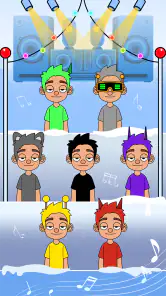
The first thing that hits you when you open the Beat Battle Music Challenge is the vibrant interface. It’s like stepping into a neon-lit club, with pulsating lights and beats that make your fingers itch to start tapping. Setting up is a breeze, and you’re quickly thrown into your first battle. The app offers a variety of music genres, so whether you’re into hip-hop, EDM, or rock, there’s something to get your head nodding.
Gameplay Dynamics
Here’s where the real fun kicks in. You’ll be matching beats with perfect timing, and trust me, it’s addictive. The gameplay is straightforward but challenging enough to keep you coming back. You tap, slide, and hold to the rhythm, trying to achieve that elusive perfect score. The app is responsive, and the touch controls are spot on, making it feel like you’re truly part of the music. And the best part? As you progress, you unlock more songs and challenges, each one a bit more complex than the last.
Visuals and Sound
The visuals are a feast for the eyes. Each track is accompanied by dynamic animations that add to the thrill of the game. The sound quality is top-notch, immersing you in the beat battle experience. You can feel the bass thumping as you tap away, and it’s hard not to get lost in the rhythm.
Community and Competition
What really sets Beat Battle Music Challenge apart is its community aspect. You can compete against friends or other users worldwide, climbing the leaderboard and earning bragging rights. The app encourages friendly competition, pushing you to improve your skills and climb higher.
Make a short session count
For a casual rhythm game, the best way to judge the fit is to play with a small goal in mind. I’d focus on whether following the beat feels satisfying, rather than chasing a high score straight away. On an uneven commute or in a noisy waiting room, keep the volume comfortable and pay attention to whether the rhythm remains easy for you to follow. At home, headphones can make it easier to concentrate on the music, but the important test is whether the controls feel natural on your own device.
A useful habit is to try the same section more than once before deciding that a track is too difficult. Rhythm games often reward familiarity: once the pattern stops feeling new, your attention can shift from guessing what comes next to responding on time. That does not require treating play like practice homework. It simply helps separate a genuine mismatch with the game from the normal first-run awkwardness of learning a beat.
How it fits into a music routine
I would use this as a playful interruption in a day, not as a replacement for a music library. For example, after finishing a work task, a few minutes of beat-focused play can feel more active than scrolling through songs, while still being easy to stop when the break is over. It may also suit someone who wants to share a light game with a friend nearby, taking turns and comparing how each person handles the rhythm, without needing to turn the session into a serious contest.
That use case is different from learning DJ skills. A game can encourage you to listen for timing and enjoy manipulating musical patterns, but those instincts do not automatically translate into mixing full tracks, balancing transitions, or preparing a set. If your real aim is to learn those tasks, choose software or lessons designed for them. If your aim is simply to make a music break more interactive, this is the more fitting lane.
Small trade-offs that affect enjoyment
Sound-dependent play is less convenient in places where you cannot listen comfortably, and a rhythm-focused screen may not be ideal if you are trying to conserve attention while doing something else. I would avoid playing while walking through busy areas or handling a task that needs concentration: the game asks you to watch and listen, even if a session feels casual. In a quiet moment, that focus is part of the appeal; in a rushed one, it can make the game feel like one more demand on your attention.
There is also a difference between a game being easy to begin and being something you want to return to. The first few minutes can tell you whether the basic interaction clicks, but not necessarily whether it will stay fresh for you. Since the release is early, I’d make my decision from the experience I have now and avoid assuming that a particular future feature or expansion is guaranteed. Free access makes sampling straightforward, while the best reason to keep it is still whether the beat play itself makes you want another round.
Choosing between casual play and specialist tools
Compared with common alternatives, Beat Battle’s strongest case is convenience and immediacy: it presents music as something to react to, rather than asking you to configure a production setup or commit to a long learning path. A conventional rhythm title may be preferable if your priority is a carefully structured challenge, while a beat-making app is the better choice for arranging and saving original work. These are not interchangeable products, and the right choice depends on whether you want to perform, create, or simply play along.
For parents considering a music-themed game, its Everyone age rating is a helpful starting point, and the casual framing may make it approachable for a range of ages. I would still try it together first if the child is sensitive to busy visuals or gets frustrated by timing-based play. A rating describes the intended age suitability; it does not tell you whether the particular pace, sound, or challenge will be comfortable for an individual player.
Before you commit to keeping it
The practical first check is whether the game feels responsive on your phone and whether you enjoy its sound-led interaction. The minimum operating system is 7.1, so compatibility is worth checking before trying to install it on an older device. Once it is running, give yourself a few uncomplicated sessions: notice whether the beat is enjoyable, whether the visual presentation helps or distracts you, and whether you feel curious to continue. Those observations are more useful than judging it solely by a rating or install count.
One thing I would not do is treat a missed beat as evidence that I need to buy equipment or change my whole music setup. Start with the device you already have and a comfortable listening level. If you find that background noise makes the experience difficult, try again somewhere quieter; if the controls still do not feel right, a different rhythm game may suit your play style better. That simple test keeps the decision grounded in what you actually want from a casual game.
My recommendation
In conclusion, if you’re looking for a game that’s both entertaining and challenging, Beat Battle Music Challenge is a must-try. It’s not just about hitting the right notes; it’s about feeling the music and letting it guide your fingers. Whether you’re a seasoned gamer or just someone looking for a fun way to pass the time, this app delivers in spades. So grab your headphones, dive into the beats, and let the battle begin!
My recommendation is most confident for someone who wants an easy entry into interactive music play and is happy to judge the game on its present experience. I would skip it if I needed a dependable music-production workspace, a detailed practice curriculum, or a particular competitive format. For everyone else, the low-pressure way to find out is to try a short session, see whether the rhythm holds your attention, and keep it only if you genuinely want to return.
Beat Battle Music Challenge Pros and Cons
Pros
- Diverse song library available.
- Engaging rhythm-based gameplay.
- User-friendly interface design.
- Regular updates with new songs.
- Offline mode for play anywhere.
Cons
- In-app purchases can be pricey.
- Limited free song options.
- Occasional lag on older devices.
- Ads can interrupt gameplay.
- Requires significant storage space.
Frequently Asked Questions
What is Beat Battle Music Challenge?
Beat Battle Music Challenge is an exciting rhythm-based game that challenges players to tap along to the beat of various music tracks. It offers a thrilling experience for music and gaming enthusiasts, allowing players to test their rhythm and coordination skills across diverse and engaging levels.
Is Beat Battle Music Challenge free to play?
Yes, Beat Battle Music Challenge is free to download and play. However, it may offer in-app purchases for additional features or to remove ads. Players can enjoy the core gameplay without spending any money, but optional purchases can enhance the gaming experience.
What are the system requirements for Beat Battle Music Challenge?
Beat Battle Music Challenge requires a smartphone with Android 5.0 or iOS 10.0 and above. The game is optimized for smooth performance on most modern devices, but users with older models might experience some lag. Ensuring your device meets the minimum requirements will provide the best gaming experience.
Can I play Beat Battle Music Challenge offline?
Beat Battle Music Challenge can be played offline, allowing users to enjoy the game without an internet connection. However, certain features like leaderboard updates and downloading new tracks require an online connection. Offline play is perfect for on-the-go gaming without data usage concerns.
Are there different music genres available in Beat Battle Music Challenge?
Yes, Beat Battle Music Challenge offers a wide variety of music genres, including pop, rock, electronic, and hip-hop. This diversity ensures that players can find tracks that suit their musical tastes, making each level a unique and enjoyable experience. The game regularly updates its tracklist with new songs.


