

BATTLESHIP - Multiplayer Game
- Reviews
- 3.7
- Version
- 1.4.0
- Installs
- 100,000+

Screenshots
 Analysis by Frivlyz
I tend to enjoy Battleship most when I want a game that asks for a little thought without demanding a long tutorial or a complicated set of rules. This mobile board game puts the familiar hunt for an opponent’s fleet on a phone, where I can take a turn during a spare moment or settle in for a longer match. BATTLESHIP - Multiplayer Game is a paid download, so it makes more sense for someone who already likes the guessing-and-deduction loop than for someone only curious about a quick novelty.
The purchase context is worth keeping clear: the game costs $2.99, and it also offers in-app purchases priced from $2.99 to $12.99 per item. That tells me there is an upfront cost as well as optional spending, but it does not tell me what each optional item contains or whether any purchase changes match balance. I would check the purchase choices in the app before spending more, especially if I am buying it for a younger player. The game is rated Everyone, and the developer is Marmalade Game Studio.
A familiar ruleset, with decisions that still matter
The appeal is not complicated: arrange a fleet, make guesses, and use the results to narrow down where the other ships might be. In my experience, the tension comes less from fast reactions than from reading a changing pattern. A miss can still be useful if it rules out a patch of water; a hit gives you a smaller area to investigate, but you still need to think about how a ship could fit around it. That keeps the basic board-game idea engaging without turning each move into a reflex test.
That makes it easy to recommend to people who enjoy taking turns and reasoning through a small amount of information. It is also a natural fit for someone who remembers the tabletop game and wants to play without setting up a physical board. If you mainly want action, elaborate progression, or a deep strategy game with many interacting systems, I would look elsewhere. Battleship’s pleasure is in a focused puzzle between two fleets, not in a large campaign or a constantly changing ruleset.
How I’d approach a match
The useful habit is to treat every shot as information rather than firing at random. I like to begin with a spread-out search, then tighten my guesses around confirmed hits and consider the possible direction and length of a ship. When a hit appears, it is tempting to keep firing immediately beside it, but a little patience can help distinguish a line from a cluster of unrelated clues. This is a simple adjustment, yet it makes the game feel more deliberate and gives each move a reason.
Ship placement deserves the same thought. A predictable arrangement can make an opponent’s search easier once they find a hit, while a less obvious layout may buy time. I would avoid placing every ship in the most natural-looking position just because it is quick. The trade-off is that there is no single placement trick that guarantees a win: your opponent’s guesses and your own ability to learn from feedback still matter. That uncertainty is exactly what keeps a straightforward board game from feeling solved.
For an everyday example, I can see myself starting a match during a short break, then returning to the same kind of game later when I have more time. The smaller grids mentioned in the game’s options suit a quick session, while larger grids can stretch the search and make the match feel more involved. If I am playing when distracted, I would choose the shorter format; if I have time to concentrate, a larger board gives me more room to plan. That choice is more useful than assuming every session needs to be a long contest.
Gaming Stories You May Enjoy

Dancing Road Turns Short Breaks Into a Test of Rhythm and Timing

Super Stylist Makes Every Outfit a Test of Taste and Patience

Dominoes on Your Terms: Who Should Play and Who Should Pass

Pokémon GO Makes the Familiar World Feel New

Chess.com Turns Rematches Into Rivalries, but Community Has Its Costs

Archery Battle 3D Review: Sharp Aiming, Unclear Feedback
Where the mobile version fits among alternatives
Compared with a physical Battleship set, the app saves the effort of finding an opponent in the same room and keeping track of the board by hand. It is also more convenient when nobody nearby is ready to play. The tabletop version still has an advantage if what you want is face-to-face conversation, a shared screen-free activity, or the tactile pleasure of placing ships and marking shots. I would pick the physical game for a family evening around a table and the mobile version when convenience or remote competition matters more.
Against casual mobile board games built around quick matching or luck, this one asks for more attention to spatial clues. That can be satisfying if I want a small strategic challenge, but less appealing if I only have a few seconds and cannot follow a sequence of shots. It is not a substitute for every kind of board game: there is no reason to expect the variety of a collection of different tabletop games from one familiar naval contest. Its strength is that it stays focused on one recognizable activity.
What multiplayer changes—and what it does not
Playing against another person gives the guessing loop a different feel from playing alone. A human opponent may place ships in ways I would not expect, and knowing that someone is making choices behind the other side of the board can make a narrow lead feel more exciting. The app includes multiplayer play, and I found that useful when I wanted a rival rather than simply practicing the rules. It is a better fit for players who enjoy uncertainty than for anyone who wants every match to unfold in a predictable way.
There is also an important practical difference between choosing a friend and being paired with an unfamiliar opponent: the first is about sharing a game with someone you know, while the second is about finding competition without arranging it in advance. The game supports both kinds of challenge, along with single-player play. I would use solo play to get comfortable with the rhythm and use multiplayer when I am ready for an opponent whose decisions I cannot anticipate. Chat can add a social layer, although people who prefer a quiet, no-conversation match may find that less appealing.
The social element is not automatically a reason to play with strangers. I would use the option that suits the situation, and I would not treat a chat interaction as necessary to enjoy the core game. For a casual match with a friend, the conversation may be part of the fun; for a quick game on a break, the board itself is enough. That flexibility is useful, but the experience still depends on having the kind of opponent you want at that moment.
Presentation and day-to-day usability
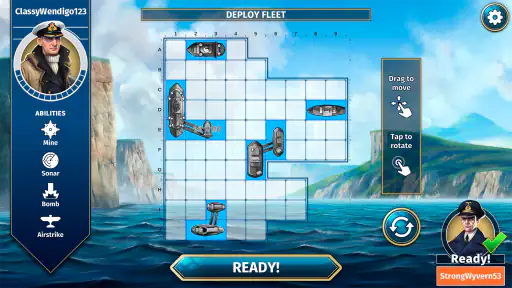
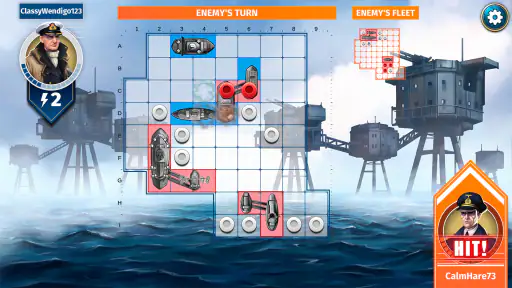
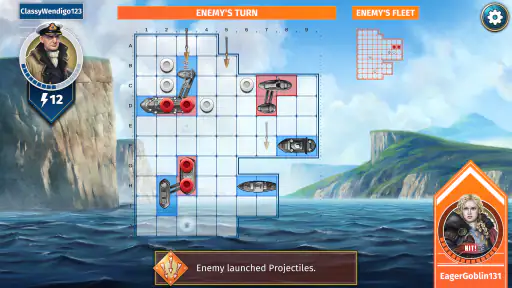
The controls are easy to understand: drag and drop ships to arrange them, then tap the grid to fire. That keeps the central actions close to what I expect from a digital board game. The display uses colorful graphics and sound effects to give hits and misses more presence than a plain paper grid. I like that extra feedback, although anyone who wants a completely quiet or visually restrained experience may prefer to turn down or avoid sound where the device’s controls allow.
The visual polish does not change the strategic core, and that is a sensible trade-off for this kind of adaptation. The game does not need elaborate animation to make a shot meaningful; the information it reveals is what matters. I would judge it mainly by whether the board remains clear while I am planning, not by how dramatic each turn looks. For a game that depends on remembering clues across a match, readability and a comfortable pace are more important than spectacle.
Fairness, spending, and what to check
The available purchase details establish the download price and the range charged for in-app items, but they do not establish what those items do, whether they are cosmetic, or whether they affect competitive play. I would not assume either an advantage or a disadvantage from that alone. If fair competition is my main concern, I would review the purchase screen and any descriptions shown there before buying optional items, and I would avoid spending until I understand what I am getting.
The same caution applies to progression. I can speak to the game’s board-based decisions and its single-player and multiplayer options, but I would not infer a ranking system, unlock path, or a particular reward structure from those facts. Players who need those systems to decide whether a game will hold their attention should inspect the current in-app details first. For me, the core question is simpler: do I enjoy finding a fleet through careful guesses enough to return for another match?
There is a modest audience signal around the game: it has an average rating of 3.7 from around 3,100 ratings, with about 612 written reviews, and it has passed 100,000 installs. I treat those figures as context, not as a promise that every player will have the same experience. The game was released on May 3, 2018, and its current version is 1.4.0; it requires Android 5.0 or later. Those details make it easier to judge basic compatibility and how established the app is, but they do not answer questions about every device or every match situation.
Who should install it—and who should pass
I would recommend it to someone who already likes Battleship, wants a portable way to play, and enjoys taking time to infer a ship’s location. It is especially suitable for short, self-contained sessions: a commute where I can focus, a quiet break, or a planned match with a friend. The choice of board size helps match the commitment to the time available, and multiplayer gives the familiar rules a human opponent when solo play is not enough.
I would skip it if I want a free-to-try purchase decision, since the game has an upfront price, or if I am looking for a broad collection of board games rather than one focused title. I would also choose a physical set when the point is to sit together and talk, and a faster casual game when I do not want to track clues across several turns. Those are not failures of the app; they are cases where its particular kind of slow-burn deduction is simply not the right fit.
The Gameplay Experience
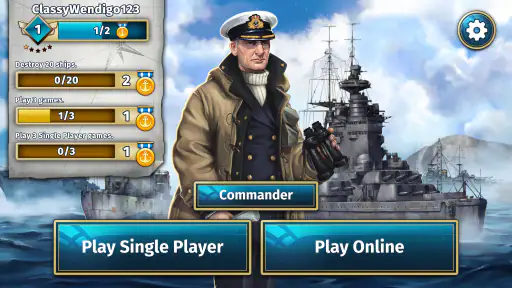
Remember the days of peeking over the divider during a tense game of Battleship? This app captures that same thrilling suspense but without the risk of getting caught cheating. BATTLESHIP - Multiplayer Game offers both single-player and multiplayer modes, catering to your desire for competition whether you're flying solo or challenging your best mate.
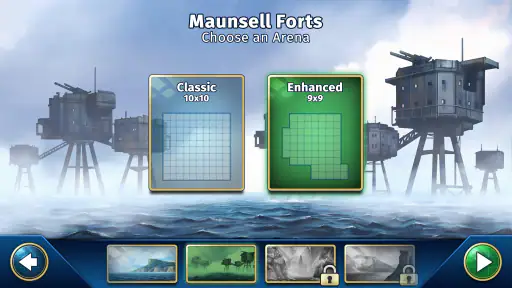
The controls are as intuitive as you'd hope. Simply drag and drop your ships on the grid, and tap away to fire at enemy waters. The app also offers a variety of grid sizes, letting you switch up the difficulty level as you see fit. I found the smaller grids perfect for quick games on my lunch break, while the larger ones are ideal for those marathon sessions when you just don't want the fun to end.
Graphics and Sound
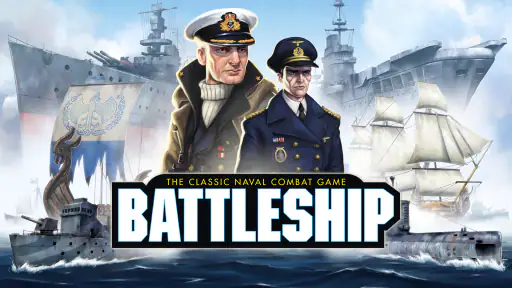
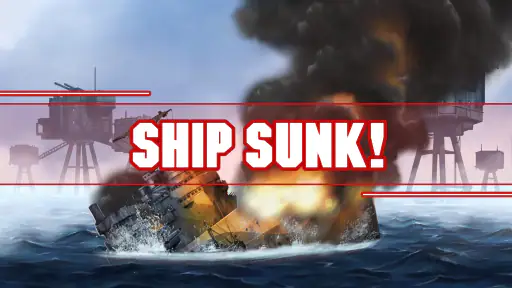
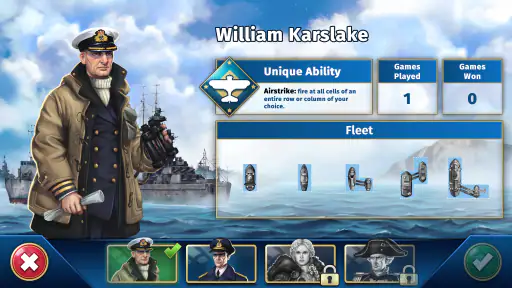
Visually, the game is a treat. The graphics are crisp, colorful, and immersive enough to make you feel like a naval commander. The sound effects, from the splashing of the waves to the explosive hits, add a layer of excitement and realism that kept me hooked. The background music is subtle but effective, never overwhelming the gameplay.
Multiplayer Madness
One of the standout features of this app is its multiplayer mode. You can challenge friends or random players from around the world. The matchmaking system is quick, and the competition is fierce. Winning a match against a player halfway across the globe offers a sense of triumph that just can't be replicated in single-player mode.
Moreover, you can chat with your opponents, adding a social element that I didn't realize I was missing. Whether you're taunting a friend or making a new one, the interaction adds a delightful twist to the game.
Final Thoughts
In conclusion, BATTLESHIP - Multiplayer Game is a fantastic adaptation of the classic board game. It's perfect for those who are looking for a quick strategic fix or a prolonged battle against players worldwide. The app is easy to navigate, visually appealing, and offers enough variety to keep things interesting. Whether you're a veteran of the old-school board game or a newcomer looking to dip your toes into naval strategy, this app delivers on all fronts. So, gather your fleet, strategize your moves, and may the best commander win!
BATTLESHIP - Multiplayer Game Pros and Cons
Pros
- Engaging multiplayer experience.
- Intuitive and easy-to-use interface.
- Variety of ship and board options.
- Quick matchmaking times.
- Cross-platform compatibility.
Cons
- Occasional connectivity issues.
- Ads can be intrusive at times.
- Limited single-player content.
- Requires constant internet access.
- In-app purchases can be pricey.
Frequently Asked Questions
What is BATTLESHIP - Multiplayer Game all about?
BATTLESHIP - Multiplayer Game is a digital adaptation of the classic board game where players strategically position their ships on a grid and take turns guessing the location of their opponent's ships. The objective is to sink all of the opponent's ships before they sink yours. The game is available for both Android and iOS devices, offering an engaging multiplayer experience with friends or players worldwide.
How can I play BATTLESHIP with friends online?
To play BATTLESHIP - Multiplayer Game with friends online, you must first download the app from the Google Play Store or Apple App Store. Once installed, create an account or log in using your social media credentials. You can then invite friends to join your game by sending them an invitation through the app. The game supports real-time multiplayer battles, allowing you to compete against friends or other players globally.
Are there any in-app purchases in BATTLESHIP - Multiplayer Game?
Yes, BATTLESHIP - Multiplayer Game offers in-app purchases. While the game is free to download and play, there are optional in-game items and features that can be purchased. These may include additional ship designs, power-ups, or ad-free experiences. The in-app purchases are designed to enhance gameplay, but they are not necessary to enjoy the full game experience.
Is an internet connection required to play BATTLESHIP?
Yes, an internet connection is required to play BATTLESHIP - Multiplayer Game, especially for the multiplayer mode. The game relies on real-time data exchanges between players, making a stable internet connection essential for smooth gameplay. However, some parts of the game, such as practice matches against AI, might be available offline, but the full experience is best enjoyed online.
What are the main features of BATTLESHIP - Multiplayer Game?
BATTLESHIP - Multiplayer Game boasts several features that enhance the classic board game experience. Key features include real-time multiplayer battles, customizable ship layouts, and various game modes such as ranked matches and tournaments. The game also offers leaderboards, enabling players to track their progress and compete for the top spot. Additionally, the app provides a chat feature for players to communicate during matches, adding a social element to the gameplay.


