

Battle Night: Cyberpunk RPG
- Reviews
- 4.5
- Version
- Varies with device
- Installs
- 1,000,000+

Screenshots





 Analysis by Frivlyz
I went into Battle Night: Cyberpunk RPG expecting a quick mobile role-playing game with a neon coat of paint, but its strongest idea is more specific than that. It is built around managing a team of heroes in a cyberpunk setting while letting the game handle much of the routine fighting. That makes it easy to check during a short break, yet it also means the enjoyment depends less on constant action and more on making good decisions before and between battles.
The game comes from FT Games and is free to start on Android, with a Teen content rating. It has been available since September 16, 2020, and supports Android 7.0 or later. Its audience is already substantial, with more than a million installs, an average score of 4.5 from roughly 114 thousand ratings, and about 4.6 thousand written reviews. Those figures suggest a healthy player base, but they do not remove the central question: whether its hands-off combat and progression style suit the way you want to play.
How Battle Night feels in its current form
I find it useful to judge Battle Night by the choices it asks me to make between encounters, not by expecting every session to deliver a dramatic fight. In this section, I’d look at how a familiar team and a clear goal can make brief check-ins feel deliberate rather than routine. That baseline also makes it easier to spot which adjustments are worth trying next.
A role-playing game built around preparation
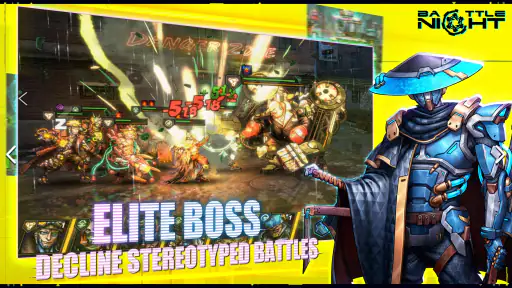
The first thing I noticed is that this is not trying to be a traditional action RPG. You are not steering a character through every strike or aiming abilities manually. Instead, the main work happens in assembling a group, improving individual heroes, arranging positions, and deciding how to spend the resources earned from play. Once a fight begins, the result reflects those choices more than quick reflexes.
That structure is a good fit for anyone who enjoys team composition. I found myself paying attention to which heroes complemented one another, which character could absorb pressure, and whether my damage dealers were being protected long enough to matter. The cyberpunk presentation gives those decisions a distinct atmosphere, but the practical appeal comes from the small tactical adjustments that can turn a stalled encounter into a manageable one.
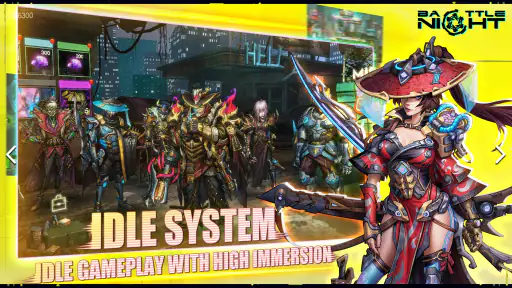
The game also works well as a low-commitment routine. I could open it, collect progress, review upgrades, improve a few characters, and leave without needing a long uninterrupted session. That is convenient when I have only a few minutes. It is less satisfying if I want a battle system that rewards constant input, because the most meaningful choices happen outside the actual exchange of attacks.
The cyberpunk setting helps, but it is not the whole experience
The neon city style gives the game an identity that separates it from medieval fantasy teams and brightly colored cartoon battlers. Characters, menus, and enemies are presented through a futuristic lens, so the atmosphere feels more like a dystopian squad adventure than a conventional sword-and-magic quest. I appreciated that the setting is not merely a background image; it shapes the mood of the menus and the way the roster is presented.
Gaming Stories You May Enjoy

Dancing Road Turns Short Breaks Into a Test of Rhythm and Timing

Super Stylist Makes Every Outfit a Test of Taste and Patience

Dominoes on Your Terms: Who Should Play and Who Should Pass

Pokémon GO Makes the Familiar World Feel New

Chess.com Turns Rematches Into Rivalries, but Community Has Its Costs

Archery Battle 3D Review: Sharp Aiming, Unclear Feedback
Still, I would not choose this game solely for deep science-fiction storytelling. The strongest reason to stay is the loop of recruiting, upgrading, arranging, and testing a team. The setting makes that loop more appealing, but it does not turn the game into a narrative-heavy role-playing experience. If your priority is a long, carefully written story with direct exploration, a more traditional single-player RPG will probably serve you better.
What the free entry point really means
Because the game is free, it is simple to try without making a commitment. That matters here because the hands-off format is personal: some players find it relaxing, while others quickly decide that it feels too passive. I recommend giving it enough time to understand the roster and progression rather than judging it from the first few battles.
There are in-app purchases ranging from $4.99 to $99.99 per item. I would treat that range as a reason to set a spending limit before getting comfortable with the upgrade loop. The game is most enjoyable for me when purchases are viewed as optional convenience rather than a requirement for basic progress. Anyone who dislikes free-to-play pressure should approach carefully, especially if collecting and improving heroes becomes emotionally rewarding.
Small-session use is one of its practical strengths
A realistic use case is a commute or a lunch break where I want something more involving than a simple puzzle but cannot give a game my full attention. I can check the current team, claim accumulated rewards, make one or two upgrades, and attempt a difficult stage. That routine gives me a sense of progress without demanding a long session.
The trade-off is that the game can become repetitive if I treat every visit as a checklist. My advice is to use short sessions to make a specific decision: test a different formation, replace a weak link, or save resources for a meaningful improvement. That keeps the routine from turning into mindless tapping and makes the management layer feel more deliberate.
Three decisions that matter more than they first appear
My first useful discovery was that upgrading everything a little is not always better than concentrating resources. A balanced-looking roster can still perform poorly if the heroes who define the team are underdeveloped. I got better results by deciding which characters were central to my plan and directing improvements toward them before spreading resources across the bench.
The second is to treat a failed battle as information rather than an automatic signal to grind. If the team collapses immediately, the problem may be placement or durability. If it survives but cannot finish opponents, the issue is more likely damage or target pressure. Changing one element at a time makes it easier to understand what actually helped, instead of replacing the entire lineup and learning nothing.
The third is to resist spending resources simply because an upgrade button is available. In a game with a roster and several competing improvement paths, saving for a more important enhancement can be stronger than making constant minor purchases. This is especially useful for free players, because careful timing reduces the feeling that progress is being divided into too many small steps.
What has changed, what remains familiar, and what to expect
When I return to a game with an established team-building loop, I prefer to separate what I can observe from what I merely hope has changed. Here, I’d focus on checking the current lineup, testing one adjustment at a time, and deciding whether the familiar planning-first style still suits me. That gives returning and new players a practical way to set expectations before settling into a longer routine.
Reading the release history without overpromising
The game was released in 2020, so I see it as an established mobile title rather than a brand-new experiment. That matters when deciding what kind of experience to expect. An older game can offer a more settled progression loop and a community that has had time to learn its systems, but it may also feel less fresh than newer role-playing releases built around more immediate controls or newer presentation.
The confirmed release point tells me when the game entered the market, not exactly how every later update changed the experience. I would therefore separate the stable identity from assumptions about future development. The stable identity is clear: this is a cyberpunk team-management RPG from FT Games, designed around repeatable progression and largely automated encounters. Expectations about major future features should remain expectations rather than part of the buying decision.
For existing users, that established identity is both reassuring and limiting. Players who already enjoy checking their roster and refining formations are likely to understand what keeps the game engaging. Players hoping that it will suddenly become a fully manual action game may be waiting for a change that would alter its basic character. I would judge it by the quality of its current management loop, not by imagined transformations.
How returning players can get more from it
If I were returning after time away, I would not immediately spend every saved resource. I would first inspect the roster, identify which heroes still fit my preferred formation, and then test the current team against a familiar challenge. That gives me a baseline and prevents old assumptions from controlling new decisions.
I would also avoid rebuilding the whole group at once. Changing one position or one key hero at a time makes the results easier to read. This is a particularly useful workflow in a game where automated combat can hide the reason for a victory or defeat. The slower approach feels less dramatic, but it produces better information and reduces wasted materials.
New players can use the same principle on a smaller scale. Rather than chasing every available character, choose a workable core and learn what each role contributes. A roster that looks impressive on paper is not automatically a coherent team. The practical question is whether the heroes survive long enough, deal enough pressure, and support one another in the battles you are actually facing.
Where the game may frustrate you
The biggest limitation is the lack of moment-to-moment control. If you want to interrupt an enemy, aim a skill, dodge attacks, or personally execute a complicated combo, this is not the right kind of RPG. The game asks for planning, patience, and resource management instead of mechanical mastery.
Progression can also feel less exciting when the next improvement is incremental. A small increase may be useful, but it does not always feel meaningful on its own. I found the experience better when I connected upgrades to a clear goal, such as surviving a particular stage or making a fragile damage dealer more reliable. Without that goal, the menus can start to feel like chores.
The free-to-play structure is another point to consider. The wide purchase range means the game can appeal to both cautious players and people willing to spend heavily, but those groups may experience the progression differently. I would skip it if you know that optional purchases make you uncomfortable or if you tend to spend impulsively when a team-building game slows down.
Who should play it and who should choose something else
I think it is a good match for players who enjoy cyberpunk presentation, collectible teams, automated battles, and gradual optimization. It is especially suitable for someone who likes checking a game several times a day, making a few strategic changes, and watching a carefully prepared group improve.
I would recommend a different option to anyone seeking a story-first adventure, real-time combat, or a game that can be played competitively through reflexes alone. I would also be cautious about recommending it to a child because the content rating is Teen, and the purchase structure deserves adult supervision where appropriate.
Compared with a standard turn-based RPG, Battle Night places more emphasis on preparation and less on choosing every action during a fight. Compared with an action RPG, it is calmer and easier to play in short bursts, but it offers much less direct control. Compared with a purely idle game, it gives me more to think about through formations and roster decisions, although the automated battles can still make the experience feel passive at times.
What I would watch before committing long term
If I planned to keep playing, I would watch how satisfying the roster remains after the early discovery period. The important question is not simply whether more heroes appear, but whether new additions create meaningful team choices instead of making older decisions irrelevant. A healthy long-term loop should reward understanding rather than only accumulation.
I would also pay attention to how often progress asks for repetitive checking. Short sessions are a strength when they feel purposeful. They become a weakness when the game expects frequent collection without giving me an interesting decision in return. My own rule would be simple: if I am opening the game only to clear identical tasks, I would take a break rather than forcing the routine.
Finally, I would keep the purchase system in view. Free access makes experimentation easy, but the most comfortable way to play is to decide in advance whether I will spend anything. That boundary protects the strategic part of the game, because I can evaluate a team based on my choices instead of automatically solving every obstacle with a purchase.
My recommendation after playing
Battle Night: Cyberpunk RPG is a focused role-playing game for people who enjoy building a squad more than controlling every second of combat. Its cyberpunk identity is appealing, its short-session format is practical, and its best moments come from understanding why a formation works rather than simply pressing a stronger attack.
I would recommend trying it if you want a free game that can fit around a busy day and still offer more thought than a basic idle clicker. I would not recommend it if you need constant action, a deep cinematic story, or complete freedom from free-to-play spending pressure. For me, the deciding factor is whether the management loop sounds enjoyable on its own. If it does, this is a polished enough starting point for a team-building RPG; if it does not, the neon setting will not compensate for the passive combat.
My honest advice is to play patiently, focus resources on a clear team plan, and set a spending boundary before the progression becomes familiar. That approach gives the game its best chance to show what it does well while keeping its slower battles and purchase options from becoming the reason you stop playing.
Battle Night: Cyberpunk RPG Pros and Cons
Pros
- Stylish cyberpunk visuals with detailed character designs
- Idle rewards let you progress even when you are offline
- Many heroes offer varied team-building strategies
- Regular events provide extra objectives and valuable rewards
- Battles are simple to manage and suit short play sessions
Cons
- Progress slows noticeably without careful resource management
- Higher-tier heroes can be difficult to obtain consistently
- The interface may feel crowded for new players
- Some upgrades require long waiting periods or premium currency
- Repetitive combat can reduce the sense of active involvement
Frequently Asked Questions
What is Battle Night: Cyberpunk RPG about?
Battle Night: Cyberpunk RPG is a futuristic idle role-playing game set in a neon-lit cyberpunk world. You recruit and upgrade heroes, build a team with different combat roles, equip weapons and gear, and send your squad into turn-based battles. Much of the progression continues automatically, making it suitable for players who enjoy collecting characters and improving a team without constant manual control.
Can Battle Night: Cyberpunk RPG be played offline?
The game includes idle progression, so your heroes can continue gathering rewards while you are away from the app. However, an internet connection is generally required for important features such as account synchronization, receiving idle rewards, events, purchases, updates, and online content. If you are traveling or have limited data, it is best to open the game on Wi-Fi and avoid assuming that every feature will work completely offline.
Is Battle Night: Cyberpunk RPG free to download and play?
Battle Night: Cyberpunk RPG is typically free to download on supported Android and iOS devices, but it uses optional in-app purchases. You can progress without paying by collecting resources, completing missions, and participating in events, although purchases may speed up hero development or provide additional items. Players should also review the store listing and device settings because prices, offers, and available content can change.
Does Battle Night: Cyberpunk RPG require a powerful phone?
The game is designed to run on many modern smartphones and tablets, but performance can vary depending on your device, operating system, available storage, and background applications. Older phones may experience slower loading, frame drops, or increased battery use during extended sessions. Before downloading, check the current Google Play or App Store requirements, keep sufficient free space available, and install system updates when possible.
Is Battle Night: Cyberpunk RPG suitable for every type of player?
Battle Night: Cyberpunk RPG is best suited to players who enjoy idle RPG systems, character collection, team building, automatic battles, and long-term progression. It may feel less appealing if you prefer fast real-time combat, a strongly story-driven campaign, or complete control over every action. The game also includes competitive and monetized elements, so younger users should play with appropriate purchase restrictions enabled.


