

Ball V - Red Boss Challenge
- Reviews
- 4.4
- Version
- 1.7.8
- Installs
- 10,000,000+

Screenshots


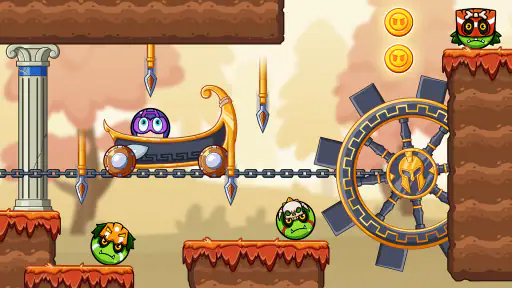

 Analysis by Frivlyz
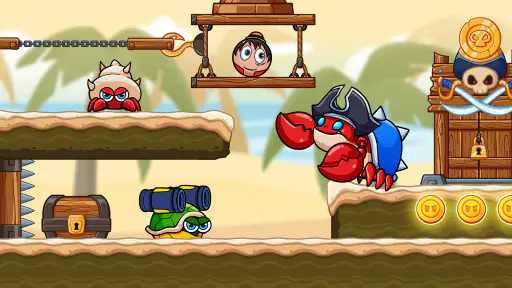
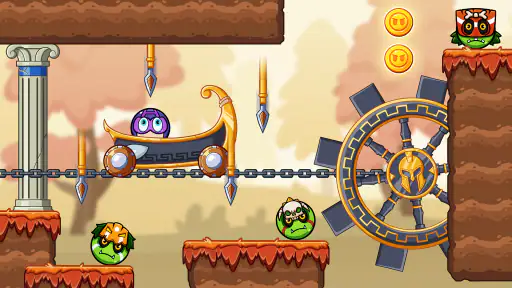
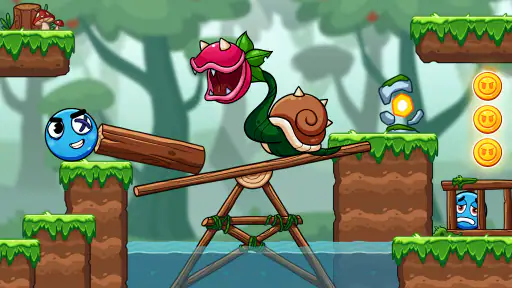
I went into Ball V - Red Boss Challenge expecting a simple rolling-ball game, and that is exactly where its appeal begins. You guide a ball through platforming stages, deal with hazards, and work toward saving the world and rescuing friends. The idea is easy to understand within seconds, but the useful question is whether the movement and challenge are satisfying enough to bring me back after a failed attempt. In my experience, the answer is yes, provided you enjoy short, hands-on adventure games rather than long story-driven journeys.
This is a free adventure game from MGIF, aimed at Everyone and available for devices running Android 7.0 or later. It has reached over ten million installs and holds a 4.4 average from around twenty-nine thousand ratings, which fits its broad, immediately accessible design. The game is not trying to replace a large console platformer. Instead, it turns familiar rolling and jumping ideas into compact challenges that are easy to start when I have a few spare minutes.
How the rolling-ball loop works in practice
I use this section to look beyond the basic roll-and-jump idea and focus on the practical sticking points: how to read a difficult approach, make a deliberate retry, and tell whether the problem is my timing or the way I’m playing. That distinction matters because a small adjustment can make a stage feel fairer, while repeating the same attempt without a plan usually does not.
The first action is simple, but control matters
The opening interaction is refreshingly direct: I move the ball across platforms and try to keep enough control to reach the next safe area. There is no long learning curve before the game becomes playable. That matters on a phone, because I can pick it up during a short break without first remembering a complicated control scheme or a large set of character abilities.
What makes the movement more interesting than it first appears is the relationship between speed and safety. Rolling quickly can help me clear a gap or escape a dangerous section, but momentum also makes small corrections harder. When I slow down, I gain time to judge the next platform, yet I may lose the smooth flow that makes a successful run feel good. That trade-off is the first real decision the game asks me to make.
I found it more useful to treat each platform as a landing problem instead of simply holding a direction and hoping for the best. Before committing to a jump or a narrow route, I try to identify where the ball will finish, not only where it will begin moving. This small change in approach reduces careless falls and makes the stages feel more deliberate. It is also one of the reasons the game can hold attention beyond its first few minutes.
Feedback arrives through movement, mistakes, and progress
The feedback rhythm is easy to read. A clean roll through a section tells me that my timing and direction were right, while a missed landing immediately shows that I approached the obstacle badly. I do not need a complex explanation after every mistake; the position of the ball and the result of my input usually make the problem obvious.
Gaming Stories You May Enjoy

Dancing Road Turns Short Breaks Into a Test of Rhythm and Timing

Super Stylist Makes Every Outfit a Test of Taste and Patience

Dominoes on Your Terms: Who Should Play and Who Should Pass

Pokémon GO Makes the Familiar World Feel New

Chess.com Turns Rematches Into Rivalries, but Community Has Its Costs

Archery Battle 3D Review: Sharp Aiming, Unclear Feedback
That clarity creates a useful action-and-response cycle. I try a route, see where control breaks down, adjust my timing, and attempt the same kind of movement again. The game’s challenge works best when I focus on one error at a time. If I rush after a failure, I tend to repeat the same mistake. If I pause briefly and change my approach, the next attempt often feels more controlled.
There is also a pleasant difference between a failure caused by poor judgement and one that feels unavoidable. The former gives me something practical to improve: a safer line, a later correction, or a better moment to commit. That sense of responsibility keeps the game from feeling like random punishment. Still, players who dislike repeating a section after a mistake may find the loop more frustrating than motivating.
Why the reward feels connected to the action
The main reward is not only reaching the end of a stage. It is the feeling of having converted a risky sequence into a reliable one. A route that looked awkward on the first attempt becomes manageable once I understand how the ball carries momentum and where I need to correct. The rescue-and-save-the-world theme gives that progress a clear purpose, while the immediate satisfaction comes from better play.
I recommend treating every successful section as information for the next one. If I reach a platform with too much speed, I know that the next attempt should begin its correction earlier. If I stop short, I can preserve more momentum. This makes the reward loop practical rather than decorative: each completed challenge teaches me how to handle the following attempt.
The game is especially suitable for people who enjoy small improvements. It does not need to overwhelm me with a large inventory or a complicated character build to make progress meaningful. The pleasure comes from learning the physical behavior of the ball and applying that knowledge under pressure. For younger players, the Everyone rating and simple premise make it approachable, although an adult may still need to help if repeated failures become discouraging.
What happens when a session resets
A failed run naturally resets the short-term goal. Instead of carrying on with a damaged attempt, I get another chance to approach the same kind of problem with better information. This is where the game’s design either works or fails for a player: the reset must feel like an invitation to improve, not a demand to repeat empty work.
For me, the reset is most effective when I can name the reason for restarting. I may have entered a platform too quickly, corrected too late, or chosen a risky line when a slower route was available. That makes the next session feel different even when the broad objective remains the same. A reset becomes annoying only when I restart automatically without thinking about what I will change.
A realistic use case is a short evening break after work or school. I can play one attempt while waiting for food, stop after a frustrating miss, and return later with a clearer plan. This is not the kind of game I would choose for a long, uninterrupted narrative session, but it fits neatly into spare moments because the central objective is always visible: move forward, survive the platforms, and continue the rescue.
Why another session begins
The reason to start again is the same reason many compact platformers remain enjoyable: the solution is close enough to imagine. After a failure, I usually know which part went wrong, and that knowledge creates a small promise that the next run can be better. The game does not need a dramatic story revelation to create that motivation. The immediate challenge supplies it.
This also explains who should skip it. If you want exploration with a large world, extended dialogue, or a deep progression system, this rolling-ball adventure may feel too focused. It is built around movement challenges, not around managing a party, collecting a huge range of equipment, or making story decisions. Players who prefer calm puzzle games may also find the momentum-based sections more demanding than expected.
On the other hand, it is a good match for anyone who wants an uncomplicated action game with a clear objective. I would recommend it to casual players who like platforming but do not want to learn a complicated control layout, and to experienced players who enjoy refining routes through repeated attempts. The strongest audience is somewhere between those groups: people who appreciate a game that starts simply but rewards attention.
Free access and the practical cost of continuing
The game is free to download, which makes trying the core experience straightforward. Optional in-app purchases range from $0.99 to $2.99 per item. I would approach those purchases as convenience choices rather than part of the reason to install the game. The important test is whether I enjoy the movement before spending anything. If the basic rolling and retry cycle does not feel good, an optional purchase will not fix that.
Because the game relies on repeated attempts, I would also avoid making a purchase during a frustrating moment. A failed run can create the urge to remove an obstacle immediately, but the more useful question is whether I understand what caused the failure. Waiting until I have played calmly gives me a better idea of whether any optional item would genuinely improve my experience or merely shorten the learning process.
Device compatibility is another practical point. The current version is 1.7.8, and the game supports Android 7.0 and later. That gives it a relatively broad reach, especially for people using older Android hardware. Even so, I would keep expectations realistic on a smaller or less responsive phone: precise rolling games depend heavily on comfortable touch input, so screen size and responsiveness can affect how fair the controls feel.
How it compares with familiar alternatives
Compared with endless runners, this game gives me a stronger sense of planned movement. I am not simply reacting to an endlessly advancing track; I am trying to understand a platforming route and improve my handling of the ball. Compared with traditional side-scrolling adventures, it feels more focused because the ball itself is the central tool, challenge, and source of momentum.
It is also less demanding than a large adventure game in terms of commitment. I do not need to remember a broad map or return after a long story break to understand what I am doing. The trade-off is variety. A bigger platformer may offer more character abilities, richer environments, or a wider range of ways to solve a problem. Here, the appeal depends on whether the rolling movement stays enjoyable as the challenges ask for more care.
Against ordinary casual puzzles, the difference is physical feedback. The answer is not only a pattern or a correct selection; it is a sequence of movement decisions. That makes success more active and mistakes more personal. If I want something I can play with almost no concentration, a very simple puzzle may be a better choice. If I want a quick game that asks me to react and adjust, this one has a clearer advantage.
Small habits that make the game more enjoyable
My first useful habit is to separate observation from movement. I look at the next landing area before accelerating, especially when the route narrows. This prevents the common mistake of treating every section as a race. A slower opening often produces a faster successful run because I spend less time recovering from a bad angle.
My second tip is to use failed attempts as controlled experiments. I change one thing at a time: the point where I begin steering, the amount of momentum I carry, or the route I choose around a hazard. Changing everything at once makes it difficult to know what worked. This approach turns repetition into learning rather than simple grinding.
My third tip is to stop after a few unfocused failures. When I am tapping impatiently, I tend to blame the stage instead of my timing. A short break resets my attention, and the next attempt often feels easier without any change to the game. This is particularly important for younger players, because the same reset loop that motivates improvement can become tiring if there is no pause.
I also recommend playing with a clear session goal. Instead of deciding to “play until I win,” I might aim to understand one difficult transition or complete one clean section. That keeps the reward close and prevents a short game from turning into an unnecessarily long struggle. It is a small change, but it makes the action, feedback, reward, and reset cycle feel much more satisfying.
My verdict on the complete loop
The best part of the game is the tight connection between what I do and what I learn. I roll, make a judgement, receive immediate feedback, and decide whether the next attempt deserves a different approach. When that process works, the reason to begin another session is clear: I am not merely repeating the level; I am testing a better version of my own timing.
There are limits. The focused concept will not satisfy players looking for a large adventure, and repeated resets can feel tiring when I play without patience. The optional purchases also mean that anyone sensitive to in-app spending should decide in advance whether they want to keep the experience entirely free. Those are reasonable cautions, not reasons to dismiss the game.
For me, MGIF has made a compact adventure that is easy to understand and more engaging than its short description suggests. The free entry point, Everyone rating, broad Android support, and straightforward controls make it approachable, while the rolling physics give attentive players something to practise. I would recommend it to a friend who wants a quick platforming challenge with a rescue theme and a clear retry loop. I would skip it only if that friend wanted deep exploration, a long story, or a game that never asks them to repeat a difficult movement.
After playing, my final recommendation is simple: try a few stages without thinking about purchases or perfect results. Pay attention to how the ball responds, identify one mistake after each failed run, and see whether improving that movement feels rewarding. If it does, Ball V - Red Boss Challenge has enough immediate challenge to earn regular short sessions. If it does not, a more relaxed puzzle game or a broader platforming adventure will probably suit you better.
Ball V - Red Boss Challenge Pros and Cons
Pros
- Simple one-touch controls make the game easy to pick up.
- Short levels are convenient for quick gaming sessions.
- Increasing difficulty keeps the challenge engaging over time.
- Bright visuals make obstacles and targets easy to recognize.
- Offline play lets you enjoy it without a data connection.
Cons
- Repeated attempts can feel frustrating when progress depends on precision.
- Limited gameplay variety may reduce long-term appeal.
- Ad interruptions can disrupt the flow between attempts.
- Some levels may feel difficult without clear guidance.
- Performance may vary on older or lower-end devices.
Frequently Asked Questions
What is Ball V - Red Boss Challenge?
Ball V - Red Boss Challenge is a reflex-based arcade game centered on controlling a bouncing ball through challenging obstacle courses. The main objective is to guide the ball safely, avoid traps, collect useful items, and reach the end of each stage. Its boss-focused challenges add tougher encounters that require timing, patience, and quick reactions rather than complicated controls.
How do you play Ball V - Red Boss Challenge?
The gameplay is designed to be easy to understand, although later levels can become demanding. Players generally control the ball with simple touch or directional inputs, timing movements to jump over hazards and avoid dangerous objects. Success depends on learning the rhythm of each section, reacting quickly to changes, and repeating difficult areas until the correct route and timing become familiar.
Is Ball V - Red Boss Challenge suitable for children?
The game may be suitable for children who enjoy platforming and fast arcade challenges, since its basic controls are straightforward and the objective is easy to understand. However, some levels and boss encounters can be frustrating because they require repeated attempts and precise timing. Parents should also review the app’s current advertising, privacy, and in-app purchase information before installation.
Does Ball V - Red Boss Challenge work offline?
Ball V - Red Boss Challenge may be playable without a constant internet connection if its core levels are stored locally on the device. Offline availability can vary depending on the version, advertisements, updates, or optional online features. For the most reliable experience, launch the game once while connected, then test its main gameplay in airplane mode before relying on it offline.
Is Ball V - Red Boss Challenge free to download?
The game can generally be downloaded at no initial cost when offered as a free mobile title, but the exact business model may include advertisements, optional purchases, or other limitations. Before downloading, check the official Google Play or App Store listing for current pricing and permissions. Also review whether purchases are required to remove ads or progress more comfortably.


