

Ball Run 2048: merge number
- Reviews
- 4.2
- Version
- 0.8.2
- Installs
- 100,000,000+

Screenshots
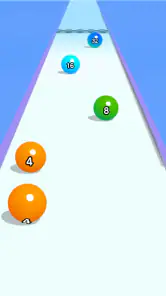
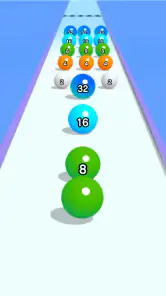
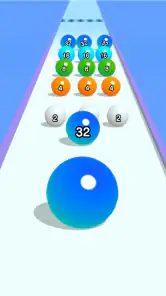

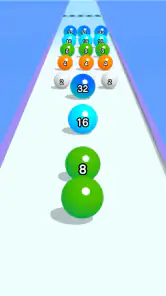
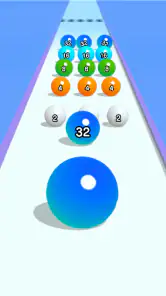
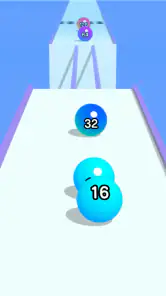
 Analysis by Frivlyz
I like the central idea in Ball Run 2048: it turns number merging into a decision you make while moving through a course, rather than a quiet puzzle you can study at your own pace. That change gives each choice a little urgency. I have to watch the numbers and the route together, so the appeal is less about calculating a perfect sequence and more about staying alert while shaping a run. It suits a quick casual session, especially when I want something more involved than simply tapping through a score screen.
Why merging while moving changes the puzzle
In a traditional 2048-style game, the board stays still while I plan a move. Here, the ball is in motion and the numbers I collect affect the value I carry forward. That makes the puzzle feel physical: I’m not only asking which number would be useful, but whether I can reach it without losing control of the route. The same basic goal becomes a mix of timing, observation and quick adjustment.
That difference is the game’s strongest idea, but it also defines its limits. Players who love taking their time over a grid may find the moving course less comfortable, because there is less room to pause and reconsider. I enjoy the format most when I treat each attempt as a short chain of choices rather than expect a fully planned solution. The number puzzle is at its best when I stay flexible instead of chasing a perfect run.
Our Stories on Ball Run 2048: merge number
Project Makeover: The Game Revolutionizing Mobile Fashion and Puzzles
NewsDancing Road Turns Short Breaks Into a Test of Rhythm and Timing
NewsSuper Stylist Makes Every Outfit a Test of Taste and Patience
NewsDominoes on Your Terms: Who Should Play and Who Should Pass
NewsPokémon GO Makes the Familiar World Feel New
NewsChess.com Turns Rematches Into Rivalries, but Community Has Its Costs
NewsGameplay and Mechanics
At its core, Ball Run 2048 is about merging numbers, but instead of swiping tiles on a grid, you’re controlling a ball that collects numbers along its path. Each number you collect adds to your ball, and your goal is to reach the magic number: 2048. The game offers a simple yet challenging mechanic that requires you to think quickly and act faster.
As your ball rolls down the track, you have to dodge obstacles and navigate through tight corners, all while trying to merge numbered balls. It’s not just about speed; it requires strategic thinking to make the right merges at the right time. Trust me, it’s easier said than done, especially when the track starts to get crowded with obstacles!
How to make each run more deliberate
A useful way to approach a run is to look beyond the nearest number. Before steering toward a pickup, I try to notice what the course is asking me to avoid and whether the number is worth the risk of changing direction. A tempting value can be a poor choice if it sends the ball toward an obstacle or leaves little room to correct course. That small pause in attention—scanning ahead rather than reacting only to what is directly in front—makes the merging feel less random.
I also find it helpful to separate two kinds of decisions: protecting the run and building the number. When the path gets crowded, staying clear of trouble matters more than making an ambitious collection. On a more open stretch, I can focus on adding value. This isn’t a complicated strategy system; it is simply a way to avoid treating every visible number as an automatic target. It makes the game easier to read, though it cannot remove the pressure of steering and choosing at the same time.
Gaming Stories You May Enjoy

Archery Battle 3D Review: Sharp Aiming, Unclear Feedback

Should You Switch to Geometry Dash Meltdown? A Test of Timing and Patience

Fidget Toys Trading・Pop It 3D: What Happens When the Game Stumbles
NBA LIVE Mobile Makes the Season the Main Event

Sonic Forces: PvP Battle Race - Speed and Strategy Combined

Unlocking the Secrets of Piano Game: Classic Music Song
That trade-off explains why the controls and the puzzle are so tightly linked. A choice that looks mathematically attractive can still be awkward to execute while moving. If I make a late correction, I may compromise the route; if I commit too early, I may miss a better opportunity. Players who enjoy this kind of immediate feedback will likely find the tension satisfying. Those who prefer puzzles where every move can be reviewed calmly may prefer a conventional number-merging game.
Graphics and Sound
Visually, the game is quite pleasing. The colors are vibrant, and the animations are smooth, which makes the experience visually satisfying. The sound design complements the gameplay perfectly, with upbeat tunes that keep you engaged without being too distracting. The sound effects for merging balls are particularly satisfying, adding a rewarding audio cue to every successful merge.
The clear visual feedback matters here for more than appearance. Because I’m tracking a moving ball, the numbered objects and obstacles need to register quickly. Bright colors and smooth movement help me understand what is happening without making the screen feel like a spreadsheet of values. The merging sound also gives a quick sense that a collection worked, which is useful when my attention is divided between the ball and the course.
For a casual game, that presentation makes it easy to settle into a short session without needing to learn a complicated interface. At the same time, anyone who prefers a quiet, minimal puzzle may find the motion and upbeat audio busier than necessary. I’d lower or mute sound when playing somewhere that calls for concentration or silence; the visual decisions remain the main point, and the sound is pleasant rather than essential to understanding the run.
When it fits into an ordinary day
This is the kind of game I would open while waiting for a bus, taking a short break, or sitting down for a few minutes between chores. A run gives that spare time a clear focus: watch the track, decide which numbers to collect, and see how far the ball can progress. It does not ask me to remember a long story or manage a complicated setup before I can play, so it works well when I have only a little attention to spare.
There is a practical catch to that convenience. A quick game can turn into repeated attempts if I keep wanting to improve the result, so I would not choose it when I need to stop at a precise moment or keep my attention on something else. It is better as a deliberate break than as background entertainment while working, walking, or doing anything that needs focus. The movement is simple to understand, but the obstacle-dodging still rewards looking at the screen.
Levels and Challenges
The game doesn’t just stop at reaching 2048. It offers a variety of levels, each with unique challenges that ramp up the difficulty. This keeps the gameplay fresh and ensures you’re always on your toes. Some levels introduce new obstacles or power-ups that can either help or hinder your progress, adding an extra layer of depth to the game.
That changing challenge gives returning players a reason to adjust rather than rely on one fixed route. A level that adds an obstacle asks me to reconsider when to collect and when to prioritize a safe line. The important skill is not memorizing a single sequence, but noticing what has changed and adapting. I would keep expectations grounded, though: the core pleasure remains steering and merging, so players looking for a deep campaign or a broad set of puzzle rules may find the structure comparatively focused.
One small but useful habit is to judge a level by its pressure points instead of trying to master the whole course at once. I pay attention to the sections where the route narrows or the obstacles bunch up, then try to enter them with enough control to respond. That approach is more useful than blindly collecting every number early. It also makes a failed run easier to learn from: I can identify whether I misread the path or simply took an unnecessary risk.
I found myself getting hooked on trying to beat my previous scores and completing all the levels. The leaderboard feature is a nice touch, allowing you to compete with friends or players globally. It adds a competitive edge to the game, making it even more engaging.
How it compares with other casual choices
Compared with the usual static 2048 puzzle, this game trades leisurely planning for movement and quick reactions. I would choose the grid version when I want to think several moves ahead, replay a position in my head, or play at a slower pace. I would choose this one when I want the numbers to be part of an active run and I’m happy to make decisions under mild pressure. Neither style replaces the other; they satisfy different moods even though both revolve around combining values.
It also differs from a straightforward endless runner. The course and obstacles give it that arcade-like urgency, but collecting numbers is not just a side objective: it is the reason to steer and the measure of progress toward the target. If I want pure reflex action, a runner with no number puzzle may feel cleaner. If I want a number game with room for careful calculation, a grid-based alternative is a better fit. This sits between them, and that blend is exactly what makes it distinctive—and what may not work for everyone.
Who will enjoy the format—and who may not
I’d recommend it to people who like simple rules with a little pressure, enjoy trying to improve a previous attempt, or want a casual game that combines visual steering with number recognition. It can also suit someone who already knows the familiar 2048 idea but wants a more active version rather than another board to swipe. The basic goal is easy to grasp, while the course gives experienced players room to refine their choices.
I would steer away from it if you dislike controlling a moving object, find obstacles frustrating, or want a puzzle that lets you stop and reason for as long as you like. It is also not my first pick for someone seeking a long narrative, a realistic simulation, or a highly varied set of mechanics. The game’s identity is deliberately narrow: merge numbers while negotiating a course. That focus is a strength if it matches your mood and a limitation if you need more variety.
Practical details before you install
Ball Run 2048 is a free casual game from KAYAC Inc. It has an average rating of 4.2 from around 239,000 ratings, with roughly 2,800 written reviews and over 100 million installs. Those figures suggest that the simple premise has reached a broad audience, but popularity alone does not mean the moving-puzzle format will suit your habits. I’d judge it by whether you enjoy steering and number choices happening together.
The game is rated Teen, runs on Android 6.0 or later, and its current version is 0.8.2. It was released on March 11, 2021. For someone deciding whether to try it, the key question is less about learning a complicated ruleset and more about enjoying a screen that asks for attention while the ball is moving. If that sounds appealing, the free entry point makes it straightforward to test whether the pace works for you.
One question people often have about a game built around reaching 2048 is whether every run depends on exact calculation. I don’t think that is the right way to approach this one. The route and obstacles make situational judgment more useful than trying to calculate a perfect sequence from the start. Another reasonable question is whether it works for very short breaks: its direct premise does, although the urge to retry can stretch a pause longer than intended.
It is also worth considering whether it is a good choice for children. The Teen content rating is the guide I would use rather than assuming that a colorful, casual presentation makes it suitable for every age. And if you are choosing between this and another number puzzle, ask yourself whether you want to react to a course or think over a stationary board. That distinction is more important than the shared 2048-style target.
Final Thoughts
Overall, Ball Run 2048 is a fantastic twist on the classic 2048 game. It combines the best elements of puzzle and arcade games into a fun and addictive package. Whether you’re a fan of the original 2048 or just looking for a new game to pass the time, this one is definitely worth a try. Just a heads up: it’s incredibly addictive, so be prepared to lose track of time as you try to reach that elusive 2048!
Ball Run 2048: merge number Pros and Cons
Pros
- Engaging gameplay with simple controls.
- Attractive graphics and smooth animations.
- Suitable for all age groups.
- Frequent updates with new levels.
- Offline play available.
Cons
- Contains in-app purchases.
- Advertisements can be intrusive.
- May become repetitive over time.
- Limited customization options.
- Battery drains quickly during play.
This Game in Other Languages
Frequently Asked Questions
What is Ball Run 2048: Merge Number and how does it work?
Ball Run 2048: Merge Number is a dynamic and engaging puzzle game available for Android and iOS devices. The game’s primary objective is to control and merge numbered balls to reach the ultimate goal of 2048. Users navigate through various levels filled with obstacles and challenges while strategically merging balls to score high. The game combines elements of strategy and quick reflexes, making it both entertaining and mentally stimulating.
Is Ball Run 2048: Merge Number free to play?
Yes, Ball Run 2048: Merge Number is free to download and play. However, like many mobile games, it offers in-app purchases. These purchases can enhance the gaming experience by providing additional features, such as new skins, power-ups, or ad-free gameplay. Players can enjoy the core game without spending money, but optional purchases are available for those looking to support the developers or enhance their experience.
What are the system requirements for Ball Run 2048: Merge Number?
Ball Run 2048: Merge Number is designed to run on most modern smartphones and tablets. For Android users, the game requires a device running Android 5.0 or higher, while iOS users need a device with iOS 10.0 or later. The game is optimized for smooth performance on devices with decent processing power and adequate RAM. It’s recommended to have a stable internet connection for downloading and updating the game.
Are there any social features in Ball Run 2048: Merge Number?
Yes, Ball Run 2048: Merge Number includes several social features that enhance the gaming experience. Players can connect their game to social media platforms to share their progress, compete with friends, and participate in leaderboards. This competitive aspect adds an extra layer of fun, as players can challenge each other and strive to rank higher on the global scoreboard. Engaging with these features is optional but can significantly enhance the enjoyment of the game.
What kind of updates and support can players expect for Ball Run 2048: Merge Number?
The developers of Ball Run 2048: Merge Number are committed to providing regular updates to improve the game and fix any issues. Players can expect periodic updates that may include new levels, features, and improvements based on user feedback. The game also offers customer support, allowing players to report bugs or seek assistance directly from the support team. This ensures a smooth and enjoyable gaming experience for all players.


