

Baby Panda: Dental Care
- Reviews
- 4.2
- Version
- 8.70.00.01
- Installs
- 10,000,000+

Screenshots
 Analysis by Frivlyz
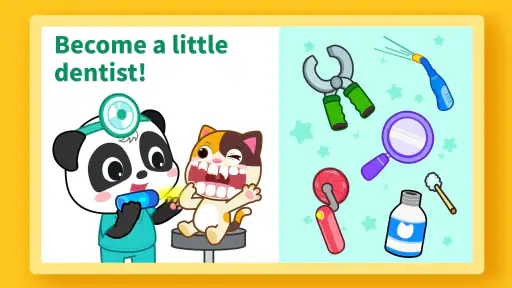
I like children’s learning games best when they give a parent something useful to talk about after the screen goes dark. Baby Panda: Dental Care turns a pretend dental visit into a playful way to introduce tooth care, with children taking the role of the dentist rather than just watching an explanation. That change of perspective can make brushing and checkups feel less mysterious, especially for a child who is curious about what happens at a dental clinic.
What the free entry point means
The game is free to download, so a family can try its basic experience without paying upfront. There are in-app purchases priced at $2.49 per item, which is worth knowing before handing a device to a child. I would check the purchase settings on the device first and explain that optional purchases require an adult’s permission. That small bit of preparation makes the free starting point easier to enjoy without an unexpected checkout becoming part of playtime.
BabyBus made this educational game for a young audience, and its Everyone age rating reflects that broad family-facing positioning. It has been available since April 27, 2020, and version 8.70.00.01 is the current version. The game runs on Android 5.0 or later. Those details are practical when deciding whether an older tablet can be used for a child’s quiet-time activity, though compatibility alone does not tell you how it will feel on a particular device.
Where the learning earns its screen time
The central value is not that a game can replace brushing with a real toothbrush; it cannot. Its more realistic job is to give a child familiar words and a simple mental picture of dental care. When a child has questions about a cleaning or a cavity, pretend play can offer an easy opening for a conversation. I would use it as a companion to a parent-led routine, not as a lesson that is expected to create lasting habits on its own.
That distinction matters because screen interactions and real hygiene are different skills. A child may enjoy acting out a dentist’s work without being ready to brush independently or follow a complete routine. After playing, I’d connect the theme to a real moment: let the child choose the toothbrush, demonstrate gentle brushing, and ask what the pretend patient needed. Keeping that conversation short and concrete is more likely to help than treating the game as a substitute for guidance.
Play, value, and the right fit
As a game in the educational category, it sits between a storybook about visiting the dentist and a more open-ended pretend-play toy. A book can be calmer and easier to share aloud, while a toy clinic may give a child more freedom to invent stories away from a screen. This game’s appeal is the combination of an interactive role and a focused dental theme. For a child who learns by tapping, trying, and repeating, that can be a useful middle ground.
Small ways to make a session more useful
I would start by playing alongside the child for a few minutes instead of immediately leaving them to explore alone. Ask them to describe what they think the pretend patient needs, then let them make choices in the game. This turns the session into a conversation rather than passive screen time. It also gives a parent a chance to notice whether the child understands the dental theme or is mainly enjoying the colors and character.
Gaming Stories You May Enjoy

Dancing Road Turns Short Breaks Into a Test of Rhythm and Timing

Super Stylist Makes Every Outfit a Test of Taste and Patience

Dominoes on Your Terms: Who Should Play and Who Should Pass

Pokémon GO Makes the Familiar World Feel New

Chess.com Turns Rematches Into Rivalries, but Community Has Its Costs

Archery Battle 3D Review: Sharp Aiming, Unclear Feedback
A second helpful approach is to link play to a specific everyday event, rather than launching the game whenever a child resists brushing. For example, after dinner, a parent could offer a short game session and then move together to the bathroom for the actual brushing routine. The game can make the subject feel familiar, but the adult still models what to do and helps the child finish. I would avoid presenting access to the game as a reward for brushing, since that can turn a health routine into a negotiation.
It can also be useful to let a child narrate the pretend dental visit. Asking what the animal patient might be feeling or why a tooth needs attention invites empathy and gives the adult a chance to correct misunderstandings gently. This is a better use of the game’s role-play premise than simply trying to complete activities quickly. If the child is already confident about dental visits, that conversation may be less valuable; the appeal then is more about light play than reassurance or preparation.
Tradeoffs parents should weigh
The focused theme is both a strength and a limit. A child who is fascinated by dentists may return to it, while a child looking for a broad mix of puzzles, stories, or creative activities may lose interest once the dental novelty wears off. I would not choose it as the only educational game on a device, and I would not expect it to teach every part of oral care. It works best as a small, topic-specific activity within a wider mix of books, conversation, and hands-on routines.
The free download lowers the barrier to trying it, but the presence of item-priced purchases means an adult should stay involved with device settings and purchasing access. That is not a reason to avoid the game; it is a reminder that “free to start” and “nothing can ever cost money” are not the same promise. I’d also set a clear stopping point before the child begins, especially if they tend to ask for more screen time. A simple transition plan can prevent a pleasant activity from ending in a dispute.
Another tradeoff is that a playful dental scenario should not be mistaken for health advice tailored to a child. If a child is worried about pain, has a real dental concern, or needs care, a game is not the right place to look for an answer. I would use it to make the subject approachable, then rely on a parent, dentist, or appropriate professional guidance for actual concerns. That boundary keeps the game’s educational role in perspective.
Who is likely to get the most from it?
I can see it suiting preschool and early-school-age children who enjoy pretend roles and respond well to friendly characters. It may be especially handy before a first dental visit, during a quiet stretch at home, or when a child has started asking how teeth are cleaned. A parent can use the play as a low-pressure way to introduce the idea of caring for teeth, without making a real appointment sound like a frightening event.
It is less suitable for families looking for a detailed brushing coach, a comprehensive dental curriculum, or a replacement for supervised hygiene. Children who do not enjoy touch-based mini-games or who prefer physical toys may get more from a picture book, a toy dentist set, or simply helping an adult with a real toothbrush routine. If the goal is to reduce screen use, there is no need to add another app: a short conversation and a hands-on demonstration may be the better choice.
The game’s broad reach suggests that many families have tried it: it has more than 10 million installs, with an average rating of 4.2 from around 27,000 ratings. I treat those figures as context rather than a guarantee that every child will enjoy it. Children differ in how long they stay interested and what kind of play feels rewarding, so a brief supervised trial is a better test than assuming popularity means a perfect fit.
My practical verdict
For a family that wants a free-to-start, child-friendly way to introduce dental role-play, I think this is worth trying, provided an adult manages purchase access and keeps expectations realistic. The strongest value is as a conversation starter: it can make dental care less abstract and give a child a playful role in the topic. Its value is weaker if you need a full oral-care guide, a screen-free activity, or a tool that will independently build brushing habits.
I’d try it during a calm moment, sit nearby at first, and see whether the child naturally talks about the pretend patients and their teeth. If the game sparks questions, carry those into the next brushing session or an upcoming appointment. If it does not hold their attention, switching to a story or hands-on pretend play is a sensible choice rather than a failure. BabyBus has made an approachable educational game, but the best results come when a parent supplies the real-world routine around it.
When I first opened Baby Panda: Dental Care, I was greeted by an adorable panda character that made me smile instantly. The game is all about interactive learning, and it does a fantastic job of blending entertainment with education. The vibrant colors and friendly animations are perfect for capturing a child’s attention, making the whole experience feel more like playtime than a chore.
Interactive Learning
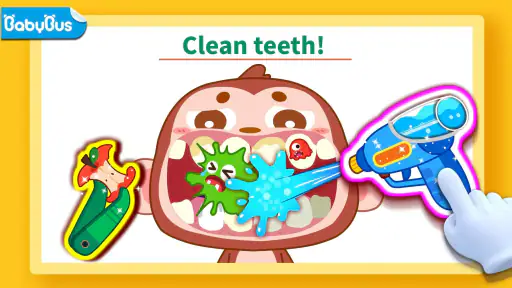
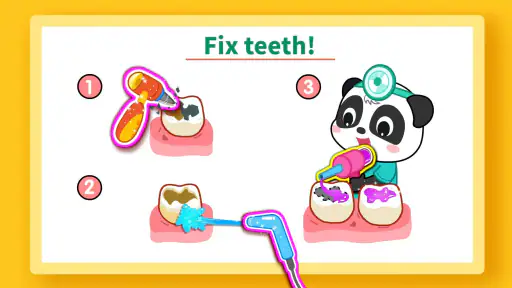
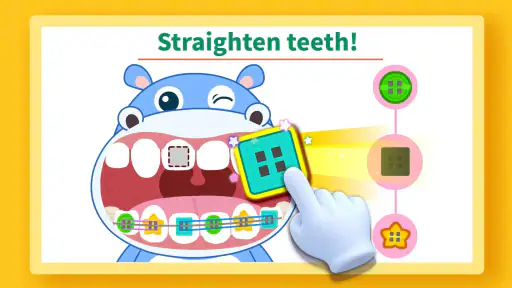
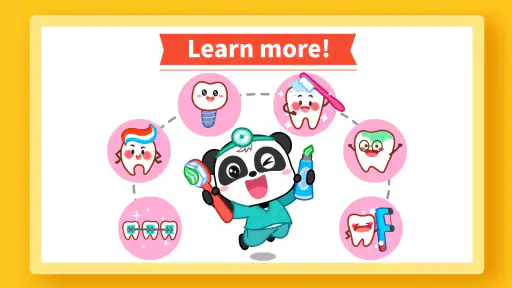
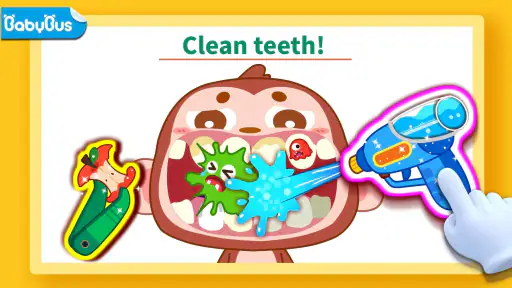
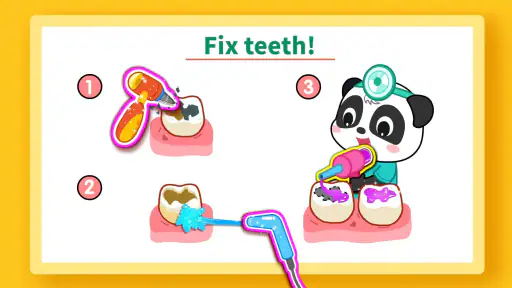
What sets this game apart is its interactive approach. Kids get to role-play as a dentist, treating various animal patients with different dental issues. From cleaning teeth to treating cavities, each task is designed to educate kids on the importance of oral hygiene. I found myself getting sucked into the tasks, which are presented as mini-games, keeping the engagement level high.
The game cleverly uses these mini-games to instill good habits. For example, kids learn the proper way to brush teeth by guiding the toothbrush in circular motions. It’s these small but effective details that make the learning process both fun and memorable.
Engagement and Rewards
Another aspect I loved about the game is the reward system. Kids earn stickers for completing tasks, which they can then use to decorate their own virtual dental clinic. This feature adds a layer of motivation, encouraging kids to keep playing and learning. It’s a smart way to reinforce positive behavior without feeling like an educational drill.
Parental Controls and Safety
For parents, Baby Panda: Dental Care offers peace of mind with its robust parental controls. You can set playtime limits and control in-app purchases, ensuring that your child’s screen time is both safe and controlled. The game is also ad-free, which is a huge plus in my book. Knowing that the game prioritizes safety allows me to let kids explore independently.
Overall, Baby Panda: Dental Care is not just a game; it’s a tool that turns learning about dental hygiene into an exciting adventure. It’s a must-have for parents looking to instill good dental habits in a fun and engaging way. So, if you’re on the lookout for an educational game that your kids will actually want to use, give this one a try. Trust me, it’s a smile-maker!
Baby Panda: Dental Care Pros and Cons
Pros
- Engaging for kids with colorful graphics.
- Simple and easy-to-understand interface.
- Educational content on dental care.
- Promotes healthy habits early on.
- In-game rewards keep kids motivated.
Cons
- Limited levels can lead to quick boredom.
- Repetitive gameplay may not engage older kids.
- Requires in-app purchases for full content.
- Ads can disrupt the gameplay experience.
- Some features need internet to function.
Frequently Asked Questions
What is the main objective of Baby Panda: Dental Care?
Baby Panda: Dental Care aims to educate children about the importance of dental hygiene through interactive gameplay. The app engages kids with fun activities like brushing teeth, fighting tooth decay, and learning about oral health care routines, making it an entertaining and educational tool for parents and educators alike.
Is Baby Panda: Dental Care suitable for all age groups?
Baby Panda: Dental Care is primarily designed for young children, typically those in the preschool age group, ranging from 3 to 6 years old. The app’s colorful graphics, simple controls, and engaging storyline make it ideal for this age group. However, older children might also enjoy the app if they are interested in learning about dental care.
Does Baby Panda: Dental Care require in-app purchases?
While Baby Panda: Dental Care offers a range of free features and activities, it does include optional in-app purchases. These purchases can unlock additional content, such as new levels or characters, enhancing the overall experience. Parents can choose to disable in-app purchases through their device settings to prevent accidental purchases by children.
Is Baby Panda: Dental Care available for both Android and iOS platforms?
Yes, Baby Panda: Dental Care is available for download on both Android and iOS devices. Users can find the app on Google Play Store for Android devices and the Apple App Store for iOS devices, allowing a wide range of users to enjoy the educational benefits of the app regardless of their preferred platform.
Can parents track their child's progress in Baby Panda: Dental Care?
Currently, Baby Panda: Dental Care does not offer built-in tracking features for parents to monitor their child's progress. However, parents can engage with their children by playing together and discussing the activities, thereby gaining insights into their child's understanding and interest in dental hygiene.


