

Baba Is You
- Reviews
- 4.7
- Version
- 536.0
- Installs
- 50,000+

Screenshots
 Analysis by Frivlyz
Some puzzle games ask you to find the right move inside a fixed set of rules. Baba Is You asks you to question the rules themselves. That distinction gives this unusual game its spark: I’m not just steering a character through obstacles, but rearranging words on the board to change what the world allows. It can make a familiar-looking room feel like a small logic experiment, and a solution feel earned rather than guessed.
That idea comes from Hempuli, and it remains the clearest reason to try the game. It is a single-player puzzle experience for people who enjoy testing assumptions, not a reflex challenge or a breezy match-three diversion. The Everyone age rating makes it broadly approachable, but the thinking can become demanding. I’d recommend it most to players who like pausing over a problem and turning it around in their heads; anyone seeking constant action may find its deliberate pace hard to love.
The Concept That Hooks You
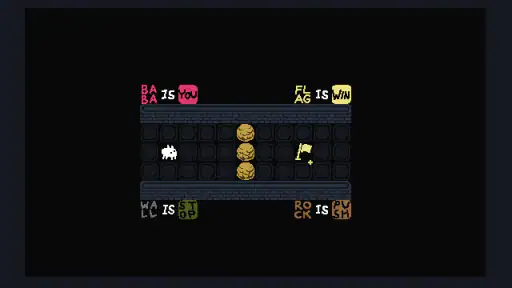
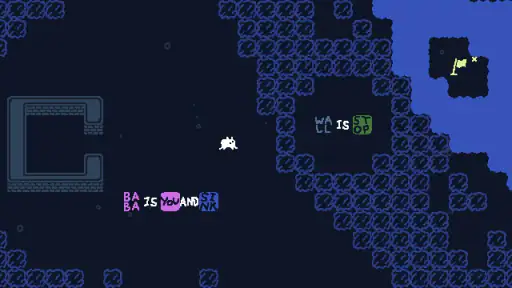
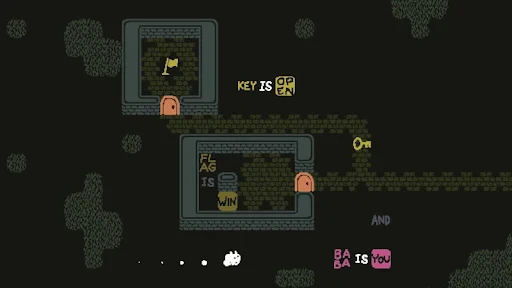
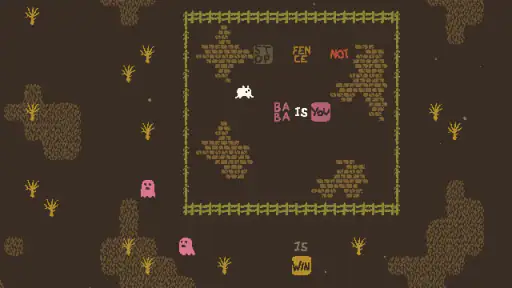
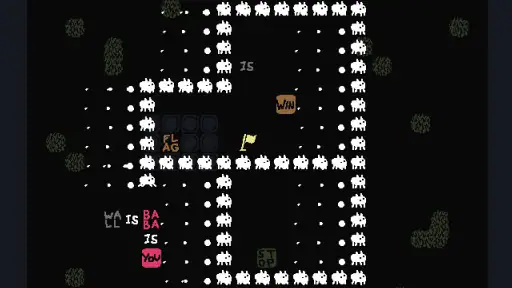
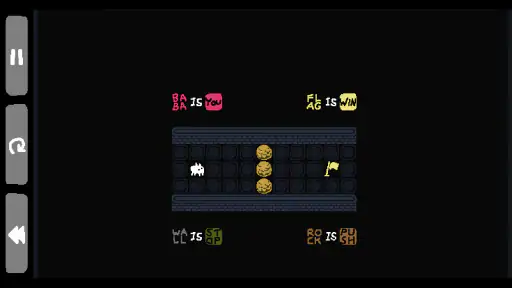
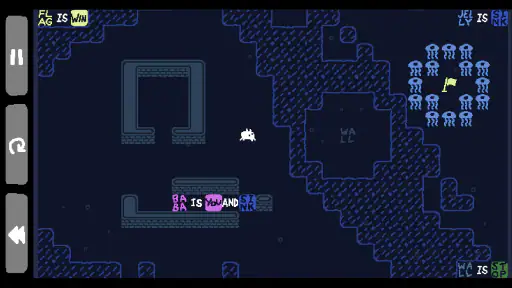
So, here’s the deal with Baba Is You. It’s not just your run-of-the-mill puzzle game. The whole premise revolves around manipulating the rules of the game itself to solve puzzles. Sounds wild, right? You’re given control over the game’s logic by moving around blocks of text that represent the rules. For example, if you see “Baba Is You” on the screen, you’re controlling Baba. But change that to “Rock Is You,” and suddenly you’re in charge of a rock! It’s like being the game master in your own little world.
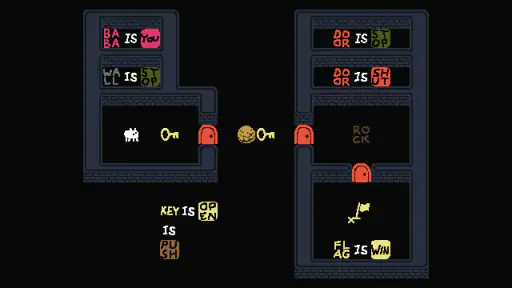
The difference between changing a rule and simply moving a character is more than a clever gimmick. A line of text acts like a working instruction, so shifting one word can reshape the puzzle’s conditions. A wall might stop being an obstacle if its defining rule changes; a goal might become reachable through an unexpected chain of edits. This makes careful reading part of the play. Before pushing anything, I try to identify which words are movable, which rules are currently active, and what would actually change if I disturbed them.
A useful habit is to treat each board as a small set of hypotheses. I’ll make one deliberate change, observe the result, then reconsider instead of shuffling words at random. Since experimenting is part of the design, a failed idea can still teach me how the board’s logic behaves. The trade-off is that the game asks for patience: when I overlook a word or misunderstand a rule, the answer can seem arbitrary until I slow down and inspect the layout again.
For a realistic short-session scenario, imagine opening the game during a quiet break and finding a board that appears blocked. Rather than trying every possible movement, I’d scan the text for a rule that can be altered, test one change, and stop when I reach a natural point of uncertainty. That approach makes the game easier to fit around a busy day without turning it into a mindless time-killer. Some puzzles will still occupy more than a brief pause, so it suits breaks best when you’re comfortable leaving a problem unfinished and returning with fresh eyes.
Gameplay That Makes You Think
The gameplay is essentially about thinking outside the box. Each level presents you with a problem that seems impossible at first, but by rearranging the rule blocks, you can find creative solutions. The satisfaction of seeing “Flag Is Win” and making it come true is just phenomenal. The game starts off simple enough but ramps up in complexity as you progress, introducing new elements and mechanics that keep you on your toes.
Gaming Stories You May Enjoy

Dancing Road Turns Short Breaks Into a Test of Rhythm and Timing

Super Stylist Makes Every Outfit a Test of Taste and Patience

Dominoes on Your Terms: Who Should Play and Who Should Pass

Pokémon GO Makes the Familiar World Feel New

Chess.com Turns Rematches Into Rivalries, but Community Has Its Costs

Archery Battle 3D Review: Sharp Aiming, Unclear Feedback
What makes the challenge distinctive is the way it rewards a change of perspective more than quick execution. If I feel stuck, I try asking a narrower question: what rule is preventing progress, and can I change that rule without breaking something I still need? Sometimes the useful move is not to create a new path but to alter what counts as a wall, a goal, or the player. That is a more productive workflow than pushing every text block just to see what happens.
There is also a real difference between an elegant solution and a merely possible one. Finding a route that works can be satisfying, but the route may depend on noticing a single word that I initially treated as scenery. I recommend taking a moment to read the whole board before moving, especially after a new rule appears. That small pause helps distinguish a puzzle’s actual constraints from assumptions carried over from more conventional games.
Compared with the usual puzzle-game alternatives, this is not primarily about matching patterns, managing a timer, or following a sequence of increasingly tricky spatial moves. Its central pleasure is rewriting the puzzle’s logic. That makes it a strong choice for players who want novelty and conceptual problem-solving, while a traditional block-pushing game may be a better fit for someone who prefers stable rules and a clearer path from action to result. Here, an apparently simple move can have consequences beyond the square it touches, so it rewards deliberate play more than speed.
Experimentation is welcoming, but it does not make every moment effortless. A player can create a rule that changes the situation in a way they did not intend, then need to work out how to recover or rethink the approach. The freedom can feel exhilarating when a surprising idea works; it can feel like a maze of possibilities when several words seem equally promising. If you enjoy open-ended reasoning, that ambiguity is part of the appeal. If you want every puzzle to signal its intended trick, it may frustrate you.
It is worth asking whether this is a good choice for a first puzzle game. I think it can be, provided the player enjoys reading instructions and is willing to learn by testing ideas. Its premise is easy to grasp, but the later demand is not simply “more of the same”; it asks you to think flexibly about the rules you have already learned. For a younger player, the age rating is Everyone, yet a patient adult nearby may help turn a confusing board into a useful conversation about cause and effect rather than supplying the answer outright.
Aesthetic and Sound
Visually, Baba Is You sports a charming, minimalist design that complements its innovative gameplay. The graphics are simple but effective, with a retro charm that feels both nostalgic and fresh. The soundtrack, too, is a delightful companion to your puzzle-solving escapades, offering tunes that are soothing yet engaging enough to keep you focused.
The uncluttered look helps the words stay central, which matters because reading the board is part of solving it. The presentation is distinctive without competing with the logic for attention. Still, minimalism is not the same as instant clarity: when I’m tired or rushing, I can miss a relevant word precisely because I’m scanning for a route rather than studying the rule arrangement. It rewards giving the screen a careful look, not treating it as decoration around a conventional puzzle.
Why You Should Dive In
One of the things I love most about Baba Is You is its accessibility. Whether you’re a hardcore puzzle enthusiast or someone just looking to pass the time, the game offers a rewarding experience. It challenges your logic and creativity without overwhelming you, making it a perfect pick-up-and-play title for any occasion.
I’d qualify that recommendation: it is easy to start playing, but not always easy to make progress. The audience figure gives a sense of its reach, with over fifty thousand installs, and players have rated it an average of 4.7 from around fifteen hundred ratings, alongside 148 written reviews. Those numbers suggest a well-received niche favorite, not proof that its style suits everyone. Its $6.99 price makes it a considered purchase rather than a casual free download, so I’d choose it because the rule-changing idea genuinely appeals to me, not simply because I want something to fill a few minutes.
If you’re wondering whether you need to be an expert at puzzles, my answer is no; curiosity and patience matter more than specialist knowledge. If you’re wondering whether it can be played casually, yes, but the most satisfying sessions often come when you can give a tricky board your full attention. And if you’re deciding between this and a more conventional puzzle, choose this one when you want to challenge your assumptions; choose the conventional option when you’d rather focus on spatial planning under familiar rules.
The game was released on May 5, 2021, and its current version is 536.0, with Android 4.4 as the minimum operating-system requirement. Those details make it straightforward to check basic compatibility before buying. The more important question, though, is whether you enjoy a game that can leave you thinking about a rule after you have put your device down. I often find that a short break from a puzzle helps me notice a possibility I missed while staring directly at it.
So, if you’re ready to embark on a journey that will stretch your brain in the most delightful ways, give Baba Is You a shot. It’s a game that reminds us that sometimes the rules are meant to be broken, and in doing so, it opens up a world of endless possibilities. Happy puzzling!
My final recommendation is enthusiastic, with one clear caveat: this is best for someone who enjoys the process of being stumped as much as the moment of solving. Its cleverness comes from asking you to inspect the rules rather than accept them, and that gives its puzzles a personality I rarely find in the genre. If that sounds rewarding, I think the purchase is easy to justify. If you prefer immediate feedback, low-effort play, or puzzles with one obvious intended route, I’d pick a gentler alternative instead.
Baba Is You Pros and Cons
Pros
- Innovative and unique puzzle mechanics.
- Challenging levels that stimulate critical thinking.
- Simple graphics that focus on gameplay.
- Frequent updates with new levels.
- Multilingual support enhances accessibility.
Cons
- Steep learning curve for beginners.
- Some puzzles can be frustratingly difficult.
- Limited hints for stuck players.
- Graphics may feel too basic for some.
- No multiplayer or social features.
Frequently Asked Questions
What is 'Baba Is You' about?
'Baba Is You' is a unique puzzle game where the rules of the game are present as blocks in each level. You can interact with and manipulate these blocks to change how the game works, allowing you to solve puzzles creatively. The game challenges your logic and problem-solving skills, making every level a new and exciting experience.
On which platforms is 'Baba Is You' available?
'Baba Is You' is available on several platforms including Windows, macOS, Linux, Nintendo Switch, iOS, and Android. This wide availability allows players to enjoy the game on their preferred devices, whether they are at home or on the go.
Is 'Baba Is You' suitable for all ages?
Yes, 'Baba Is You' is suitable for all ages. Its simple graphics and intuitive gameplay make it accessible to younger audiences, while the challenging puzzles provide ample opportunity for adults to enjoy. The game does not contain any inappropriate content, making it a family-friendly choice.
Does 'Baba Is You' require an internet connection to play?
No, 'Baba Is You' does not require an internet connection to play. Once downloaded and installed, you can enjoy the game offline, making it perfect for playing during commutes or in areas with limited internet connectivity. This feature ensures that you can enjoy uninterrupted gaming sessions.
Are there any in-app purchases or ads in 'Baba Is You'?
'Baba Is You' is a premium game that does not feature in-app purchases or ads. Once you purchase the game, you gain full access to all of its content without any additional costs. This allows for a seamless gaming experience without interruptions or the need to spend more money.


