

Atlantis Odyssey: Аdventure
- Reviews
- 4.8
- Version
- 1.96.1
- Installs
- 5,000,000+

Screenshots
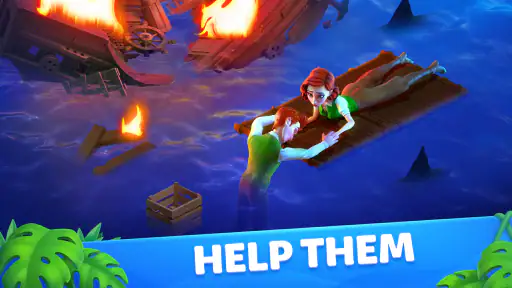



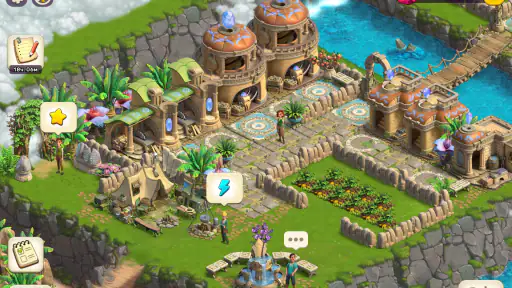


 Analysis by Frivlyz
Atlantis Odyssey is the kind of simulation adventure I open when I want steady progress rather than a quick burst of action. I spend time exploring, collecting, completing tasks, and deciding which goal deserves my limited attention first. That rhythm makes it easy to settle into, especially if I enjoy games where a small decision now can make the next few minutes smoother. It is free to play, rated for Everyone, and developed by VIZOR APPS LTD.
What makes it appealing is the combination of an adventure setting and a management-style routine. The mysterious Atlantis theme gives the journey a sense of direction, while the simulation structure turns each area into a series of practical choices. I am not simply moving forward from one fight to another. I am weighing what to gather, what to unlock, which objective is worth pursuing, and whether I should keep exploring or return to improve my position.
How the island turns exploration into a series of decisions
The central pleasure comes from deciding how to use every visit to the world. A task may point me toward a new location, but reaching it usually involves preparation and resource use. I have to think about the order of my actions instead of treating every available activity as equally important. That gives the game a more thoughtful pace than a straightforward adventure with a single obvious route.
I find it helpful to separate short-term jobs from long-term progress. A nearby objective can be useful because it clears space or provides something immediately valuable, while a distant destination may matter more for opening the next stage of the journey. If I chase every prompt as soon as it appears, I can end up spending energy and materials without a clear plan. Choosing a small group of related tasks is usually more satisfying and less wasteful.
This is one of the first non-obvious lessons I took from playing: the best choice is often the one that reduces future friction, not the one that pays off fastest. Clearing a route, preparing supplies, or finishing a requirement that unlocks several later actions can be more useful than grabbing a reward that solves only the current problem. The game rewards players who look one or two steps ahead without demanding complicated spreadsheets.
The simulation side also changes how I view exploration. A new area is not merely a backdrop for the story. It becomes a workspace where I need to organize priorities. I may want to investigate a point of interest, gather what is visible, and then decide whether returning to the main objective is sensible. That loop gives the setting a lived-in feeling, because progress depends on how I manage the environment rather than on movement alone.
Why planning the next few actions matters
I would not describe the decision-making as intimidating, but it is meaningful enough to prevent the game from feeling automatic. Before using a resource, I try to ask what it enables. Does it complete a current task, open a route, support a later upgrade, or simply make the next action more convenient? That quick check prevents the common mistake of spending everything just because an option is available.
Gaming Stories You May Enjoy

Dancing Road Turns Short Breaks Into a Test of Rhythm and Timing

Super Stylist Makes Every Outfit a Test of Taste and Patience

Dominoes on Your Terms: Who Should Play and Who Should Pass

Pokémon GO Makes the Familiar World Feel New

Chess.com Turns Rematches Into Rivalries, but Community Has Its Costs

Archery Battle 3D Review: Sharp Aiming, Unclear Feedback
A practical routine is to begin a play session by checking the active objectives, then identifying which ones overlap. If two tasks can be advanced in the same area, I handle them together. This approach makes short sessions more productive and avoids unnecessary backtracking. It is especially useful when I am playing between other activities and do not want to spend the whole session retracing steps.
That said, the game is not a pure strategy title. The decisions are approachable, and players who prefer to follow the visible objectives can still make progress. The planning layer adds texture rather than turning the experience into a demanding optimization exercise. I see that as a strength for a broad audience, although players looking for deep tactical combat or a highly complex economy may find the choices lighter than expected.
Progress feels better when I treat resources as a budget
The resource loop is where the simulation identity becomes most noticeable. I cannot assume that every material should be used immediately. Some items are useful for current requirements, while others become more valuable when several objectives begin to overlap. Holding back a little can make a later sequence much easier.
I also learned not to judge progress only by visible story movement. Improving my position, organizing the next route, and preparing for a cluster of tasks can be worthwhile even when the narrative does not advance immediately. This is a slower form of satisfaction, but it suits the game’s structure. The experience is less about winning one dramatic encounter and more about building a reliable chain of small successes.
For everyday play, I recommend setting a simple intention before starting: explore, complete a particular objective, gather for a future requirement, or improve the current area. Without that intention, it is easy to wander between activities and finish a session feeling busy but not particularly effective. With one clear aim, the same amount of time feels more rewarding.
Risk, reward, and the cost of pushing forward
Atlantis Odyssey creates tension through decisions about timing. I can continue deeper into an area, spend what I have to remove an obstacle, or step back and prepare. None of these choices is automatically correct. The right answer depends on whether I am close to a meaningful milestone or merely consuming resources for a minor convenience.
I enjoy this because it gives exploration a practical edge. The question is not only “What can I do?” but also “What should I do now?” Moving forward may reveal a useful opportunity, yet it can also leave me short of something needed for another objective. Returning to a safer position can feel slower, but it may protect the progress I have already made and create a better starting point for the next session.
The reward structure encourages curiosity, but I do not think every optional action deserves immediate attention. I sometimes leave an attractive side objective alone until it fits naturally with my route. That is an important trade-off: exploring everything at once can provide more discoveries, but it can also scatter my resources and attention. Focusing on connected goals usually produces a cleaner rhythm.
There is also a psychological risk in free-to-play design. When progress slows, the temptation to spend money can become part of the decision space. The game includes in-app purchases ranging from $0.29 to $99.99 per item, so I would approach purchases as a convenience choice rather than as a requirement for enjoying the adventure. I prefer to wait, plan around my current supplies, and only consider spending when I am certain the shortcut improves my experience rather than simply rescuing an impulsive decision.
When patience is the better strategy
My strongest advice is to avoid treating every delay as a problem. A slower moment can be useful if it lets me gather, reorganize, or finish an objective that supports several later steps. This is where the game differs from more aggressive mobile adventures that push me toward constant action. Here, patience can be an active strategy.
I also recommend keeping a mental reserve instead of using the last of a useful material for a small gain. I do not need to remember exact quantities to benefit from this habit. I simply avoid emptying one resource category unless the action clearly advances a major objective. That reserve gives me flexibility when the next task is less predictable than expected.
Players who enjoy immediate rewards may find this restraint frustrating. The game’s satisfaction often arrives through accumulation and preparation, not through a single spectacular payoff. If I want rapid combat, short competitive matches, or a constant stream of instant upgrades, another type of mobile game may suit me better. Atlantis Odyssey is more comfortable when I accept its measured pace.
How I decide whether an optional detour is worthwhile
I use three questions before taking a detour. Will it help with an active objective? Does it open a useful route or improve my future options? Can I complete it without draining the supplies I need for the main path? If the answer is no to all three, I usually postpone it. This simple filter keeps exploration enjoyable without turning it into aimless collection.
The exception is when I am near the end of a session. Then a small detour can be a good way to use remaining time, especially if I am not planning to continue immediately. I can gather nearby materials, inspect an accessible location, or prepare the next objective so that the following session starts with a clear purpose. That makes the game work well in short visits, even though longer sessions reveal more of its planning layer.
I appreciate that the risk is mostly manageable rather than punishing. I can make inefficient choices, but the game does not require perfect play to remain enjoyable. The trade-off is that experienced simulation players may want harsher consequences and more demanding optimization. For me, the forgiving structure makes it easier to recommend to people who like planning but do not want a stressful experience.
Adapting as the adventure expands
The most interesting adaptation happens when my original plan stops being convenient. A route that looked efficient can become awkward once another objective appears. A resource that seemed plentiful can suddenly become important elsewhere. I have to revise my priorities instead of stubbornly following the first plan I made.
This flexibility is more valuable than memorizing a single perfect sequence. The game encourages me to read the current situation and adjust. If I have already invested in one area, I may finish the nearby work before changing direction. If a new objective aligns with a route I was already taking, I can fold it into the plan. The best approach is not fixed; it changes with what I have available.
One useful habit is to avoid committing all attention to the most distant goal. I keep one nearby objective in reserve so that a session can still end productively if the main route becomes expensive or inconvenient. This gives me a fallback plan and reduces the feeling that I must either make major progress or waste the session.
Another practical insight is that exploration and preparation should not be treated as separate modes. I often gather while moving toward a task, then use the return trip to complete something nearby. This turns travel into progress and helps prevent the world from feeling like a set of disconnected errands. It also makes the adventure atmosphere stronger because I am responding to the environment rather than rushing through it.
How the game suits different kinds of players
For someone who enjoys gentle management, story-led exploration, and a steady stream of objectives, this is a comfortable fit. I can play actively when I have time or make a few deliberate decisions during a shorter break. The Everyone age rating also makes it approachable for households looking for a light adventure rather than mature themes or intense competition.
It is less suitable for players who need direct control over every second of play. The simulation structure means that progress is tied to planning, waiting for opportunities, and managing resources. Someone who dislikes energy-style pacing, repeated gathering, or free-to-play friction may lose patience even if the setting is appealing.
I would also skip it if my main reason for downloading a game is deep combat strategy. The adventure presentation may suggest constant danger, but the lasting appeal comes from exploration and organization. People who prefer action-heavy alternatives, competitive games, or traditional role-playing systems with detailed character builds will likely find more depth elsewhere.
Compared with a typical farming simulator, Atlantis Odyssey feels more outward-looking because the adventure setting keeps exploration at the center. Compared with a conventional quest game, it asks more from me in terms of preparation and resource choices. That middle position is its identity: it is neither a pure builder nor a pure action adventure, and its appeal depends on enjoying both sides.
What changes over a longer play period
At first, the attraction is easy to understand: the setting provides curiosity, and the objectives give me a clear reason to explore. Over time, the deeper satisfaction comes from recognizing patterns in my own play. I become better at grouping tasks, saving useful materials, and choosing when a detour is worth the cost. The game rewards improved habits more than reflexes.
That long-term rhythm can be relaxing, but it also exposes the main limitation. Repeated gathering and similar task structures may feel routine if I play for too long in one sitting. I prefer alternating focused sessions with breaks. A short visit to prepare the next objective, followed later by a longer exploration session, keeps the loop from becoming monotonous.
The current version is 1.96.1, and the game supports devices running Android 6.0 or later. Those details make it accessible to a wide range of Android users, although the quality of the experience will still depend on how comfortably the device handles a visually active simulation adventure. I would check available storage and general device condition before committing to a long-term install, particularly on an older phone.
The game has reached over five million installs, with an average rating of 4.8 from around 223 thousand ratings and roughly 7.8 thousand written reviews. I read those figures as evidence that the core loop connects with a substantial audience, not as a guarantee that every player will enjoy the pacing. A strong reception makes me more willing to try it, but the personal fit still depends on whether I like resource planning and gradual exploration.
Because it is free to download, the sensible approach is to test the opening rhythm without assuming I need to buy anything. I would play long enough to see whether gathering, objectives, and exploration feel satisfying together. If the basic loop already feels repetitive, purchases will not solve that underlying issue. If I enjoy the structure, optional spending can be considered carefully rather than treated as part of the entry price.
Small habits that make the longer journey smoother
I get more from the game when I end a session deliberately. Before closing it, I try to leave my character near a useful objective or with a clear next action in mind. That removes the friction of reopening the game and wondering what I was doing. It also makes short sessions feel connected instead of random.
I avoid collecting everything automatically. Some exploration rewards are more useful when they support a current plan, while others can wait. This does not mean ignoring the world; it means keeping enough attention for the objectives that actually move my progress forward. The result is a calmer experience and fewer moments where I feel I have created extra work for myself.
Finally, I treat the story and the systems as complementary. The Atlantis theme gives context to the journey, but the management decisions are what keep me involved after the initial curiosity fades. If I focus only on the plot, the resource loop may feel like an interruption. If I focus only on efficiency, the adventure may lose its charm. Enjoying both sides is the key to getting lasting value from it.
My verdict on Atlantis Odyssey
Atlantis Odyssey is a thoughtful free simulation adventure for players who like exploration with a planning layer. I enjoy the way it turns ordinary actions—gathering, choosing routes, preparing tasks, and deciding when to push ahead—into a steady stream of manageable decisions. It feels welcoming rather than punishing, yet it still gives me reasons to think before spending resources or following every available objective.
Its strongest quality is the balance between direction and freedom. I usually know what the game wants me to pursue, but I can decide how efficiently to approach it. That makes the experience suitable for relaxed evening play, short breaks, and longer sessions where I want to organize several goals at once. The adventure setting adds personality without overwhelming the approachable simulation structure.
The limitations are equally clear. The pace may feel slow to action-focused players, repeated resource work can become routine, and free-to-play purchases may tempt impatient decisions. I would not recommend it to someone seeking competitive pressure, complex combat, or a completely frictionless progression system. In those cases, a dedicated action game or a deeper strategy alternative would be a better choice.
For me, the best reason to try it is the satisfying middle ground it occupies. It offers more planning than a simple casual quest game, but less pressure than a demanding management simulator. I can make imperfect decisions, adapt when a route changes, and still feel that my choices shape the journey. If that sounds like the kind of progress you enjoy, this Atlantis adventure is worth installing and judging through its first few sessions rather than through its premise alone.
Atlantis Odyssey: Аdventure Pros and Cons
Pros
- Relaxing island exploration with a charming underwater Atlantis theme.
- Story-driven quests provide clear goals and steady progression.
- Colorful visuals and detailed environments make locations enjoyable to explore.
- Resource gathering and crafting add variety beyond simple quest completion.
- Regular events and new areas can keep long-term players engaged.
Cons
- Energy limits can slow progress during longer play sessions.
- Some upgrades and resources may require considerable grinding.
- The numerous currencies and materials can feel confusing at first.
- Later quests may depend heavily on waiting for buildings or items.
- Optional purchases can make faster progression tempting for impatient players.
This Game in Other Languages
Frequently Asked Questions
What is Atlantis Odyssey: Adventure about?
Atlantis Odyssey: Adventure is a story-driven exploration and management game set in a mysterious lost civilization. You follow young explorers as they travel through tropical locations, uncover ancient secrets, restore buildings, gather resources, and complete quests. The game combines adventure, puzzle-like tasks, crafting, farming, and light strategy, making it suitable for players who enjoy relaxed progression with an ongoing narrative.
How does the gameplay work in Atlantis Odyssey: Adventure?
The main gameplay loop involves exploring new areas, collecting materials, completing character requests, solving environmental obstacles, and using gathered resources to develop your camp. You gradually unlock workshops, crops, tools, and story locations. Energy management is an important part of the experience because most actions consume energy, so progress is designed around planning activities and returning later when resources or energy become available.
Can Atlantis Odyssey: Adventure be played offline?
An internet connection may be required for several important features, including loading the game, synchronizing progress, receiving updates, and accessing events or promotional content. Although some previously loaded sections may appear playable without a connection, offline availability can be limited and is not guaranteed. For the most reliable experience, especially when starting the game or switching devices, use a stable internet connection.
Is Atlantis Odyssey: Adventure free to download and play?
Atlantis Odyssey: Adventure is generally free to download, but it includes optional in-app purchases. Players can usually progress without paying by completing tasks, waiting for energy to restore, and managing resources carefully. Purchases may provide premium currency, energy, boosters, or faster progress. Parents should review purchase settings because the game’s optional offers can appear during regular gameplay and events.
Does Atlantis Odyssey: Adventure save progress across devices?
Progress can often be connected to an available account or platform service, but the exact synchronization options may depend on the device, operating system, and current version of the game. Before deleting the app or changing phones, it is wise to connect the game to its supported account service and confirm that your progress is backed up. Avoid relying only on local device storage.


