

Arcadia Mahjong
- Reviews
- 4.9
- Version
- 0.0.18
- Installs
- 100,000+

Screenshots
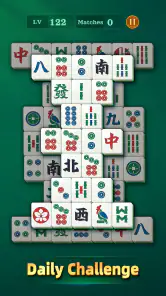
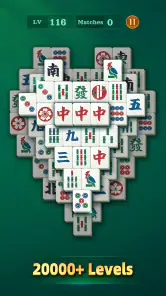
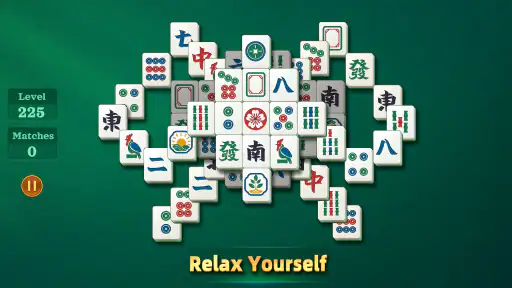
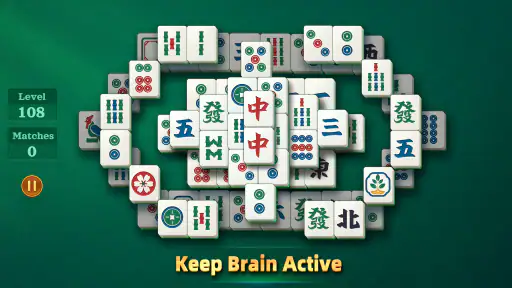
 Analysis by Frivlyz
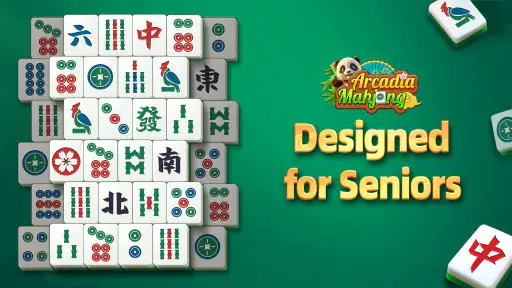
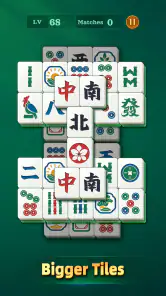
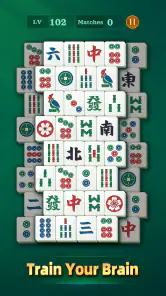
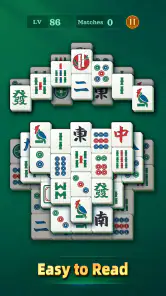
I like a board game that lets me settle into a quiet puzzle without asking for a big time commitment. Arcadia Mahjong has that easy-to-understand appeal: match tiles, scan the layout, and decide which move keeps the board open. Its focus on large tiles also makes it a natural option for players who find small symbols tiring, though a comfortable display still depends on the device and the player’s eyesight. My first impression was that this is best approached as a calm, familiar routine rather than a game to rush through.
Getting Started with Arcadia Mahjong
First things first, I have to say that downloading and installing Arcadia Mahjong was a breeze. A few taps and I was all set to dive into the world of tiles. The game welcomes you with a lush, vibrant interface that’s both inviting and easy to navigate. I was impressed with how quickly I was able to get into a game without any fuss.
Gameplay and Mechanics
The gameplay is what you’d expect from a Mahjong game but with a little twist that keeps things fresh. You have the classic tile matching but the game introduces various levels of difficulty and intriguing puzzles that test your strategic thinking. I found myself getting engrossed for hours, trying to clear the board and beat my previous scores. It’s challenging but not frustratingly difficult, which is a sweet spot for any game lover.
One thing I noticed is the smoothness of the gameplay. The transitions are seamless, and the controls are super responsive. This is crucial for a game that relies on quick thinking and nimble fingers. You’ll appreciate the fluidity, especially if you’ve played other Mahjong games that lag or glitch.
A First Week of Easy Sessions
The early appeal is the low barrier to entry. If you already know tile-matching Mahjong, you can get to the central decision quickly: which exposed pair should I remove before it leaves awkward tiles trapped beneath or beside others? If you are new to this style of puzzle, the rules are also simple enough to pick up by watching the board. I would treat the first sessions as a chance to learn how the layouts feel, not as a test of speed.
A useful habit is to pause before taking the first obvious match. Look across the whole arrangement and notice which tiles appear in several places, then favor a pair that opens up more of the board. That small change in approach can make a familiar puzzle feel more thoughtful without requiring a complicated strategy guide. It is especially helpful when you are playing in short bursts and do not want to restart simply because an early choice narrowed your options.
For an everyday example, I can imagine playing a board while waiting for an appointment or taking a quiet break after lunch. The game’s straightforward premise suits those moments better than a session that demands a long tutorial or a rapid response. I would still choose a place where I can see the screen clearly: larger tiles are a welcome design priority, but they do not remove the need for readable contrast and a comfortable viewing angle.
Gaming Stories You May Enjoy

Dancing Road Turns Short Breaks Into a Test of Rhythm and Timing

Super Stylist Makes Every Outfit a Test of Taste and Patience

Dominoes on Your Terms: Who Should Play and Who Should Pass

Pokémon GO Makes the Familiar World Feel New

Chess.com Turns Rematches Into Rivalries, but Community Has Its Costs

Archery Battle 3D Review: Sharp Aiming, Unclear Feedback
Graphics and Sound
Visually, Arcadia Mahjong is a treat. The tiles are beautifully designed with intricate patterns, and the background themes are just stunning. It’s like playing Mahjong in an art gallery. I particularly loved the serene music and sound effects that accompany the gameplay. It’s calming and enhances the overall experience, making it perfect for winding down after a hectic day.
Who Benefits Most from the Large Tiles
The large-tile focus is a practical reason to consider this game, not just a visual flourish. It may suit older players, people who prefer a less cramped board, or anyone who wants to spend less effort distinguishing small symbols. I would also recommend it to a relative who enjoys traditional tabletop puzzles but wants a solo option that is ready whenever there is a spare moment. The age rating is Everyone, so its general presentation is suitable for a broad audience.
There is a trade-off: players who want a dense, highly customizable puzzle experience may care more about layout variety, difficulty controls, or rule options than tile size. I would not assume that a senior-friendly presentation means the game will suit every older player equally; vision, motor comfort, and personal taste differ. If someone finds touchscreens awkward, a physical set or a game designed around larger controls may be a better fit than any tile-matching app.
Compared with the usual Mahjong solitaire alternatives, the appeal here is its straightforward board-game format and emphasis on legible tiles. Some competing games lean on elaborate themes, collections, or extra modes to keep attention. That can be enjoyable if you want constant novelty, but it can also make a simple puzzle feel busy. I would choose this one when the goal is to focus on matching and planning rather than managing a wider set of systems.
Month-to-Month Value
A puzzle like this earns a place on my device through repeatable, low-pressure sessions, not a dramatic first impression alone. The basic matching loop can be satisfying whenever I want a small mental challenge, and the board gives me a reason to think ahead instead of tapping randomly. The value is therefore personal: if you enjoy returning to a familiar kind of problem, it can remain useful as a regular pastime; if you need a steady stream of new mechanics, the same familiarity may become limiting.
One way I would keep it enjoyable is to set a modest stopping point before opening a session. For example, play a single board during a break, then put the phone away rather than letting a relaxing game turn into an unplanned stretch of screen time. This approach also makes it easier to tell whether the game genuinely fits your routine. A title that works in a small daily window can be more useful than one that is exciting once but hard to return to.
Metajoy is the developer, and the game is free to play. It has a 4.9 average from around 2.2 thousand ratings, with more than 100 thousand installs; those figures suggest that many players have tried it, but they do not tell me whether its particular style will hold your attention. I would use the game’s simple premise as the deciding factor: it is a sensible choice if you want accessible tile matching, while players looking for deep progression or a social competition should compare it with games built around those interests.
Maintenance and Practical Fit
There is not much to learn before playing, which keeps the ongoing effort low. The current version is 0.0.18, and the minimum operating system is Android 5.1. Those details make it easier to judge basic device compatibility, but they are not a promise that every older phone will feel equally comfortable in use. If the screen is small or touch input is unreliable, the large-tile concept may help less than expected, so I would test a short session before making it part of a daily routine.
Because this is a focused board game, it is also easy to fit around other activities: start when you have a few quiet minutes and stop when you are ready. I would avoid playing while walking, cooking, or doing anything that needs attention; scanning a layered tile board works better when you can look carefully. For someone choosing a game for a parent or grandparent, I would first let them try it on their own device and check whether the tile shapes and touch targets feel comfortable rather than assuming the age rating settles that question.
Its release date is Jul 9, 2024, and the game’s modest version number is a reminder to keep expectations grounded: I would judge it by the puzzle experience available now, not by imagined future additions. A free game can be easy to sample, but the best reason to keep it installed is that its core activity suits your habits. If you only enjoy Mahjong when there are fresh mechanics or a sense of competition, a familiar matching board may not repay regular attention.
Sources of Fatigue
The same simplicity that makes this kind of game approachable can eventually work against it. Once the matching routine feels predictable, players who crave changing objectives may start to see each board as more of the same. I would not recommend it as a substitute for a strategy game with deeper systems, a multiplayer board game, or a collection of varied puzzles. Its strongest fit is narrower: a calm, individual tile puzzle for someone who likes to inspect a layout and make deliberate choices.
It can also be easy to mistake a smooth, familiar session for a reason to keep playing longer than intended. If you notice yourself tapping through without thinking, take that as a cue to stop or return later; the game is most satisfying when you are actually considering the board. On the other hand, a player who finds comfort in repetition may see that predictability as a benefit rather than a flaw. The question is whether you want a dependable ritual or constant surprise.
For players who need help with vision or hand control, the large tiles are a thoughtful starting point, but they are not a guarantee of full accessibility. I would check whether symbols remain easy to distinguish at the brightness and text scale you normally use, and whether selecting tiles feels accurate. If the board is still hard to read, a physical game with larger pieces, or a digital option with more explicit accessibility controls, may serve better.
Why You'll Love It
If you’re someone who enjoys a good puzzle and appreciates beautiful design, you’ll find a lot to love here. The game keeps you engaged by offering various challenges and rewards as you progress. I found myself eagerly anticipating the next level, just to see what new puzzle awaited me.
Moreover, the game doesn’t bombard you with ads, which is a huge relief. It respects your gaming time and lets you immerse yourself without constant interruptions.
In conclusion, Arcadia Mahjong is more than just a game; it’s an experience. Whether you’re a Mahjong veteran or a newbie to the tile-matching world, this game has something for everyone. Its combination of strategic gameplay, stunning visuals, and soothing sound makes it a must-try for anyone looking to add a new game to their collection. Trust me, once you start, it’s hard to put it down!
My Long-Term Verdict
I would keep this game installed if I wanted a calm Mahjong-style puzzle that is easy to pick up and has a clear emphasis on large tiles. It is a better match for quiet solo play than for players seeking a social challenge, a broad catalogue of game types, or elaborate long-term progression. That distinction matters: a focused game does not have to become everyone’s daily favorite to be worthwhile.
For me, its lasting value comes down to whether I still enjoy considering each board after the initial novelty fades. If I do, the uncomplicated format makes it easy to return for a short break. If I start clearing tiles automatically and no longer feel engaged, I would move on without guilt. That is the honest test for a small, repeatable puzzle: it should earn its space through the moments it continues to make pleasant, not through promises of endless novelty.
Arcadia Mahjong Pros and Cons
Pros
- Engaging gameplay with intuitive controls
- Variety of challenging levels
- Beautiful and colorful graphics
- Regular updates with new content
- Offline mode available
Cons
- Contains in-app purchases
- Ads can be intrusive
- Requires stable internet for updates
- Some levels are very difficult
- Consumes a lot of battery
Frequently Asked Questions
What is Arcadia Mahjong and how is it played?
Arcadia Mahjong is a digital version of the classic tile-matching game played by connecting pairs of matching tiles to clear the board. The game offers various levels of difficulty and themes to keep players engaged. It's designed for both beginners and experienced players, with options for hints and shuffling to assist when stuck.
Is Arcadia Mahjong free to download and play?
Arcadia Mahjong is free to download and play, but it may offer in-app purchases. These purchases can include additional themes, power-ups, or ad-free experiences. Players can enjoy the core game without spending any money, but optional purchases enhance the gaming experience.
Does Arcadia Mahjong require an internet connection to play?
Arcadia Mahjong does not require a constant internet connection to play. It can be enjoyed offline once downloaded. However, some features, such as leaderboards or purchasing in-app items, might require internet connectivity. This makes it convenient for users to play anytime and anywhere without worrying about data usage.
What are the main features of Arcadia Mahjong?
Arcadia Mahjong offers a variety of features, including multiple game modes, different tile sets, and backgrounds to customize the gaming experience. It provides daily challenges, achievements, and leaderboards to keep players motivated. The game is designed to be user-friendly with intuitive controls and graphic-rich environments to enhance user engagement.
Is Arcadia Mahjong accessible for people with disabilities?
Arcadia Mahjong aims to be accessible for a wide range of players, including those with disabilities. It features adjustable settings such as text size, sound levels, and color contrast. These customizable options help accommodate players with visual or auditory impairments, ensuring a more inclusive gaming experience for everyone.


