

Alley Restaurant Tycoon
- Reviews
- 4.7
- Version
- 3.3.3
- Installs
- 500,000+

Screenshots

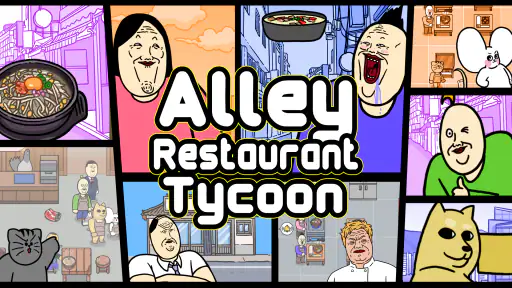
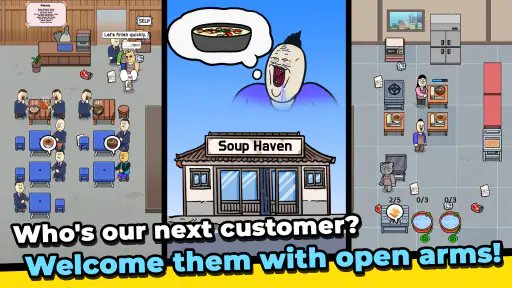
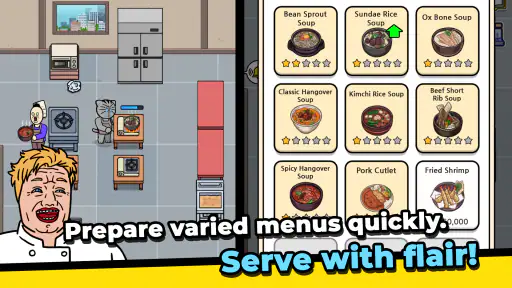
 Analysis by Frivlyz
I enjoy restaurant games most when they give me a small place to improve at my own pace, rather than asking me to memorize a complicated system before I can begin. Alley Restaurant Tycoon has that approachable starting point, with the appeal of building up an eatery tucked into a busy alley. I’d put it on my shortlist if I wanted a mobile simulation game that mixes practical management with room to make the restaurant feel like my own.
Who will enjoy running this alley restaurant
This is a good fit for players who like seeing a modest business develop through a series of manageable decisions. The basic loop described by the game—staff, kitchen improvements, menu choices, and customer satisfaction—gives each session a clear focus. I can imagine opening it for a short break, making a few decisions, and leaving with a sense that the restaurant has moved forward without needing to devote an entire evening to it.
It also suits people who enjoy decorating as part of a management game, rather than treating appearance as an afterthought. Changing the restaurant’s style can make the space feel personal, and that creative element offers a different kind of reward from simply pursuing growth. If I were choosing between a numbers-first business simulator and a lighter restaurant setting, I’d lean toward this one when atmosphere and visible progress matter as much as optimization.
A practical rhythm for playing
My preferred way to approach a game like this is to treat each visit as a small management round. I would first look at what is currently slowing the restaurant down, then decide whether my next improvement should support the kitchen, the staff, the menu, or the dining space. That order matters: spending on something attractive can be satisfying, but it may not solve the problem that is actually keeping the business from running smoothly.
For example, if I had only a few minutes while waiting for a bus, I would avoid making several unrelated changes just because they were available. I’d check the restaurant’s immediate needs, make one considered upgrade or adjustment, and then see how the next stretch of play feels. This keeps the cause and effect easier to judge. It is a useful habit in a tycoon game because changing too many things at once can make it hard to tell which choice helped.
When I have more time, I’d use a longer session to compare priorities rather than simply spend whatever resources are on hand. A kitchen improvement and a décor change may both feel worthwhile, but they serve different goals. If I’m trying to make service more capable, the practical improvement deserves attention first; if the business is already progressing comfortably, then personalizing the room can make that progress more enjoyable. Matching the next decision to the current bottleneck is a simple discipline that makes management games feel less like random tapping.
Settings and habits worth checking
I would start by looking through the available settings before settling into a routine. In particular, I like to check whether the game offers controls for sound, notifications, or other play preferences, then choose what suits the way I use my phone. I’m not assuming every control will be present; the useful point is to make that quick check early instead of being distracted by default choices during a session.
Gaming Stories You May Enjoy

Dancing Road Turns Short Breaks Into a Test of Rhythm and Timing

Super Stylist Makes Every Outfit a Test of Taste and Patience

Dominoes on Your Terms: Who Should Play and Who Should Pass

Pokémon GO Makes the Familiar World Feel New

Chess.com Turns Rematches Into Rivalries, but Community Has Its Costs

Archery Battle 3D Review: Sharp Aiming, Unclear Feedback
Sound is especially worth considering for a restaurant game with background music and service activity. If I’m playing somewhere quiet, lowering or muting audio can make a short session more comfortable; if I’m relaxing at home, the soundtrack may help the restaurant feel lively. I’d also consider whether notifications are helpful or intrusive for my routine. A game is easier to enjoy when it fits around the day rather than repeatedly pulling attention away from it.
Another helpful habit is to pause before spending in-game currency or making a purchase. The game is free to download, but it includes optional purchases priced from $0.99 to $45.99 per item. I would treat those as a choice, not a requirement, and first see how the ordinary progression feels. For anyone who prefers to keep mobile spending predictable, checking purchase controls and any device-level approval settings is sensible before handing the phone to a child or beginning a long play session.
Why repeatable routines help
Restaurant management can become a string of small interruptions if I react to every new issue without a plan. I find it more satisfying to establish a repeatable sequence: review what the restaurant needs, make a focused change, let the business run long enough to see the result, and then reassess. That does not mean every visit has to be identical. It gives me a stable baseline so I can tell when a change in menu, staff, or kitchen investment is making a difference.
The same principle applies to challenges and rewards. Rather than treating every task as equally urgent, I’d look at what is already close to completion and decide whether pursuing it fits my current goal. If a task naturally overlaps with the way I’m already managing the restaurant, it can be an efficient target. If it would push me into spending or changing direction without a clear benefit, I’d be comfortable leaving it for later.
That approach also helps with the game’s daily quests and events. They can add a reason to return, but a daily activity should be a bonus, not a chore. I’d check what an event asks me to do before committing time to it, especially on a busy day. If it aligns with normal restaurant progress, I can fold it into my routine; if it demands a different focus, I can decide whether the reward is worth the detour.
Where it differs from other simulation games
Compared with a restaurant game built mainly around rapid tapping or moment-to-moment order handling, Alley Restaurant Tycoon presents itself more as a business-building experience: staffing, upgrades, menu decisions, and the gradual development of a venue are central to its appeal. That makes it a better match for someone who enjoys planning and watching a business grow than for a player looking for a highly technical cooking challenge or a story-heavy role-playing game.
It also occupies a different mood from a broad city-building simulator. The restaurant setting gives decisions a more immediate theme: I’m shaping one eatery and its customer experience, rather than spreading attention across an entire town. That narrower focus can be refreshing on a phone, though it may feel limiting to someone who wants a large world, complex supply chains, or extensive systems to master. I would choose a more involved management sim if I wanted deep economic modeling; I’d choose this when I want a more approachable restaurant-focused loop.
Limits to keep in mind before settling in
The simplicity that makes the game easy to approach may not satisfy everyone for long. Players who want to micromanage every part of a business, compare detailed performance figures, or build a highly complex strategy should be cautious about expecting that level of depth. The central appeal is the restaurant’s growth and presentation, and a player who finds routine upgrades repetitive may eventually want a simulation with more intricate decisions.
There is also a trade-off between customization and efficiency. Decorating can make the restaurant feel more personal, but when I’m focused on steady progress I would avoid letting cosmetic choices take priority over improvements that address a real management need. Conversely, optimizing every decision can drain some of the charm from a game whose visual identity is part of the enjoyment. I’d alternate between practical sessions and creative ones rather than insist that every choice serve the same purpose.
The game is rated Teen, so I would check whether that age guidance suits the person who will be playing. It is developed by BigPictureTeam, and its current version is 3.3.3; Android support begins at version 6.0. Those details make it easier to decide whether the game is suitable for a particular device and household, but the more important personal question is whether a restaurant-management loop sounds appealing in the first place.
What a normal play session can look like
Picture a weekday evening when I have a short stretch of downtime. I open the game, take a look at how the restaurant is doing, and decide that my next step should support service rather than simply make the room look different. I make one targeted change, check how the restaurant feels afterward, and stop when I’ve reached a natural point. The next time I return, I can decide whether to keep improving that area or shift attention to the menu or décor.
On a quieter weekend, I might do the opposite: spend more time considering the restaurant’s look and enjoy the gradual transformation. I would still keep an eye on management needs, but I wouldn’t turn the whole session into an efficiency test. That flexibility is the strongest reason I’d recommend the game to a friend who likes casual simulations. It can be approached as a small planning exercise or as a more relaxed creative pastime, depending on what I want from the session.
The game has an average rating of 4.7 from around 19,000 ratings, with over 500,000 installs. Those figures suggest that many players have tried it and that its overall reception is strong, but they can’t tell me whether its particular pace suits my taste. I’d use them as a reason to consider giving it a try, not as a promise that every player will find the same depth or long-term appeal.
Before installing, I’d also consider how I feel about free-to-play games with optional purchases. Someone comfortable progressing without spending may find the basic experience a reasonable place to start, while anyone who dislikes seeing purchase options at all may prefer a paid game with a different model. I would not make a purchase simply to speed through a system I have not yet decided I enjoy. A few ordinary sessions are a better way to judge whether the restaurant loop itself is worth my time.
For a first-time player, I’d recommend resisting the urge to optimize everything immediately. Learn the basic rhythm, notice which decisions seem to affect the restaurant most, and then build a routine around what you enjoy. If the game becomes a pleasant daily check-in, let it stay that way. If progress starts to feel like obligation, step back rather than treating every quest or event as mandatory.
Ready to dive into the bustling world of restaurant management? Well, Alley Restaurant Tycoon might just be the game you’re looking for! As someone who’s spent hours navigating its charming alleyways and serving up virtual dishes, I’m here to spill the beans about what makes this game a delectable treat for mobile gamers.
The Flavorful Concept
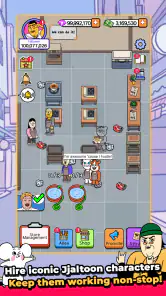
Imagine this: You’re in charge of a quaint little restaurant nestled in a lively alleyway. The goal? To transform it into the ultimate foodie destination. The gameplay revolves around managing and expanding your restaurant empire, all while keeping your customers happy and your dishes top-notch.
Gameplay Mechanics
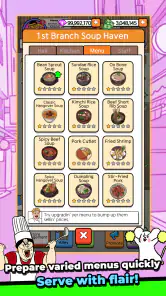
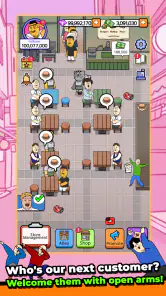
The game kicks off with a humble setup – just a small eatery with a couple of tables and a basic menu. But don’t be fooled; there’s a lot to sink your teeth into! The mechanics are straightforward yet addictive. You’ll find yourself hiring staff, upgrading your kitchen, and crafting a menu that will wow your patrons. There’s a real sense of progression as you watch your little restaurant grow into a bustling hub.
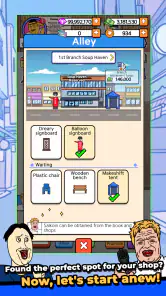
One feature that stands out is the ability to customize your restaurant’s décor. From rustic vibes to modern chic, you can really make it your own. And let’s not forget the satisfaction of seeing your patrons enjoy the ambiance you’ve meticulously crafted!
Graphics and Sound
Visually, the game is a feast for the eyes. The graphics are colorful and inviting, perfectly capturing the whimsical nature of a restaurant set in an alley. Each character and dish is beautifully rendered, adding to the overall charm. The sound design complements the visuals, with a catchy background score that keeps you in the groove as you manage your culinary kingdom.
Challenges and Rewards
What’s a good game without a bit of challenge? Alley Restaurant Tycoon doesn’t disappoint. As you progress, you’ll face various challenges – from managing a sudden influx of customers to handling tricky orders. But fear not, each challenge conquered is met with satisfying rewards, whether it’s unlocking new recipes or gaining that sweet, sweet in-game currency.
The game also offers daily quests and events to keep things fresh, ensuring there’s always something new to tackle and achieve. It’s this dynamic gameplay that keeps you coming back for more.
Final Thoughts
In conclusion, Alley Restaurant Tycoon serves up a delightful mix of strategy, creativity, and fun. Whether you’re a casual player looking for a relaxing experience or a hardcore gamer wanting to test your management skills, this game has something to offer. Its charming graphics, engaging mechanics, and the sheer joy of running your own restaurant make it a must-try.
So, if you’re ready to don your virtual apron and dive into the world of restaurant management, give Alley Restaurant Tycoon a whirl. Trust me, you won’t leave hungry for entertainment!
Alley Restaurant Tycoon Pros and Cons
Pros
- Engaging gameplay with strategic elements.
- High-quality graphics and animations.
- Variety of dishes and customization options.
- Frequent updates with new content.
- User-friendly interface and controls.
Cons
- Requires internet connection to play.
- In-app purchases can be costly.
- Occasional ads disrupt gameplay.
- Some levels can be very challenging.
- Limited offline features.
Frequently Asked Questions
What is Alley Restaurant Tycoon and how does it work?
Alley Restaurant Tycoon is an engaging simulation game available for both Android and iOS platforms where players can build and manage their own restaurant empire. Users take on the role of a restaurant manager, responsible for designing the layout, hiring staff, crafting menus, and ensuring customer satisfaction. The game combines strategy with creativity, allowing players to expand their restaurant and increase profits through various challenges and tasks.
Can I play Alley Restaurant Tycoon offline?
Yes, Alley Restaurant Tycoon offers offline gameplay, allowing players to enjoy the game without an active internet connection. This feature is particularly beneficial for users who have limited data plans or are in areas with poor connectivity. However, certain features like in-game purchases or social interactions may require an internet connection.
Are there in-app purchases and how do they affect gameplay?
Alley Restaurant Tycoon includes in-app purchases that enhance the gaming experience by providing additional resources, decorations, and upgrades. While these purchases can accelerate progress and provide aesthetic enhancements, they are entirely optional. Players can enjoy the full experience without spending any money, as the game is designed to be fun and rewarding through regular gameplay.
What age group is Alley Restaurant Tycoon suitable for?
Alley Restaurant Tycoon is designed for players aged 8 and above, making it suitable for children, teenagers, and adults alike. The game features simple controls and engaging content that appeals to a broad audience. However, parents may want to supervise younger children due to the availability of in-app purchases and online interactions.
Does Alley Restaurant Tycoon offer any social features?
Yes, Alley Restaurant Tycoon includes various social features that allow players to connect with friends and other players globally. Users can visit each other's restaurants, exchange gifts, and participate in friendly competitions. These social interactions enhance the gameplay experience, fostering a sense of community and competition among players worldwide.


