

Airport Security
- Reviews
- 4.5
- Version
- 2.6.8
- Installs
- 100,000,000+

Screenshots


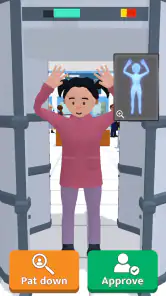


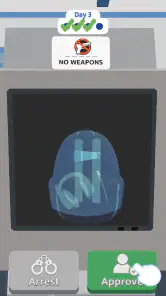


 Analysis by Frivlyz
I usually reach for a casual game when I have a few spare minutes and want something more active than scrolling but less demanding than a long session. Airport Security has an appealing premise for that mood: I take charge of an airport checkpoint, make judgments about passengers and their belongings, and try to keep the terminal moving safely. Its airport setting gives familiar screening tasks a playful twist, although the experience is best approached as light entertainment rather than a realistic simulation of security work.
Quick sessions, with decisions to make
The basic appeal is easy to understand: inspect what comes through the checkpoint and decide whether it seems safe to pass. That gives each interaction a small decision at its center, rather than asking me simply to tap through a sequence without looking. When I want a casual game that starts with a clear task, this setup is more inviting than a puzzle whose rules take time to learn.
It also sets expectations about pace. The concept suggests brisk turns and a steady stream of small choices, which suits a short break better than a game built around lengthy planning. I would not treat it as a demanding strategy challenge, though. The pleasure is in responding to situations as they arise, and players who want deep systems or precise simulation may find that loop too light.
What keeps the checkpoint interesting
Passenger checks and luggage screening give the game a recognizable structure, while suspicious items and people in a hurry add a reason to pay attention. The useful tension is between being thorough and keeping the queue moving. If I rush every decision, I may miss the point of the inspection; if I imagine every case needs the same level of scrutiny, the checkpoint loses its brisk, casual feel.
A practical way to enjoy that trade-off is to focus on what each scene is asking me to notice instead of tapping as quickly as possible. That small change makes the task feel more deliberate without turning a simple game into homework. It is also a good fit for someone who likes quick visual judgments and a clear sense of responsibility, but less so for anyone who dislikes being asked to make repeated go-or-check decisions.
Progress, upgrades, and sensible expectations
As I advance, the game introduces more involved situations, so the opening idea is not the only thing it offers. The described progression also includes in-game currency for improving equipment or the airport and choosing between better scanning technology and extra staff. That gives me a modest planning question: do I want to strengthen the inspection side or make it easier to handle a growing line?
I would make those choices according to what feels like the bottleneck in a session, rather than assuming one upgrade is always best. The equipment option fits a player who enjoys the screening decisions; additional staff may sound more appealing when queue management is the part they want to ease. Either way, the upgrades add a layer of direction to the casual play, but they should not be mistaken for a complex airport-management toolkit.
Gaming Stories You May Enjoy

Dancing Road Turns Short Breaks Into a Test of Rhythm and Timing

Super Stylist Makes Every Outfit a Test of Taste and Patience

Dominoes on Your Terms: Who Should Play and Who Should Pass

Pokémon GO Makes the Familiar World Feel New

Chess.com Turns Rematches Into Rivalries, but Community Has Its Costs

Archery Battle 3D Review: Sharp Aiming, Unclear Feedback
How it fits into everyday play
I find this checkpoint premise especially useful to think about in terms of session length: it gives me a clear task to return to, rather than a long chain of plans to remember. I would use a short pause between errands to see whether I enjoy the inspection rhythm, then save a longer stretch for noticing how queue pressure changes my choices. That distinction leads naturally to how the game handles heavier use.
A small airport scenario, not a work simulator
Imagine opening the game while waiting for a friend or taking a short break between chores. The checkpoint premise gives me a reason to focus immediately: check the passenger, look over the luggage, and decide whether to let the traveler continue. If a suspicious item appears or someone seems rushed, that familiar flow gets a little more interesting. I can pause after a brief stretch without needing to remember a complicated plan, which is exactly what I want from a casual game in that situation.
That scenario also shows where the theme works best. Airport screening is familiar enough to understand at a glance, but the game frames it as a playful challenge rather than training or guidance for real security decisions. I would not use its fictional situations as a reference for actual travel procedures. The fun is in the game’s simplified choices and the feeling of managing a checkpoint, not in learning how real airports assess risk.
How it compares with other casual games
Compared with a conventional match-style puzzle, this has a more direct role-playing hook: I am responsible for a checkpoint instead of clearing a board. Compared with a full management game, it sounds more immediate and less dependent on long-term planning. That middle ground is its strongest pitch. It can appeal to players who want a recognizable setting and small decisions, while people who prefer pure puzzles, collectible goals, or detailed simulation may be happier elsewhere.
The trade-off is that the central inspection loop needs to stay enjoyable on its own. Randomized challenges and new elements as I advance can help keep sessions from feeling identical, but the premise still revolves around screening, judgment, and keeping things moving. If I enjoy that rhythm, the repeated structure is part of the appeal. If I need a completely different activity every few minutes, progression may not change the core experience enough.
Who is likely to enjoy it—and who may not
I would suggest it to someone who likes light decision-making, airport themes, and games that are easy to understand without a long learning period. It is also a reasonable choice for a quick break when I want to feel engaged but do not want to commit to a sprawling campaign. The game is free to start, with optional in-app purchases priced from $0.99 to $74.99 per item, so I would keep an eye on purchase prompts and decide for myself whether any paid extras are worth considering.
On the other hand, I would steer a player toward a deeper simulation if they want realistic procedures, extensive control over a terminal, or detailed staff and resource planning. I would also skip it if repeated screening decisions sound tedious rather than satisfying. Its appeal depends on enjoying the same basic responsibility as the situations change; it is not the right match for every casual player simply because the subject is familiar.
Popularity, age suitability, and getting started
Kwalee Ltd developed this casual game, which has an average rating of 4.5 from around 617,000 ratings and more than 7,000 written reviews. It has passed 100 million installs, a sign that the checkpoint idea has reached a broad audience, though popularity alone cannot tell me whether its loop will suit my taste. The content rating is Everyone 10+, a useful point for families deciding whether the game fits their household.
It was released on October 26, 2021, and version 2.6.8 is listed for devices running Android 7.0 or later. Those details give Android users a straightforward compatibility check before downloading. I would still leave enough free space and keep the device’s software reasonably current as ordinary good practice, but I would not infer a particular battery drain or performance problem from the game’s premise or version number.
Speed, stability, and device expectations
The simple checkpoint concept makes it sound suited to quick play, but a game’s apparent simplicity is not a guarantee of how it will behave on every phone. I would judge responsiveness on my own device during a short first session: are passenger interactions easy to follow, do the controls respond as expected, and does the game remain comfortable to play? That is more useful than assuming the same performance across different hardware.
For heavier play, I would take a brief pause if the device feels warm or the game becomes less comfortable to use. That is a practical habit for mobile gaming, not a claim that this title has a particular resource demand. If an interruption happens, I would reopen the game and see where I can resume rather than assume progress is saved in a specific way. The sensible expectation is to treat it as a casual diversion and avoid relying on it for uninterrupted long sessions.
Small choices that improve the experience
One useful approach is to let the game’s changing situations set the pace rather than trying to rush through every passenger. The checkpoint theme is built around noticing details, so a moment of attention can make the decisions more satisfying. When I have only a minute, I can keep the session light; when I have more time, I can pay closer attention to how the inspection and queue-management sides feel before deciding which upgrade direction interests me.
I would also separate enjoyment from purchase decisions. Since the game is free to download but offers paid items, I would first see whether the basic loop holds my attention over several short sessions. That gives me a better basis for deciding whether optional spending adds anything I personally value. There is no need to buy simply because progression introduces upgrades; the core question is whether I enjoy managing the checkpoint as it is.
My verdict on the checkpoint
Airport Security works best as a quick, approachable casual game with a specific theme and a simple source of tension: make careful checks while keeping the airport moving. I like that the premise gives ordinary decisions a clear context, and the progression offers some direction beyond the first inspections. Its limitations are equally clear: the central loop may become repetitive for players who need broad variety, and it is not a substitute for a deep management game or a realistic account of airport security.
If that balance sounds right, I would give it a try during a short break and see whether the screening decisions keep me engaged. The game is free, rated Everyone 10+, and made by Kwalee Ltd, with optional purchases for players who choose to spend. For me, its strongest use is as a low-commitment way to pass a spare moment; I would choose another genre when I want a more demanding challenge, a more varied set of activities, or a simulation with greater depth.
Be the Boss of the Checkpoint
When I first downloaded Airport Security, I was immediately intrigued by the concept. The app places you in the role of a security agent tasked with keeping the airport safe. It sounds simple, right? But don't be fooled—this game is all about multitasking and attention to detail. From checking passports to scanning luggage, you have to ensure everything is shipshape before passengers can proceed to their gates.
The graphics are vibrant and the user interface is intuitive, which makes getting into the game a breeze. You'll start with basic security tasks, but as you level up, you'll find yourself dealing with more complex scenarios. The game expertly balances challenge and fun, making it addictive without being frustrating.
Features That Keep You Hooked
One of the standout features of Airport Security is its wide variety of challenges. Just when you think you've mastered the art of baggage scanning, the game throws a curveball with suspicious items and passengers who are in a rush. You'll have to make quick decisions—should you let them go, or is a more thorough inspection warranted?
Another aspect I loved is the customization options. As you progress, you earn in-game currency that can be used to upgrade your equipment or even your airport. This adds a layer of strategy as you decide whether to improve your scanning technology or hire additional staff to help with the growing queue of passengers.
Why You'll Keep Coming Back
The replay value of Airport Security is high, mainly because no two days are the same. The game keeps things fresh by randomizing the challenges and introducing new elements as you advance. Plus, there's a satisfaction in knowing that you're keeping your virtual airport safe and running smoothly.
What really sets this app apart is its ability to combine fun with a hint of real-world stress, minus the consequences. It's a unique take on a management simulator that offers both entertainment and a bit of insight into the world of airport operations.
So, if you're looking for a game that's easy to pick up but hard to put down, Airport Security might just be your next go-to app. It's perfect for those moments when you need a quick escape or a little challenge to keep your mind sharp. Just don't blame me if you find yourself scrutinizing your fellow travelers more closely next time you're at an actual airport!
Airport Security Pros and Cons
Pros
- Engaging and interactive gameplay.
- Easy to understand controls.
- Educational for all ages.
- Frequent updates with new content.
- Offline play available.
Cons
- Repetitive tasks over time.
- In-app purchases necessary for progression.
- Limited customization options.
- Occasional bugs and glitches.
- Ads can be intrusive.
This Game in Other Languages
Frequently Asked Questions
What is the main objective of Airport Security?
Airport Security is a mobile game where players take on the role of an airport security officer. The main objective is to ensure passengers follow security protocols by checking their luggage, scanning them for prohibited items, and maintaining airport safety. Players must be vigilant and quick to identify potential threats and ensure smooth operations at the airport.
Is Airport Security suitable for children?
Airport Security is designed to be a family-friendly game suitable for players of all ages, including children. However, parents should be aware that the game involves themes of security and law enforcement, which might require supervision for younger children to ensure they understand the context and the importance of following rules in real-life situations.
Does Airport Security require an internet connection to play?
Airport Security can be played offline, making it convenient for users who do not have consistent internet access. However, some features, such as leaderboard rankings and certain in-game updates, may require an internet connection to function properly. Players can enjoy the core gameplay without the need for internet connectivity.
Are there in-app purchases in Airport Security?
Yes, Airport Security includes in-app purchases. Players have the option to buy additional game items, skins, or boosters to enhance their gaming experience. While these purchases can provide advantages or customization options, they are not mandatory to enjoy or complete the game. Players can still progress and have fun without spending money.
How can I improve my performance in Airport Security?
To improve performance in Airport Security, players should focus on enhancing their observation skills and speed. Familiarizing themselves with common prohibited items and staying alert to passenger behaviors can greatly aid in identifying threats quickly. Practicing regularly and utilizing available in-game tools or tutorials can also help players become more efficient in their security role.


