

AFK Journey
- Reviews
- 4.6
- Version
- 1.2.31
- Installs
- 5,000,000+

Screenshots



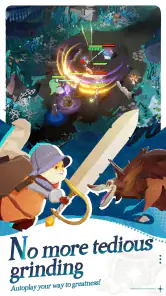
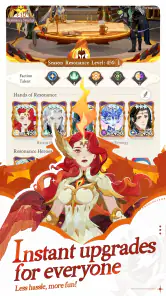



 Analysis by Frivlyz
I went into AFK Journey expecting a fantasy role-playing game I could dip into between other things, and its appeal became clearest when I treated progress as a series of small goals rather than a marathon. It gives me a world to explore, heroes to develop, and battles that ask me to think about my team. That combination suits short visits well, though it still asks for attention when I want to push through a difficult stretch.
Small goals make the first sessions easy to approach
The early appeal is the steady sense that there is something useful to do next: continue exploring, strengthen a team, or see whether a different hero arrangement handles a fight better. I like that these aims make the game approachable even when I only have a few minutes. Rather than needing to plan a long session before I start, I can focus on one immediate objective and stop when real life calls.
That rhythm is particularly handy during a commute break or while waiting for an appointment. I can check in, make a little progress, and leave without feeling that I have abandoned a complicated run halfway through. The trade-off is that short sessions can make the broader journey feel gradual. If I want a story-heavy role-playing game that pulls me into long, uninterrupted stretches, I would choose something designed around that kind of focused play instead.
Progress feels best when I notice what changed
For me, a useful way to play is to pay attention to the exact point where progress slows. If a battle stops moving forward, I treat that as a prompt to reconsider my team rather than simply repeating the same attempt. Hero abilities and strengths give those choices some strategic weight, and experimenting can make a stalled encounter feel like a puzzle instead of a wall.
I also find it helpful to give each visit a purpose. I might check what resources have accumulated, decide which improvement is most relevant to the obstacle in front of me, and then test that change. This avoids spending a brief session clicking through upgrades without a clear result. It is a small habit, but it makes the idle structure feel more intentional: waiting can support progress, while my active time is spent making decisions.
A gentle entry does not mean every stretch is effortless
The opening tutorial gets me moving without burying me in instructions, which is a good fit for a casual first session. Later, the strategic side matters more. A team that worked for one encounter may not be the answer everywhere, so I have to look at what a challenge is asking for and adjust rather than assume that collecting more power will solve everything.
That is where the game’s pacing can divide players. If I enjoy trying different combinations and learning from a failed attempt, the slowdown gives me a reason to engage more closely. If I mainly want automatic battles and a constant stream of effortless wins, the need to think about team composition may feel like friction. I would approach difficult sections in short bursts: make one considered adjustment, try again, and step away if the next move is not obvious.
Gaming Stories You May Enjoy

Dancing Road Turns Short Breaks Into a Test of Rhythm and Timing

Super Stylist Makes Every Outfit a Test of Taste and Patience

Dominoes on Your Terms: Who Should Play and Who Should Pass

Pokémon GO Makes the Familiar World Feel New

Chess.com Turns Rematches Into Rivalries, but Community Has Its Costs

Archery Battle 3D Review: Sharp Aiming, Unclear Feedback
Idle convenience has a boundary
The game’s idle character is useful, but I would not mistake it for a role-playing game that plays itself completely. Passive progress can help when I am busy, yet the decisions that make a team effective still belong to me. That balance is part of the attraction for someone who wants to check in casually, but it may disappoint anyone who expects to leave the game alone and see every challenge resolve without involvement.
There is also a difference between enjoying a free starting point and wanting every possible option immediately. The game is free to download, while in-app purchases range from under a dollar to just under a hundred dollars per item. I would begin without spending and first see whether the pace and team-building are enjoyable on their own. If purchases are a concern in your household, it is worth setting expectations before handing the game to a younger player; its content rating is Teen.
Who will enjoy this particular kind of fantasy RPG?
I would recommend it to someone who likes collecting a varied roster and thinking about how heroes work together, but needs a game that can fit around a busy day. It is also a reasonable pick if you enjoy fantasy exploration and want your active sessions broken up by periods of background progress. Someone who prefers a tightly authored, uninterrupted story, direct action in every battle, or a purely hands-off idle game may be happier with another role-playing style.
Compared with a conventional action RPG, this one puts more emphasis on roster choices and measured progress than on controlling every moment of combat. Compared with a simple idle game, it gives me more reason to consider which heroes to use and how to respond when a challenge resists my current approach. That middle ground is its clearest strength, but it also means it will not satisfy players who want either extreme.
What a normal day with it can look like
On a busy day, I might open the game during a short break, collect what has built up, and check whether my current team can move past the next obstacle. If it can, I continue; if not, I look at the heroes’ abilities, make one adjustment, and save the next attempt for another visit. This is a more satisfying routine than trying to clear everything in one sitting, and it gives the idle element a practical role rather than making it the whole experience.
A useful personal rule is to avoid changing several things at once when testing a new team. If I alter the lineup and make a different upgrade at the same time, it is harder to tell which decision helped. Making one deliberate change keeps experimentation understandable. It also makes a failed attempt informative: I can decide whether the lineup needs another adjustment or whether I simply need more progress before returning.
How the game earns repeat visits
What brings me back is not just the promise of more rewards; it is the chance to see whether a small decision changes the result of a challenge. The mix of passive accumulation and active team planning creates a simple loop: check in, choose a goal, test an approach, and leave with a clearer next step. For players who enjoy incremental improvement, that loop can make brief sessions feel worthwhile.
The same loop can become repetitive if I log in without a goal or expect every visit to deliver a major breakthrough. I get more out of it when I treat a session as one step in a longer progression, not as a demand to finish everything immediately. That perspective also helps set expectations: background progress is convenient, but it does not remove the need to make choices when the game asks for a stronger or better-matched team.
Setting off on Your Adventure
As soon as I launched AFK Journey, I was immediately drawn into a beautifully crafted world full of vibrant landscapes and intriguing characters. The game kicks off with a brief tutorial, guiding you through the basics without overwhelming you with information. I appreciated this, as it let me jump right into the action without feeling lost. The interface is user-friendly, making it easy for even the most casual gamers to navigate through the features.
Gameplay that Keeps You Hooked
What's really cool about AFK Journey is its idle RPG mechanics. Even when you're not actively playing, your characters continue to explore and gather resources, which means you’re making progress even when you're busy with other things. This feature was a game-changer for me, as it allowed me to balance my gaming with daily life seamlessly. The game continuously rewards you with loot and upgrades, which kept me coming back for more.
I must say, the strategic aspect of assembling a team of heroes is one of the most engaging parts of the game. Each hero comes with unique abilities and strengths, encouraging you to mix and match to find the perfect combination for every challenge. This strategic depth added a layer of complexity that kept the gameplay fresh and exciting.
Visuals and Soundtrack
The visual design of AFK Journey is nothing short of stunning. The artwork is detailed and immersive, bringing the world to life with vibrant colors and intricate designs. I found myself pausing just to admire the scenery! The soundtrack complements the visuals perfectly, with an orchestral score that enhances the adventurous feel of the game. It’s like being part of an epic fantasy film.
Community and Events
One of the highlights of AFK Journey is its active community. The game hosts a variety of events that encourage players to band together and tackle challenges. Participating in these events not only provides extra rewards but also fosters a sense of camaraderie. I enjoyed interacting with fellow players, exchanging tips, and strategizing for upcoming events.
How it fits into the RPG shelf
In the broader role-playing category, this feels like a middle ground between games built around hands-on combat and those that reduce nearly everything to passive collection. Its overworld presentation gives exploration a visible place, while the idle structure makes it easier to fit progress around ordinary routines. I would choose a more action-focused alternative if the pleasure I wanted was precise control in every fight; I would choose a simpler idle title if I wanted almost no team decisions. Here, the appeal is having both a relaxed check-in and a reason to think when progress stalls.
The store pitch points to a large hero roster and a generous number of pulls, but I would not treat roster size as a promise that every character will be immediately useful to my particular team. A broad collection is most enjoyable when I focus on combinations I actually want to test, rather than assuming I need to chase every option. That mindset keeps the strategic part manageable and makes the game less about collecting for its own sake.
Practical expectations before installing
The game is free, and the developer is FARLIGHT. It has a 4.6 average from around 242,000 ratings, with over five million installs, which suggests that many players have given it a try. It launched on March 22, 2024, and version 1.2.31 supports Android 5.1 and later. Those details make it easy to judge basic fit, but the more important question is whether its pace matches yours: the game is best when you enjoy gradual development and can accept that some sessions will be about preparation rather than a dramatic win.
Because it combines collection, upgrades, and recurring check-ins, I would also decide in advance what “enough” play looks like for me. A quick visit can be satisfying if I have a specific task, while repeatedly reopening the game just to see whether something new has appeared can turn a hobby into a habit. I prefer to set my own stopping point and let the next session wait until I actually want to return.
Reasons to pass, and reasons to stay
I would skip it if I were looking for a fully linear campaign that always moves at a fixed pace, or if I disliked roster management and repeated team adjustments. The idle layer does not make every stretch effortless, and the free-to-play structure includes optional purchases; players who want a completely purchase-free environment should keep that in mind. On the other hand, if I enjoy a fantasy setting, gradual goals, and the small satisfaction of finding a better answer to a stubborn fight, it gives me a pleasant reason to check back without requiring a long session every time.
The game is rated Teen, so I would take that age guidance seriously when choosing it for a younger player. I would also discuss spending expectations rather than relying on the free download alone to settle the question. For an adult who is comfortable with optional in-app purchases and wants a flexible fantasy RPG, the format is easier to recommend than it is for a family seeking a game with no purchase prompts or monetization decisions.
My progression verdict
For me, the strongest part of this game is the way its goals, unlocks, and challenges support a routine of short visits without making the strategic layer irrelevant. The best progress signals are practical ones: a team adjustment works, a previously awkward fight becomes manageable, or a new session begins with a clear next objective. When those moments arrive, the slow-and-steady structure feels rewarding rather than empty.
It is not the right choice for everyone, and its pacing can feel modest if I want constant novelty or direct control in every encounter. But as a free fantasy role-playing game for Android players who like idle progress, hero collection, and thoughtful team choices, it is an easy one to sample. I would try it with a few short sessions, see whether the team-building clicks, and keep going only if the steady rhythm feels like a welcome part of the day.
In conclusion, AFK Journey is a delightful mix of idle gaming and strategic planning. It offers a rich gaming experience without demanding too much of your time, making it perfect for busy gamers. With its stunning visuals, captivating gameplay, and engaging community, it’s a journey worth embarking on. So, if you're looking for an adventure that fits into your pocket, give AFK Journey a try. Who knows? You might just find yourself hooked on this epic quest!
AFK Journey Pros and Cons
Pros
- Engaging idle gameplay mechanics.
- Rich and detailed fantasy world.
- Frequent updates with new content.
- Intuitive user interface and controls.
- Variety of characters to choose from.
Cons
- In-app purchases can be pricey.
- Requires stable internet connection.
- Progress can be slow without spending.
- Occasional bugs and glitches.
- Limited customization options.
This Game in Other Languages
Frequently Asked Questions
What is AFK Journey?
AFK Journey is an adventure RPG game designed for mobile devices, providing players with an immersive experience of exploration and strategic battles. It allows players to recruit heroes, upgrade their teams, and engage in battles with various monsters and bosses. The game offers a blend of idle gameplay mechanics with strategic elements, making it suitable for both casual and dedicated players.
Is AFK Journey free to play?
Yes, AFK Journey is free to download and play. However, like many mobile games, it includes in-app purchases that allow players to buy game currency, special items, or heroes, which can enhance the gaming experience significantly. Players can still enjoy the game fully without making any purchases, although progression might be slower.
What are the system requirements for AFK Journey?
AFK Journey requires a stable internet connection and is compatible with both Android and iOS devices. For Android, it typically requires version 5.0 or higher, while for iOS, it requires iOS 10.0 or later. It’s important to ensure that your device has sufficient storage space and processing power to run the game smoothly.
How does the idle gameplay work in AFK Journey?
The idle gameplay feature in AFK Journey allows players to continue earning rewards and progress even when they are not actively playing the game. This means that your team of heroes continues to fight and gather resources, which can be collected the next time you log in. It’s a great feature for those with busy schedules who cannot play continuously.
Can I play AFK Journey with friends?
Yes, AFK Journey includes social features that allow you to play with friends. You can form alliances, participate in guild battles, and help each other in various in-game events. The social aspect enhances the gameplay experience by enabling players to strategize and cooperate with others to overcome challenges and progress faster.


