

A Webbing Journey
- Reviews
- 4.5
- Version
- 0.8.11
- Installs
- 1,000,000+

Screenshots
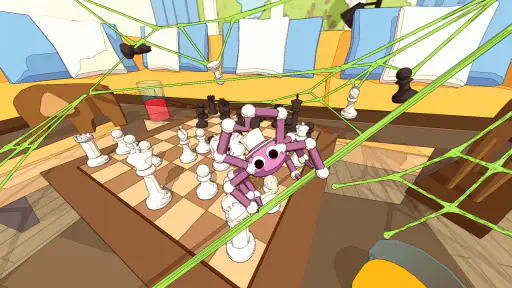
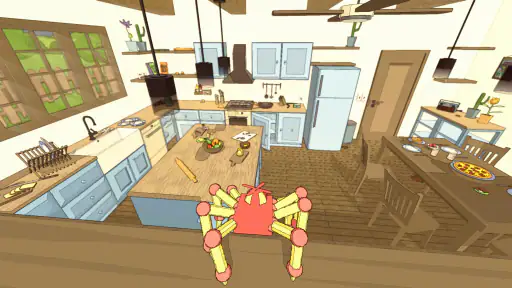


 Analysis by Frivlyz
I like games that give me a small, clear world to explore rather than a long list of tasks, and this one makes that idea easy to understand from the start. A Webbing Journey is an adventure game from Fire Totem Games where you play as a little spider and use the surroundings as part of the fun. Its appeal is less about rushing through action and more about seeing what you can do with a web, a surface, and a bit of curiosity.
What to expect from a spider’s-eye view
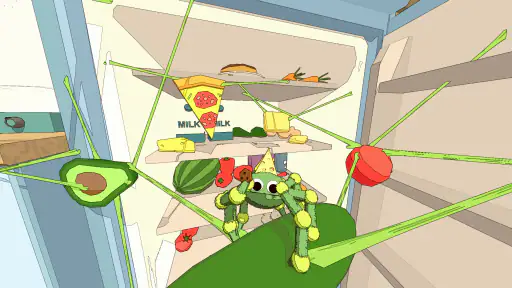
The central pleasure is movement. A twig, leaf, or other part of the environment can become something to climb around or swing from, so the world invites experimentation rather than treating every object as scenery. The physics-based approach gives those small actions weight: your spider’s motion is part of the puzzle, not just a way to get from one marked point to another.
That makes the game feel different from a conventional platform adventure, where jumps are often predictable and the route forward is the main question. Here, I find myself wondering how the spider can use the space in front of it. That shift is a genuine strength, though it also means players who want constant speed, combat, or tightly scripted action may find the pace too gentle.
Getting comfortable before the first challenge
I’d recommend beginning with a few minutes of low-pressure movement instead of immediately trying to solve everything efficiently. Get a feel for how climbing and swinging respond, and notice which surfaces make it easier to change direction. In a physics-led game, a tiny adjustment in approach can matter more than trying to move faster, and learning that early makes later exploration feel less awkward.
There is no need to treat the first session like a test of skill. Let the spider move around and use the environment as a place to practise. If an attempt doesn’t work, I’d change one thing at a time—where I start, what I attach to, or the direction I move—rather than repeating the same action with more force. That simple habit turns trial and error into useful feedback.
The game is free, rated for Everyone, and has a 4.5 average from around 6,700 ratings. It has passed a million installs, which gives a new player a sense that it has found an audience without telling you whether its particular style will suit you. The current version is 0.8.11, and it runs on Android 7.0 or later. Those details make it straightforward to judge basic fit before installing; the more important question is whether you enjoy patient, playful movement.
Turning a first attempt into a small success
For a satisfying first session, pick one nearby point you want the spider to reach and make that your goal. Try to get there by using the environment, not by treating the route as a straight line. If a swing carries you past the target, use the next attempt to adjust your starting position or timing. Reaching a modest destination this way is more rewarding than rushing around without noticing how the movement works.
Gaming Stories You May Enjoy

Dancing Road Turns Short Breaks Into a Test of Rhythm and Timing

Super Stylist Makes Every Outfit a Test of Taste and Patience

Dominoes on Your Terms: Who Should Play and Who Should Pass

Pokémon GO Makes the Familiar World Feel New

Chess.com Turns Rematches Into Rivalries, but Community Has Its Costs

Archery Battle 3D Review: Sharp Aiming, Unclear Feedback
That approach also helps when a puzzle or obstacle feels confusing. Pause and inspect the available surfaces; the useful route may be a sequence of small movements rather than one big leap. I find it helpful to think, “What can I attach to next?” instead of “How do I get there immediately?” The game’s appeal comes from discovering those possibilities, so a slower attempt can be the more productive one.
Spinning the Web
When I first launched A Webbing Journey, I was instantly captivated by its vibrant graphics and intuitive controls. The game invites you into a lush environment teeming with flora and fauna, where every leaf and twig becomes part of your playground. You can swing, climb, and crawl your way through various challenges, each designed to test your arachnid agility and problem-solving skills.
Gameplay and Features
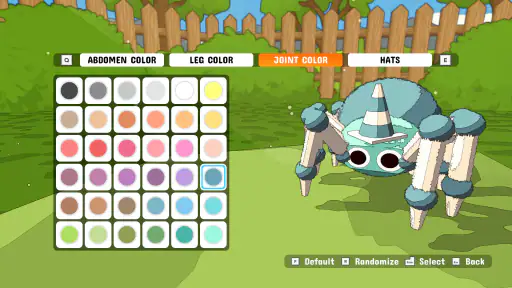
The gameplay is as smooth as silk! You’ll find yourself navigating through levels by swinging on webs, solving puzzles, and interacting with other adorable critters. The game does a fantastic job of balancing fun and challenge, making it suitable for players of all ages. I particularly loved the way you can customize your little spider with different skins and abilities. It adds a personal touch that keeps you engaged and wanting to explore more.
One feature that really stands out is the game’s physics engine. The way your spider moves and interacts with the environment feels incredibly realistic. You can tell that a lot of thought and care went into making sure every web thread and jump behaves just as you’d expect in the real world. It’s these details that make the game not just fun, but genuinely immersive.
Sound and Visuals
Let’s talk about the aesthetics for a moment. The visuals are nothing short of stunning. Each level is a colorful masterpiece, with intricate details that bring the tiny world to life. The sound design complements the visuals perfectly, with a soundtrack that is both soothing and adventurous. Every swing and scuttle is accompanied by charming sound effects that enhance the overall experience. It’s a sensory delight that makes you feel like you’re really part of this mini-ecosystem.
Moreover, the game is optimized for both Android and iOS platforms. Whether you're playing on a tablet or a smartphone, the experience remains consistently enjoyable without any noticeable lag or glitches. This is a big plus for those of us who like to game on the go.
Small habits that make exploration easier
One useful way to approach the environments is to look at them in layers. Rather than scanning only for the next obvious landing spot, check whether a nearby branch or leaf offers a safer intermediate move. Short hops and climbs give you more chances to correct a mistake than a long swing that carries you beyond the area you meant to reach. This is especially helpful when you are still learning how the spider responds.
Another trade-off is that experimentation can be charming one moment and a little imprecise the next. Physics-based movement creates memorable, organic moments, but it is not always as exact as a fixed jump in a traditional platform game. When a movement feels inconsistent, I’d avoid assuming the game expects a perfect sequence. Try a different angle or a closer anchor point, and use the result to learn how that section behaves.
For a relaxed everyday session, this works well as a game to open when you have a short break and want something more hands-on than a puzzle app but less demanding than a fast action game. I can imagine playing for a few minutes after school or work, setting myself one small exploration goal, and stopping once I reach it. The gentle premise and readable world suit shared play too: a younger player can enjoy moving the spider around while an older player helps think through a route.
Who will enjoy it, and who may prefer something else
I’d point first-time players toward this if they like exploring, experimenting, and solving problems through movement. It is a particularly good fit for someone who enjoys the tactile feeling of climbing and swinging, or who wants an adventure that feels playful rather than intense. The Everyone age rating makes it an approachable choice for a broad audience, though a rating alone can’t tell you whether a child will enjoy its pace; the best clue is whether they like open-ended discovery.
I would steer players elsewhere if they mainly want a clear competitive goal, rapid combat, or a tightly guided story. Compared with the usual adventure platformers, this puts more emphasis on manipulating movement and less on simply memorizing a sequence of jumps. Compared with a pure sandbox, it still offers challenges and direction, so it isn’t just a place to wander without purpose. The balance between those two styles is what makes it distinctive, but it will not satisfy someone who wants either extreme.
One practical question is whether it makes sense on a phone. The small-scale setting and short movement decisions are naturally suited to handheld play, and the game is available for Android and iOS. A larger screen may make it easier to take in a busy scene, but I’d choose based on comfort rather than assuming a tablet is necessary. If you already have a compatible device, the free price makes it easy to try without making a purchase decision first.
When the web does not quite go to plan
Not every failed attempt needs a new strategy. Sometimes I simply need to slow down and read the space again. If the spider overshoots, shorten the move; if it cannot reach a useful surface, look for a nearer step. This is a small but important distinction: repeatedly pressing through a frustrating moment can make a physics game feel clumsy, while changing one part of the approach helps reveal whether the obstacle is about positioning or timing.
The same openness that makes exploration satisfying can leave a new player briefly unsure what to do next. I wouldn’t expect every moment to point toward a single obvious answer. Treating the environment as a set of possible routes makes that uncertainty feel intentional rather than like a reason to quit. Still, anyone who dislikes experimenting or wants explicit direction at every turn may prefer a more linear adventure.
More room to explore at your own pace
The game’s 190 written reviews and 4.5 average suggest a positive reception, but I’d use that as background rather than a promise. Player preferences vary, especially with a game whose main draw is physical movement. A person who enjoys testing routes may find the same freedom absorbing, while someone looking for precise, fast controls may notice the loose feel more quickly.
It also helps to think of progress as learning the world, not just clearing a challenge. A failed swing can show which surfaces are useful, and a different route may be more dependable than the first idea. I would avoid trying to make every movement perfect; the playful character of the game comes through when you let small discoveries guide the next attempt.
Its current version is 0.8.11, and the listed minimum Android requirement is version 7.0. If you are checking whether your device is a fit, those are the concrete compatibility details to keep in mind. The game has been available since May 18, 2023, and Fire Totem Games is the developer behind it. None of that changes the central decision: this is best approached as a light, exploratory adventure rather than a test of reflexes.
Final Thoughts
In conclusion, A Webbing Journey is a refreshing escape from the mundane. It’s a game that doesn’t just entertain but also enchants, offering a unique perspective on nature’s intricate beauty. Whether you’re a casual gamer or a seasoned pro, this game will weave its way into your heart. So why wait? Get ready to swing into action and embark on your own webbing adventure today!
A Webbing Journey Pros and Cons
Pros
- Innovative gameplay mechanics.
- Beautiful art style and graphics.
- Engaging storyline.
- User-friendly interface.
- Regular updates with new content.
Cons
- Occasional bugs and glitches.
- Requires constant internet connection.
- Limited character customization.
- In-app purchases can be expensive.
- Some levels are overly challenging.
Frequently Asked Questions
What is A Webbing Journey about?
A Webbing Journey is a captivating puzzle-platformer game that follows the adventures of a tiny spider navigating through intricate web-filled levels. The game is designed to challenge your problem-solving skills as you help the spider weave its way through obstacles, collect items, and solve puzzles to progress. With its charming graphics and engaging gameplay, it offers a delightful experience for players of all ages.
Is A Webbing Journey available for both Android and iOS devices?
Yes, A Webbing Journey is available for download on both Android and iOS platforms. Players can enjoy the game on their smartphones or tablets by visiting the Google Play Store for Android devices or the Apple App Store for iOS devices. Ensure your device meets the game's system requirements for optimal performance.
Does A Webbing Journey require an internet connection to play?
A Webbing Journey is primarily an offline game, which means you can enjoy the majority of its features without needing an internet connection. However, some updates or additional content might require internet access to download. This makes it a convenient option for gaming on-the-go without worrying about data usage.
Are there in-app purchases in A Webbing Journey?
Yes, A Webbing Journey includes in-app purchases. While the game itself can be enjoyed without spending money, players have the option to purchase additional items, hints, or levels to enhance their gaming experience. These purchases are entirely optional and are designed to support the developers and offer optional content.
How challenging is A Webbing Journey for new players?
A Webbing Journey is designed to be accessible to players of varying skill levels. The game starts with easy levels to help new players get accustomed to the controls and gameplay mechanics. As players progress, the levels become more challenging, offering a rewarding experience for those who enjoy puzzle-solving and strategy. There are also hints and tips available to help players who may get stuck.


