

A Dance of Fire and Ice
- Reviews
- 4.8
- Version
- 2.8.4
- Installs
- 500,000+

Screenshots
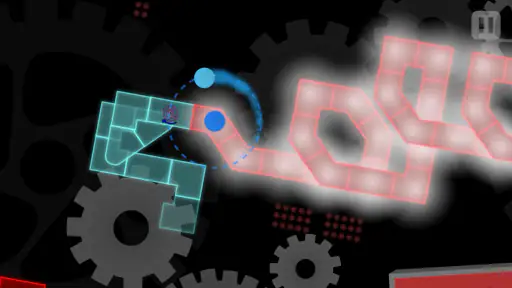
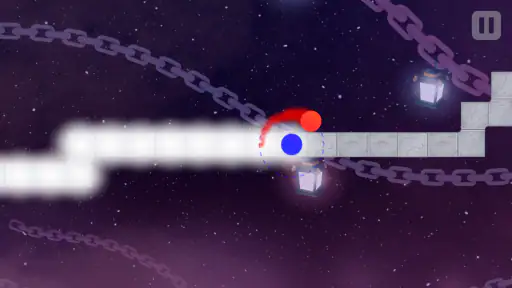
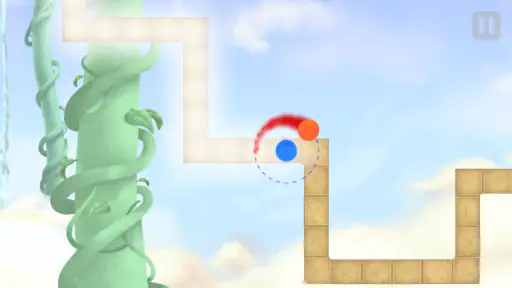
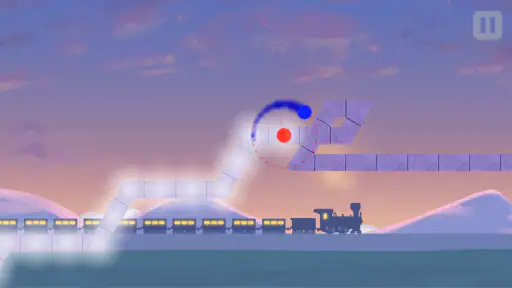
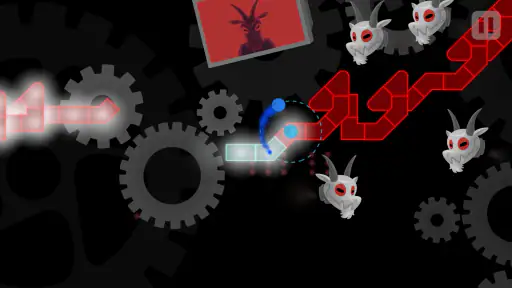
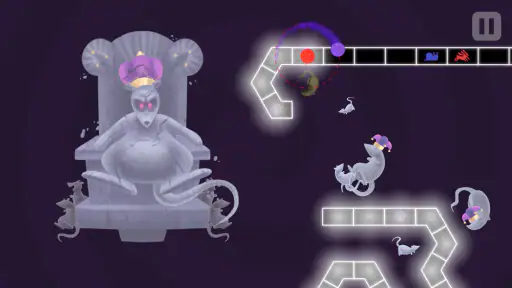
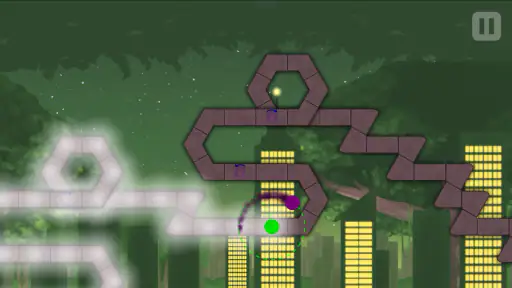
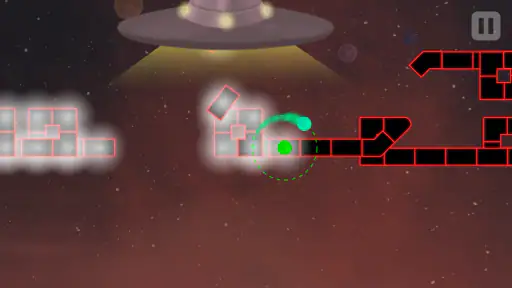
 Analysis by Frivlyz
My first few sessions with A Dance of Fire and Ice were a lesson in how much can be packed into a simple idea. I tapped along as two orbiting planets moved through a path, and the challenge was to keep their steps aligned with the rhythm. The opening appeal is immediate: the rules are easy to grasp, but the timing asks for real attention. I could pick it up for a short break, then find myself replaying a difficult passage because I wanted to understand where my timing had gone wrong.
Why the first week feels so absorbing
The visual restraint keeps my attention on the beat and the planets’ movement rather than on a busy screen. That makes each mistake legible: I can often tell whether I tapped too early, too late, or lost the pattern altogether. The quick reset after a miss turns failure into an invitation to try again, though it can also make a rough stretch feel relentless. This is not a rhythm game that lets me coast on a vague sense of the music; I need to listen and respond deliberately.
For someone new to rhythm games, that focus is a useful entry point. There is no complicated set of controls to learn before the central challenge begins. For experienced players, the appeal is different: the satisfaction comes from refining timing and staying composed when the pattern becomes less familiar. I would recommend starting when you can give the game a little concentration, rather than expecting it to work well as background entertainment. Playing while distracted makes it harder to tell whether I am learning the beat or merely repeating a section by chance.
It also helps to separate listening from tapping when a passage starts to feel confusing. I pause for a moment, listen to the rhythm in my head, and then try again with a lighter touch instead of hammering the screen. That small change gives me a better chance of noticing the pulse. If I am getting more annoyed than curious, stopping and returning later is more useful than grinding through retries without focus.
The Rhythm of Simplicity
At first glance, A Dance of Fire and Ice seems deceptively simple. Its design is minimalist, focusing on the gameplay rather than flashy graphics. But don't let that fool you! The simplicity is what makes it so addictive. You control two orbiting planets, one of fire and one of ice, and your task is to keep them on track by tapping in sync with the beat. Miss a beat, and you'll find yourself starting over, which can be both frustrating and motivating. It's like learning to ride a bike; you fall, you get up, and you try again.
Challenging Yet Rewarding
The learning curve in A Dance of Fire and Ice is real. As you progress, the beats get faster, the patterns more complex, and the challenge intensifies. But oh, the satisfaction when you finally nail that tricky sequence! It's a game that rewards perseverance and practice, making every victory feel earned. You'll find yourself tapping your foot in real life, trying to match the rhythm in your head.
One thing I absolutely love is the soundtrack. Each level comes with its own unique track, each one perfectly crafted to match the game's increasing difficulty. The music is not just a background feature; it's an integral part of the game that drives the player forward.
Gaming Stories You May Enjoy

Dancing Road Turns Short Breaks Into a Test of Rhythm and Timing

Super Stylist Makes Every Outfit a Test of Taste and Patience

Dominoes on Your Terms: Who Should Play and Who Should Pass

Pokémon GO Makes the Familiar World Feel New

Chess.com Turns Rematches Into Rivalries, but Community Has Its Costs

Archery Battle 3D Review: Sharp Aiming, Unclear Feedback
A Test of Patience and Precision
If you're someone who gets easily frustrated, this game might test your patience. But trust me, it's worth it. The game encourages you to find your rhythm and timing, and with each failure, you learn a little more. The sense of accomplishment when you finally "get it" is indescribable. Precision is key here, and the game does an excellent job of teaching you that through its gameplay.
While the game may lack the complex graphics or storyline that many other games boast, it more than makes up for it with its engaging and addictive gameplay. Whether you're a rhythm game veteran or a newcomer, you'll find something to love in this beautifully crafted game.
What keeps it in my rotation
The question after the first burst of excitement is whether I still want to open it once the novelty of the two-planet movement wears off. For me, its recurring value comes from the way a familiar rhythm can still demand careful attention. A short return session gives me a specific goal—hold the timing through a tricky sequence—instead of asking me to manage a long story or remember a complicated set of systems. That makes it easy to revisit in spare moments, provided I am in the mood to concentrate.
A realistic use is a quiet break between other tasks. I might play a little, notice that a section is consistently catching me out, and stop with that challenge in mind for later. The useful habit is to treat each attempt as practice rather than a score to defend: listen for the pulse, make one adjustment, and see whether the next run feels steadier. If I keep tapping automatically, I can repeat the same mistake without learning much. The game’s value depends partly on my willingness to pay attention.
This is where it differs from many music games built around a broad collection of songs, spectacle, or a more casual tap-along feel. Here, the central pleasure is not simply recognizing a tune or keeping a loose beat; it is matching a precise input to the movement and rhythm in front of me. If I want a relaxed musical backdrop, a playlist or a less demanding rhythm game is a better fit. If I want a compact test of timing that rewards focused retries, this approach has a clearer purpose.
That distinction also helps answer who should skip it. Players who dislike restarting after a missed input, or who want to make progress while distracted, may find the central loop more irritating than satisfying. The spare presentation may not appeal to someone who needs story, character development, or elaborate visuals to stay engaged. I would also avoid treating it as a game to play while multitasking: the beat is the point, and splitting attention makes the challenge feel arbitrary.
Keeping the challenge fair
Because timing is so central, the conditions around a session matter. I get more from playing when I can hear the music clearly and tap without rushing. If a passage seems impossible, changing my approach is more productive than assuming speed alone will solve it: I focus on the sound, relax my hand, and give myself a brief reset before another attempt. These are simple habits, but they help distinguish a genuine timing error from frustration taking over.
There is a trade-off in the retry loop. Restarting quickly keeps the action moving and makes practice convenient, but repeated failure can feel punishing when I am tired or impatient. I find it better to set a small aim for a session—understand one difficult rhythm, for example—rather than expecting every play to end in a breakthrough. That gives the game a satisfying role in a routine without turning it into an obligation.
It is a paid game, priced at $1.99, with in-app purchases at $1.99 per item. I would make the purchase decision based on whether precise rhythm challenges sound enjoyable, not on expecting a broad collection of unrelated activities. It is rated for Everyone, developed by 7th Beat Games, and its current version is 2.8.4. The game has an average rating of 4.8 from around 30,000 ratings, alongside roughly 1,300 written reviews and more than 500,000 installs. Those figures suggest it has found an audience, but they cannot tell me whether its demanding retry-based play will suit a particular person.
When the novelty fades
The main source of fatigue is also the game’s defining strength: accuracy matters, and the same section can ask for repeated attempts. Some players will enjoy the gradual improvement; others will feel that a missed beat erases too much of the pleasure. The soundtrack supports the challenge, but listening closely for a long stretch can be tiring rather than relaxing. I would not choose this when I want a soothing game that lets me drift in and out of attention.
Nor would I recommend it as a substitute for every kind of rhythm game. Its focused presentation is a strength if I want timing practice, but a weakness if I am looking for variety in presentation or a casual music experience. The best match is someone who enjoys repetition with a purpose and can accept that progress may come through small improvements rather than constant rewards. If that sounds like work rather than play, a more forgiving alternative is likely the wiser choice.
After the first week, I think it earns a place on a device when I return because I enjoy the act of getting more precise—not because I expect every session to feel new. The maintenance burden is low in the everyday sense: I can come back for a short attempt without rebuilding a complicated routine. The attention burden, however, is real. It works best as a deliberate little practice, not as something I keep open while doing something else.
So, if you're ready to test your rhythm skills, give A Dance of Fire and Ice a try. Just remember, it's not just a game; it's a dance. A dance where fire and ice move perfectly in sync to the beat, and you're the maestro conducting the symphony. Happy tapping!
A Dance of Fire and Ice Pros and Cons
Pros
- Unique rhythm gameplay with challenging levels.
- Simple one-touch control mechanics.
- Visually captivating with vibrant colors.
- Regular updates with new levels and features.
- Supports offline play for on-the-go fun.
Cons
- Steep learning curve for new players.
- Limited storyline or narrative elements.
- Can become repetitive over time.
- Requires precise timing and focus.
- Soundtrack might not appeal to everyone.
This Game in Other Languages
Frequently Asked Questions
What is 'A Dance of Fire and Ice'?
'A Dance of Fire and Ice' is a unique rhythm game available on Android and iOS, where players must control two orbiting planets as they traverse a path in sync with the beat of the music. The game is known for its challenging levels and intricate musical compositions, which test players' timing and coordination.
Is 'A Dance of Fire and Ice' suitable for all ages?
Yes, 'A Dance of Fire and Ice' is suitable for players of all ages. Its simple, intuitive gameplay mechanics make it accessible to younger audiences, while the increasing difficulty levels offer a challenge that appeals to older players and rhythm game enthusiasts. The game does not contain any inappropriate content, making it family-friendly.
Are there in-app purchases in 'A Dance of Fire and Ice'?
'A Dance of Fire and Ice' is a paid app, so there are no free-to-play elements or in-app purchases. Once you purchase the game, you will have access to all its content. This means no interruptions during play due to ads or additional purchases, providing a seamless gaming experience.
What are the system requirements for 'A Dance of Fire and Ice'?
For Android users, 'A Dance of Fire and Ice' requires Android version 4.1 or higher. iOS users need to have iOS 9.0 or later. The game is lightweight and doesn't require much storage space, making it easy to download and install even on older devices. Ensure your device meets these requirements for optimal performance.
How can I improve my skills in 'A Dance of Fire and Ice'?
Improving your skills in 'A Dance of Fire and Ice' involves practice and familiarizing yourself with the rhythm of each level. Start with easier levels to build your coordination and timing before progressing to more challenging stages. Pay attention to the music cues, as they will guide your actions. Replay levels to improve your accuracy and timing.


