

60 Seconds! Atomic Adventure
- Reviews
- 3.9
- Version
- 1.3.147
- Installs
- 1,000,000+

Screenshots
 Analysis by Frivlyz
Ever wondered what you could do if you only had 60 seconds to prepare for an apocalypse? Well, that’s exactly what 60 Seconds! Atomic Adventure throws at you, and let me tell you, it’s both nerve-racking and oddly entertaining!
A frantic opening with real trade-offs
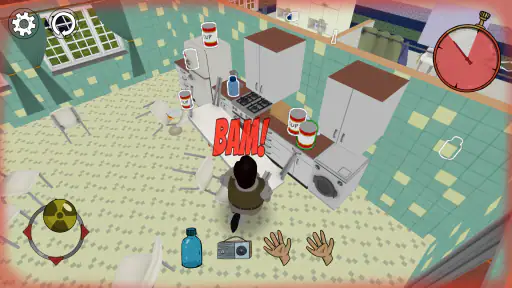
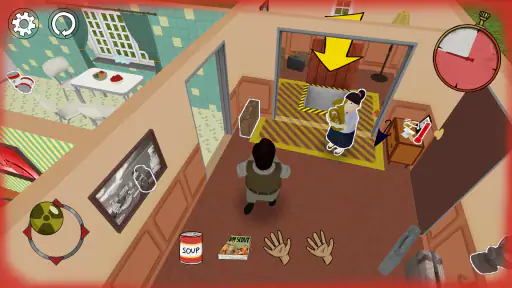
The first minute is more than a quick warm-up. You race through a house, decide what matters, and discover that carrying one useful object can mean leaving another behind. I find that scramble strongest when I stop trying to collect everything and instead think about what might help the family once the door closes. A supply run is a series of compromises, not a neat checklist, and the pressure makes ordinary objects feel surprisingly important.
That structure also gives the game a useful learning curve without making every run feel like a lesson. Early attempts are naturally messy: I might spend too long crossing rooms, grab something that turns out not to solve my immediate problem, or overlook a family member while focusing on supplies. Those mistakes show me how the house is laid out and how quickly a plan can unravel. On later runs, I can move with more purpose, but I still have to adapt because preparation is only one part of the challenge.
A practical tip is to treat the scavenging phase as a prioritization puzzle rather than a test of speed alone. If I have a clear idea of what I want to secure, I waste less time changing direction at the last moment. At the same time, I don’t want to over-plan: a rigid route can fall apart when I misjudge distance or get distracted by an item. The interesting balance is having a rough priority order while staying ready to make a quick substitution.
Getting Started with the Chaos
So here’s the deal: you have exactly 60 seconds to scavenge as many supplies as you can before the nuclear bomb drops. Sounds easy, right? Well, think again. The game kicks off with you frantically running around your house, grabbing essentials like food, water, and maybe even a board game if you have time. The controls are pretty straightforward, but the pressure is real, folks. You’ll find yourself making snap decisions that could mean the difference between survival and, well, not surviving.
Surviving the Fallout
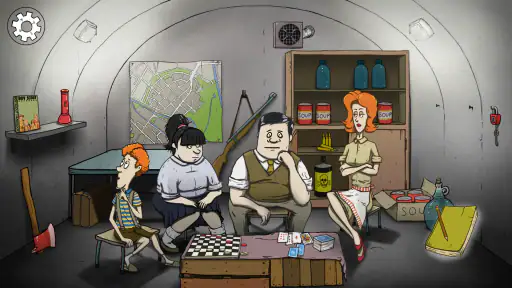
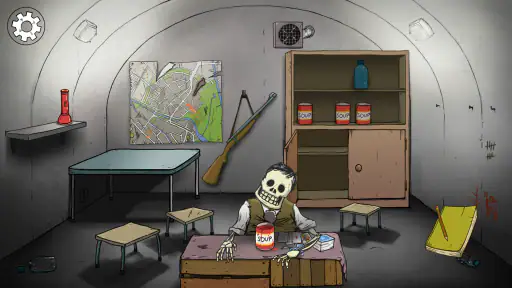
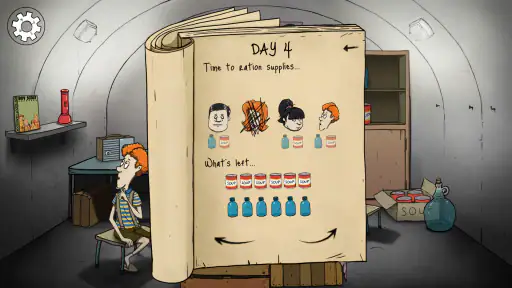
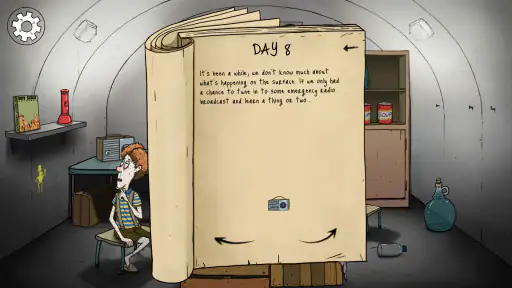
Once you’ve made it into the bunker, the game shifts gears into a strategy/survival mode. Managing your resources becomes your new reality, and let me tell you, rationing soup has never felt so intense. You’ll need to make tough choices about who gets to eat and drink, and how often. It's a bit like being the head of a very dysfunctional household, but with the constant threat of radiation sickness looming over.
This second half is where I’d recommend slowing down and reading each situation instead of tapping through on autopilot. A decision that seems harmless in isolation can change what options feel sensible later, so I try to judge choices by the household’s current condition rather than by a fixed rule. The best move is not always the one that saves the most supplies immediately; sometimes keeping the group stable matters more. That tension gives the game its character, though it can also make a run feel harsh when several problems arrive close together.
Gaming Stories You May Enjoy

Dancing Road Turns Short Breaks Into a Test of Rhythm and Timing

Super Stylist Makes Every Outfit a Test of Taste and Patience

Dominoes on Your Terms: Who Should Play and Who Should Pass

Pokémon GO Makes the Familiar World Feel New

Chess.com Turns Rematches Into Rivalries, but Community Has Its Costs

Archery Battle 3D Review: Sharp Aiming, Unclear Feedback
For a realistic short-session use case, this works well when I have a little spare time and want a contained challenge rather than a long campaign to track. I can start a run, make a handful of consequential decisions, and then decide whether I want to continue or try a different approach another time. It is less suited to someone who wants a relaxed game to leave running in the background: the choices ask for attention, and the grim comic situations are more effective when I’m actually following what is happening.
The game also throws random events your way, like unexpected visitors or mysterious noises outside. Do you open the door to see who’s there, risking exposure, or do you play it safe and stay huddled inside? Each decision comes with consequences, and not all of them are pleasant. But hey, that’s part of the charm!
Those events are also a reason not to assume that one successful approach will solve every run. I treat a familiar situation as a prompt to reconsider, not as an automatic cue to repeat the same choice. That keeps the decisions from becoming a simple memory test and makes the household’s condition matter from one moment to the next. If you prefer deterministic puzzles where the best answer stays obvious, this uncertainty may feel more frustrating than fun.
Compared with many adventure games that emphasize exploration, direct action, or a steady story path, this one gets its momentum from constrained choices and consequences. The unusual split between a frantic collection phase and slower bunker decisions is its clearest distinction. It is a good pick if I want a compact survival scenario with dark comedy; if I’m looking for precise combat, a large world to roam, or a calm puzzle with one correct solution, I’d choose something else.
Graphics and Audio
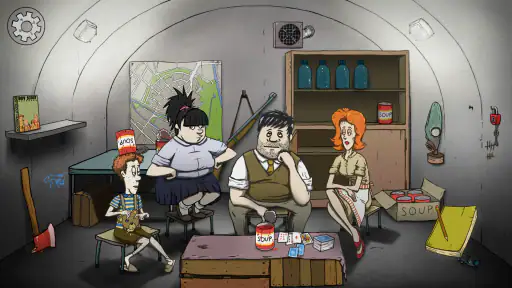
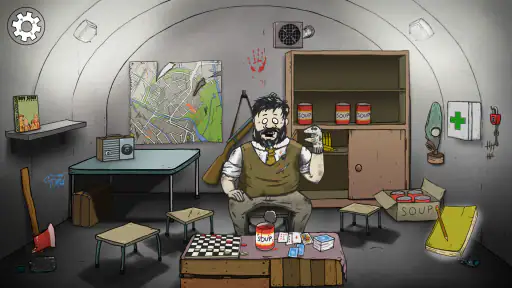
Now, let’s talk about the visuals and sound. The graphics have this quirky, cartoonish style that fits perfectly with the game’s dark humor. It’s almost like watching a post-apocalyptic comic book come to life. The audio complements this vibe with eerie sound effects and a suspenseful soundtrack that keeps you on edge, adding another layer of immersion to the whole experience.
The tone is a big part of why the bleak subject matter remains approachable. The cartoon presentation doesn’t remove the stakes, but it stops the experience from feeling like a grim simulation. I enjoy that contrast: the situation is serious enough to make choices matter, while the exaggerated style lets the game find comedy in panic and bad luck. It won’t suit everyone, especially players who want a realistic or solemn treatment of survival, but the style feels closely tied to the game’s identity rather than decorative.
Robot Gentleman’s adventure game is aimed at players who enjoy experimenting with decisions and accepting imperfect outcomes. Teen is the appropriate audience in broad terms, but the central appeal is less about reflexes than about weighing risks and watching a family cope. Someone who dislikes bleak jokes, abrupt setbacks, or the possibility that a careful plan can still go wrong may find the experience more irritating than amusing.
One thing to highlight is the replayability factor. 60 Seconds! Atomic Adventure offers multiple endings based on the choices you make, so each playthrough feels fresh and unpredictable. You’ll want to dive back in to see what could have happened if you had just picked that gas mask instead of the radio.
Replay value is most satisfying when I change my priorities on purpose, rather than simply restarting in the hope that luck improves. I might focus on taking a different mix of supplies, or respond to a familiar dilemma with a new risk calculation. That makes each attempt useful even when it ends badly: I learn which assumptions were shaky and get another chance to see how a different plan plays out. The trade-off is that repetition is part of the package, so anyone who needs a constant stream of entirely new scenes may tire of the loop.
One useful way to approach it is to separate a disappointing result from a wasted run. If a choice leads to trouble, I can still use it to understand how the game’s pressures interact, then test a different response next time. I wouldn’t recommend obsessively chasing a perfect outcome; the fun is in seeing a plan survive contact with an unpredictable situation, not in turning every decision into a guaranteed win.
Who should step into this bunker?
I’d recommend it to players who like short, replayable adventures, resource tension, and stories shaped by their own decisions. It can also suit someone who usually avoids demanding action games but still wants pressure and consequences, since the central challenge is planning and judgment rather than mastering elaborate combat. The humor gives the experience a distinctive voice, while the survival decisions provide enough substance to keep a run from being only a joke.
I’d skip it if I want a soothing game to play without thinking, dislike restarting after a bad outcome, or prefer a tightly authored story that carefully guides me from scene to scene. It also may not be the right choice if I find repeated resource management tedious. The opening rush can be stressful by design, and the bunker phase asks me to stay engaged with the household’s changing needs; neither part is meant to feel like background entertainment.
Before buying, I’d think about whether I enjoy learning through trial and error. The game costs $3.99, so the key question for me is not whether it has an endless amount of content, but whether I’ll enjoy returning to its particular cycle of rushed preparation and difficult follow-up choices. It has an average rating of 3.9 from around 25,000 ratings, with about 2,200 written reviews, and has passed 1 million installs. Those figures suggest a sizeable audience, but they don’t change the basic fit question: the appeal depends on enjoying its specific blend of dark comedy and survival decisions.
On Android, it requires version 5.0 or later, and the current version is 1.3.147. It was released on December 21, 2017, and its established premise makes it easy to understand what kind of experience I’m choosing: a self-contained nuclear-wasteland adventure, not a broad action game. If I’m unsure, I’d decide based on whether the one-minute scramble sounds exciting or simply stressful; that first impression is a good clue to whether the rest will click.
Final Thoughts
In the end, 60 Seconds! Atomic Adventure is a delightful mix of strategy, dark humor, and sheer panic. It’s not just about surviving the apocalypse, but also about the journey and the decisions you make along the way. Whether you’re a fan of survival games or just looking for something a bit different, this game is worth a try. Just remember, in the world of 60 Seconds, every second truly counts!
My recommendation is specific: pick it up if you enjoy making imperfect plans, adapting when events upset them, and finding humor in a family’s absurdly tense predicament. Pass if you want a forgiving, peaceful experience or a story that unfolds the same way each time. For me, the contrast between a frantic dash and measured bunker choices is the reason to play, and also the reason it won’t be for everyone.
60 Seconds! Atomic Adventure Pros and Cons
Pros
- Engaging real-time strategy gameplay
- Unique art style and soundtrack
- Procedurally generated worlds
- Multiple character classes to choose
- Offline play available
Cons
- Can be challenging for beginners
- Limited in-game tutorial
- Somewhat repetitive missions
- Occasional frame rate drops
- In-app purchases can be intrusive
This Game in Other Languages
Frequently Asked Questions
What is the main objective of 60 Seconds! Atomic Adventure?
60 Seconds! Atomic Adventure is a dark comedy atomic apocalypse survival game where the main objective is to survive in a fallout shelter with your family. Players have 60 seconds to gather supplies and rescue their family members before a nuclear bomb hits. The goal is to manage resources effectively and make crucial decisions to ensure survival during the post-apocalyptic scenario.
How does the gameplay work in 60 Seconds! Atomic Adventure?
Gameplay in 60 Seconds! Atomic Adventure is divided into two phases: the scavenging phase and the survival phase. In the scavenging phase, players have 60 seconds to collect supplies and family members. In the survival phase, players must make strategic decisions on rationing food, water, and other resources to keep their family alive inside the fallout shelter. Random events and moral dilemmas also play a significant role in the game.
Can I play 60 Seconds! Atomic Adventure on both Android and iOS devices?
Yes, 60 Seconds! Atomic Adventure is available for download on both Android and iOS platforms. Players can enjoy the game on a wide range of devices, making it accessible whether you are using a smartphone or a tablet. The game offers a seamless experience on both operating systems, providing hours of entertainment as you navigate through its unique challenges.
Is 60 Seconds! Atomic Adventure suitable for children?
While 60 Seconds! Atomic Adventure features a cartoonish art style, it is important to note that the game deals with themes of survival during an atomic apocalypse, which may not be suitable for younger children. The game contains dark humor and situations that require mature decision-making, making it more appropriate for teenagers and adults who can appreciate its satirical take on survival scenarios.
Are there any in-app purchases or ads in 60 Seconds! Atomic Adventure?
60 Seconds! Atomic Adventure is a premium game, meaning it is a paid app with no in-app purchases or ads interrupting the gameplay. Once purchased, players can enjoy the full experience without any additional costs. This ensures an immersive and uninterrupted gaming experience, allowing players to fully engage with the game's challenging and humorous survival scenarios.


