

3D Goods Store: Sorting Games
- Reviews
- 4.8
- Version
- 1.0.9
- Installs
- 100,000+

Screenshots
 Analysis by Frivlyz
When I judge a sorting game, I pay attention to more than whether its objects look appealing: I want to know if I can read the play space quickly, understand what to do, and enjoy a short session without fighting the controls. 3D Goods Store: Sorting Games is a casual game from LifePulse Puzzle Game Studio built around arranging goods in a three-dimensional store setting. Its colorful presentation gives the idea an easygoing feel, while the sorting itself asks for enough attention to make a quick break feel active rather than passive.
Reading the shelves and finding your way around
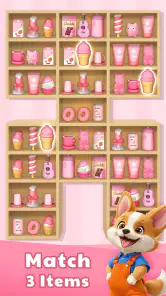
Right off the bat, 3D Goods Store: Sorting Games greets you with a splash of colors and a straightforward interface. The graphics are simple yet effective, creating a fun and engaging atmosphere without overwhelming your senses. It feels like stepping into a virtual store, minus the real-world pressure of overspending! That uncluttered first impression matters for a game based on spotting and grouping goods: the faster I can orient myself, the more attention I can give to the puzzle instead of working out the interface.
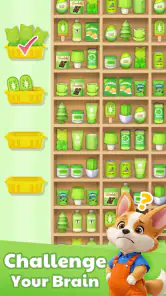
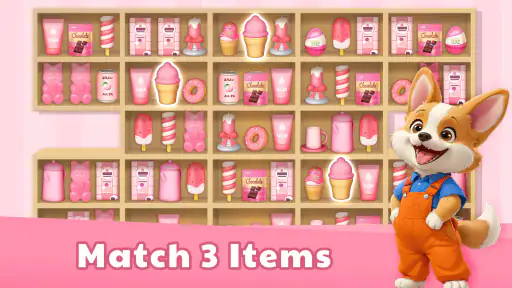
The central task is easy to grasp: identify goods and sort matching items. That makes it approachable for someone who wants a low-pressure casual game rather than a long tutorial or a complicated ruleset. The visual scene still requires looking carefully, though. Similar-looking packages or objects can take a moment to distinguish, so I would not describe the game as effortless for every player simply because its premise is familiar.
Gameplay Mechanics
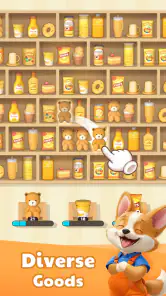
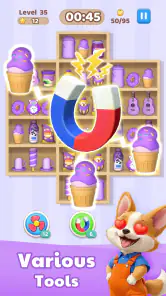
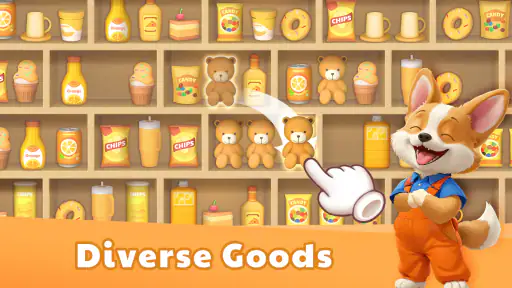
The game is all about sorting items in a 3D environment. It might sound easy, but trust me, it’s more challenging than it appears. You start with basic items and as you progress, the complexity increases, introducing a variety of goods that you need to place in their correct slots. It's like organizing a digital warehouse, and it’s surprisingly satisfying!
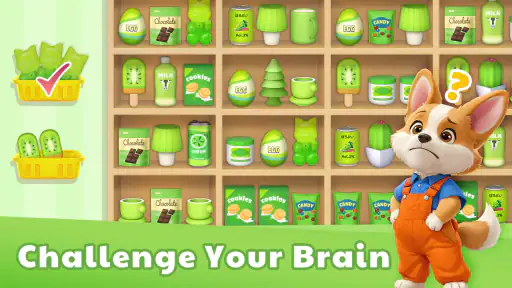
What I love about this game is how it subtly improves your organizational skills and attention to detail. It’s perfect for those moments when you need a mental shift but still want to keep your brain active. The controls are intuitive, so you won’t be fumbling around trying to figure out what to do next.
How it feels to play in different situations
I see this as a good fit for a short pause between everyday tasks: a few minutes while waiting for someone, taking a break from reading, or winding down when I want to focus on something simple. The sorting loop gives my hands and eyes a clear job, which can be more engaging than passively scrolling. If I have only a brief window, I would treat a level as a self-contained mental break rather than start playing when I need to give full attention to something else.
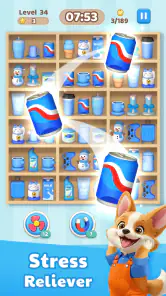
The time limit mentioned in the game’s level progression is an important trade-off. A countdown can make familiar sorting feel lively, but it can also turn a calming activity into a source of pressure. If I am tired, interrupted, or playing in a distracting place, I would expect the timed element to matter more than it does during a quiet session. This is not the strongest choice for someone who wants an entirely unhurried puzzle with no urgency.
Gaming Stories You May Enjoy

Dancing Road Turns Short Breaks Into a Test of Rhythm and Timing

Super Stylist Makes Every Outfit a Test of Taste and Patience

Dominoes on Your Terms: Who Should Play and Who Should Pass

Pokémon GO Makes the Familiar World Feel New

Chess.com Turns Rematches Into Rivalries, but Community Has Its Costs

Archery Battle 3D Review: Sharp Aiming, Unclear Feedback
For a more comfortable session, I would first play somewhere with enough light to make small visual differences easy to notice and hold the device in a position that does not strain my hands. I would also avoid trying to beat a level while carrying on a conversation or walking around. Those are practical ways to make a visual, touch-driven sorting task easier to follow; they are not special accessibility settings.
Motor and sensory considerations
The simple controls are a strength because they keep the main interaction understandable. Still, sorting in a three-dimensional scene can demand careful looking and accurate touches. Players who have difficulty with small targets, repeated tapping, or distinguishing similar colors and shapes may find some moments less comfortable than the bright, friendly style initially suggests. I would try a short session before deciding whether the pace and visual demands suit me.
The upbeat music and success sounds support the playful mood, but sound is a matter of preference and circumstance. A quiet room, shared space, or commute may call for a lower volume or silent play. I would not assume that audio is essential to understanding the sorting task; the basic premise is visual. At the same time, anyone sensitive to repeated effects may find the cheerful feedback less relaxing over a long stretch.
Sound and Music
Let's talk about the audio experience. The background music is upbeat and keeps you in a light-hearted mood throughout your sorting spree. It’s designed to be non-intrusive, so it enhances the experience without becoming a distraction. The sound effects, like the swoosh of items being placed correctly, add a gratifying touch to each successful move.
Progress, pressure, and replay value
One of the standout features is the progression system. As you advance through the levels, the game introduces new challenges and item types, ensuring that it never feels repetitive. Plus, there’s a rewarding sense of accomplishment when you manage to sort everything perfectly under the time limit set for each level.
Another fun aspect is the leaderboard feature. Competing with friends or other players worldwide adds an extra layer of excitement and motivation to keep improving your sorting speed and accuracy.
That competition is optional in spirit: I would get the most from it if I enjoy comparing results and have a reason to return to improve. If leaderboards do not motivate me, the core appeal remains the hands-on matching and sorting rather than a social obligation. A useful personal approach is to focus on accuracy first, then let speed improve with familiarity; chasing a faster result immediately can make a visually busy task feel unnecessarily tense.
Compared with a word puzzle, this game leans more on visual recognition and arranging objects than on vocabulary. Compared with a classic match-three game, its store goods and 3D presentation make the activity feel closer to organizing a display than swapping gems on a flat board. If I wanted quiet, untimed contemplation, a traditional logic puzzle might suit me better. If I wanted a fast visual task with a clear goal, this is the more natural fit.
Who is likely to enjoy it—and who may not
I would recommend it to casual players who like tidy visual tasks, enjoy noticing small differences, and appreciate a little time pressure. It can also work for someone who wants a straightforward game to pick up without committing to a story or a complex strategy. The Everyone age rating reflects its broad intended audience, though younger players may still need help managing screen time or any in-app purchase decisions.
I would suggest skipping it if you strongly dislike countdowns, find 3D scenes difficult to scan, or prefer games built around deep planning, narrative, or a completely calm pace. It is also not the best match for a person looking for a purely tactile or audio-led experience. The basic sorting idea is accessible in concept, but the practical experience depends on comfortable vision, touch interaction, and tolerance for the game’s pace.
A realistic way to use it is as a brief reset after finishing a small chore: I can sit down, play a level or two, and return to what I was doing without needing to remember a long plot or complicated plan. If I am waiting somewhere noisy, I can keep the session short and choose whether the music suits the surroundings. If I am in a hurry or likely to be interrupted, I would leave it for later, since a timed sorting challenge rewards attention.
Practical details and expectations
The game is free to download, with in-app purchases ranging from $0.99 to $99.99 per item. I would treat the optional spending as a reason to check purchase prompts carefully, especially if a child is playing, rather than assume that every part of the experience costs nothing. It is rated for Everyone, has reached over 100,000 installs, and holds an average rating of 4.8 from around 17,000 ratings, with about 1,300 written reviews. Those figures suggest that many players have tried it, but they do not tell me whether its timed pace or visual style will suit a particular person.
It was released on September 19, 2024, and version 1.0.9 requires Android 7.0 or later. The developer is LifePulse Puzzle Game Studio. These details make it easier to judge basic compatibility, but I would still check the device’s available space and the current store page before installing, since those can affect the experience on an individual phone or tablet.
One practical trade-off is that the game asks for active visual attention even though its rules are simple. I would use it when I can look at the screen steadily, not as a background activity while doing something that needs my eyes or hands. Another is that a leaderboard can make replay more appealing to competitive players but less meaningful to anyone who prefers a private, low-pressure pastime. Knowing which side of those trade-offs matters to you is a better guide than the colorful presentation alone.
Final Thoughts
In a nutshell, 3D Goods Store: Sorting Games is a charming and addictive game that offers more than just entertainment. It’s a delightful way to unwind while sharpening your cognitive skills. Whether you’re a casual gamer or someone who enjoys a bit of a challenge, this game has something to offer. So why not give it a try and see how quickly you can become the ultimate sorting champion?
Happy sorting, and may your virtual shelves always be impeccably organized!
An inclusive verdict
For me, the appeal is the clear, concrete task: look at the goods, work out what belongs together, and enjoy the satisfaction of getting the arrangement right. The colorful presentation and intuitive controls lower the learning barrier, while new item types and timed levels keep the activity from being completely automatic. That balance makes it a sensible casual pick for a quick break, provided the time pressure feels motivating rather than stressful.
Its inclusiveness has limits. A straightforward interface does not remove the demands of identifying objects in a 3D scene, making accurate touch inputs, or coping with a countdown. I would try it in a calm setting first and decide based on how comfortable the visuals and pace feel. If they work for you, this is an easy game to return to; if not, a slower flat-board puzzle or a game with less precise touch interaction may be a better choice.
3D Goods Store: Sorting Games Pros and Cons
Pros
- Engaging 3D graphics enhance the gaming experience.
- Simple
- intuitive controls for easy gameplay.
- Variety of levels keeps the game interesting.
- Teaches organization and sorting skills.
- Fun for all ages
- appealing to kids and adults.
Cons
- Contains in-app purchases for additional features.
- May become repetitive after extended play.
- Requires a stable internet connection.
- Advertisements can interrupt gameplay.
- Limited customer support options available.
This Game in Other Languages
Frequently Asked Questions
What is the main objective of 3D Goods Store: Sorting Games?
3D Goods Store: Sorting Games is designed to provide an engaging and educational experience where players sort and organize various items in a virtual store setting. The game aims to improve organizational skills, enhance problem-solving abilities, and offer a fun way to practice sorting and categorization tasks. Players will enjoy the challenge of arranging items correctly to progress through different levels.
Is 3D Goods Store: Sorting Games suitable for children?
Yes, 3D Goods Store: Sorting Games is suitable for children. It is designed to be family-friendly and offers a safe and educational environment for kids to learn sorting and organizing skills. The game is colorful, intuitive, and easy to navigate, making it an excellent choice for young players who can benefit from its educational content while having fun.
What platforms is 3D Goods Store: Sorting Games available on?
3D Goods Store: Sorting Games is available on both Android and iOS platforms. Users can download the game from the Google Play Store or the Apple App Store, ensuring compatibility with a wide range of smartphones and tablets. The game is optimized for mobile devices, providing a smooth and engaging experience for all users.
Does 3D Goods Store: Sorting Games offer in-app purchases?
Yes, 3D Goods Store: Sorting Games does offer in-app purchases. While the game is free to download and play, there are optional purchases available that can enhance the gaming experience. These may include additional levels, special items, or customization options. Players can choose to make purchases to further enjoy and expand their gameplay.
How does 3D Goods Store: Sorting Games enhance educational learning?
3D Goods Store: Sorting Games enhances educational learning by providing tasks that require players to sort and categorize items, which aids in developing critical thinking and problem-solving skills. The game encourages players to think strategically and make decisions on how to best organize items, promoting cognitive development and spatial awareness. It balances fun and learning effectively, making it a valuable educational tool.


