World War Armies: RTS Game
- Reviews
- 4.3
- Version
- 1.53.0
- Installs
- 5,000,000+

Screenshots
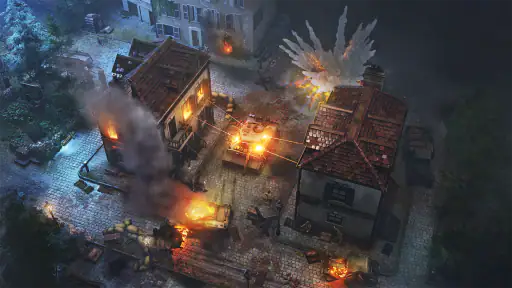
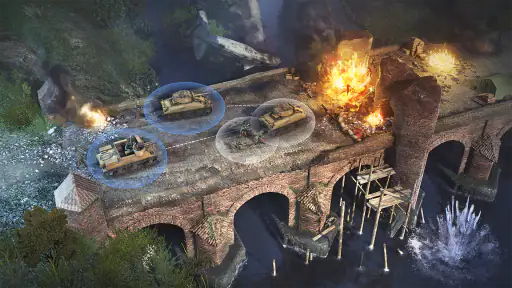
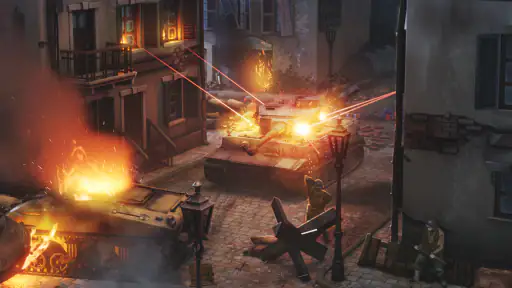
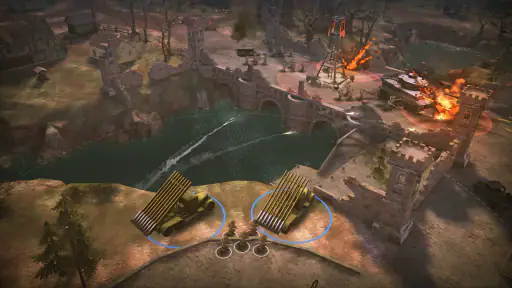
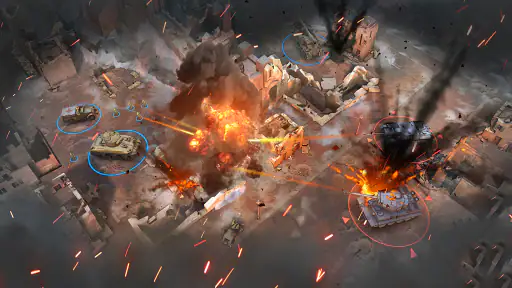
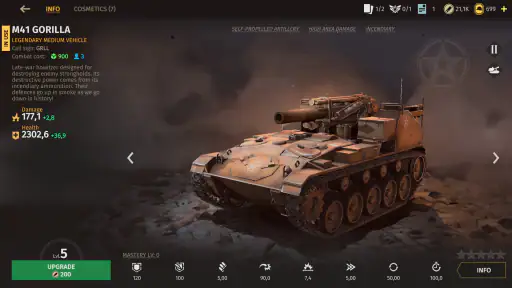
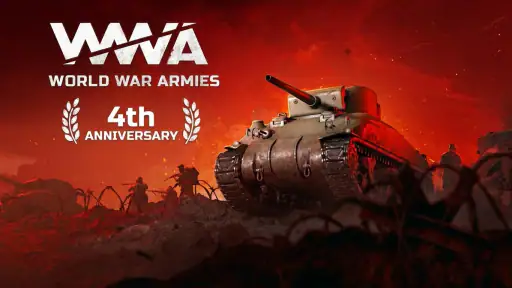
 World War Armies: RTS Game Analyzed by the Frivlyz team
I went into World War Armies: RTS Game expecting a compact World War II strategy game, but what stayed with me was its constant pressure. The battlefield asks me to make decisions quickly, watch the result, and adjust before the next clash. That action-feedback cycle is the heart of the experience: I choose a unit, send it toward a position, see whether the plan works, collect the benefit of a successful push, then start thinking about the next engagement almost immediately.
Developed by Hypemasters, Inc., this is a free strategy game built around real-time military battles rather than slow, turn-by-turn planning. It is available for players rated Everyone 10+, and its large audience—over five million installs and an average score of 4.3 from around ninety-eight thousand ratings—makes it clear that the format has broad appeal. I can understand why, although the fast pace also creates the main question a new player should ask: do you enjoy making imperfect decisions under pressure, or would you rather have time to calculate every move?
How the battlefield pulls me into the first action
The opening move in a match is rarely passive. I am not simply building a base and waiting for a long technology tree to unlock. The useful question arrives quickly: where should my force go first, and how much of it can I commit without leaving another route exposed? That makes the first action meaningful even when it is small. A move toward a strategic position can create room to attack, but it can also reveal a weakness if I become too focused on one side of the map.
I like this because the game communicates through consequences rather than long explanations. A successful advance gives me space and confidence. A careless deployment gives the opponent an opening that I can usually recognize almost at once. The feedback is immediate enough to keep me involved, but not always so generous that every mistake feels harmless. This is where the real-time format separates it from many traditional mobile strategy games that let me queue tasks and return later.
The World War II setting helps give those choices a clear identity. Units are not abstract colored pieces in a fantasy arena; the visual language makes the conflict feel like a military operation. I still have to think in practical terms—position, timing, pressure, and retreat—but the setting gives those decisions a stronger sense of purpose. I am not just collecting power for its own sake. I am trying to turn a fragile advantage into control of the battlefield.
My most useful early habit was resisting the urge to send everything forward. A first attack can be tempting because it produces an immediate sense of activity, yet a measured opening often tells me more about the opponent. If I commit too much too soon, the game can turn the excitement of the opening into a recovery exercise. The first move is best treated as information gathering, not an automatic all-in attack. That small change in mindset makes the matches feel less chaotic.
The action is quick, but not mindless
There is a difference between speed and randomness, and this game generally works best when I treat speed as a resource. I need to notice what is happening, decide what matters, and act before the situation changes again. That does not mean every second requires a dramatic command. Sometimes the correct action is to hold a position, reinforce a threatened area, or wait for a better opening instead of chasing a retreating enemy.
This gives the game a useful middle ground. It is more involved than an idle strategy title, but it is not asking me to manage a huge spreadsheet of statistics between every encounter. The focus stays on battlefield choices. For someone who enjoys the broad idea of real-time strategy but does not want a desktop-sized campaign interface on a phone, that balance is attractive.
It also means that the game can feel demanding on a small screen. When several things happen at once, I have to keep my attention on the map rather than casually playing while doing something else. That is not a flaw in the design, but it does affect where I enjoy it. I prefer a focused session with headphones or a quiet room over trying to play while commuting, cooking, or answering messages.
The feedback rhythm: attack, observe, correct
The strongest part of the loop is the short distance between an order and its result. I make a choice, watch the units respond, and immediately receive a reason to continue or change course. If an attack succeeds, the reward is not only the victory itself; it is the new tactical situation created by that success. I may gain room to maneuver, force the opponent to react, or create a safer route for the next move.
When an attack fails, the game can be just as informative. I can see that my timing was poor, that I divided my force too widely, or that I valued one objective more than the opponent did. This is an important distinction from games where defeat feels like a vague power-check. Here, I usually leave a failed attempt with a specific question: should I have waited, attacked elsewhere, or protected the unit that was doing the most work?
One practical technique is to review the moments immediately before a setback rather than blaming the final exchange. The visible defeat is often only the last part of the mistake. The real problem may have been an earlier decision to overextend, ignore a flank, or spend attention on a low-value target. Because matches move quickly, it is easy to remember the dramatic ending and forget the quiet error that caused it. Pausing mentally for that review makes later sessions more deliberate.
I also found that reacting to movement is more valuable than obsessing over a single attack. A unit that looks weak in isolation may still be useful if it forces the enemy to reposition. Conversely, a powerful-looking push can be inefficient if it pulls my attention away from a more important area. The game rewards reading the whole situation, even though the controls encourage me to focus on whatever is currently flashing with activity.
Why the real-time format changes the usual strategy formula
Compared with turn-based strategy games, this one gives me less room to test every possibility. Turn-based alternatives are often better when I want to study a board, compare several lines, and make a careful decision without pressure. World War Armies is more satisfying when I want the decision itself to create momentum. I am not only solving a puzzle; I am managing a situation that keeps moving while I solve it.
Compared with automated base-building games, it also asks more of me during the match. There is less comfort in setting a queue and checking back later. That makes the victories feel more personal, because I can connect them to a specific choice, but it also means the game is less suitable for players looking for a low-attention routine.
The trade-off becomes especially clear when I am tired. On a good evening, the pressure is energizing and makes a short session feel substantial. On a busy day, the same pressure can feel like work. I would not recommend starting a match when I only have a few distracted minutes unless I am comfortable accepting a rough result. The game is free to download, but it still asks for a real slice of attention.
Rewards that give the next session a reason
A strategy game needs more than a dramatic battle to bring me back. The reward has to make the next attempt feel worthwhile, and this game does that through the sense of progress that follows a well-played match. A win confirms that a plan worked. A close loss can still provide a useful lesson. Even a messy match may reveal a better opening for next time.
That is the kind of reward I value most here: improved understanding. I begin to recognize when I am expanding too quickly, when a defensive move can create an attack later, and when a small positional gain is more valuable than an immediate exchange. Those lessons accumulate. The game becomes more interesting as I stop treating every battle as an isolated contest and start seeing patterns in my own decisions.
There is also a practical reason to return: I want to test whether the adjustment actually works. If I changed my opening, protected a vulnerable route, or stopped chasing low-value targets, the next match becomes an experiment. That creates a satisfying loop of action, feedback, reward, and renewed action without requiring the game to invent a completely different experience every time.
Still, free-to-play design deserves attention. In-app purchases range from forty-nine cents to one hundred forty-nine dollars and ninety-nine cents per item. That broad range means players should decide early how they want to approach spending. I prefer treating purchases as optional support rather than as a shortcut I need in order to enjoy the strategy. Anyone uncomfortable with that model should be cautious and set a personal limit before browsing optional items.
The important question is not simply whether the game contains purchases; it is whether I can remain interested without turning every match into a spending decision. For me, the answer depends on the player’s goals. Someone who enjoys improving through practice can focus on the tactical loop. Someone who wants immediate access to every possible advantage may find the free entry less satisfying. That difference is worth considering before investing serious time.
A useful everyday scenario
Imagine I have finished work and have roughly half an hour before dinner. I can play a focused match, use the opening to test one change, and finish with a clear idea of what worked. That is where the game fits naturally into my routine. It gives me enough activity to feel engaged without requiring a long campaign commitment, provided I am willing to concentrate.
On the other hand, it is a poor choice for a moment when I need to stop unpredictably. If a call, appointment, or household task may interrupt me, the real-time format becomes inconvenient. I would choose a turn-based alternative in that situation because it respects interruptions better. This is one of the clearest practical distinctions between the game and its usual competitors.
The reset: why another match does not feel identical
After a battle ends, the reset is what determines whether I feel disappointed or curious. A total defeat can be frustrating, especially when I believe I lost because of one rushed decision. Yet the next match begins with a clean opportunity to test a different approach. I am not merely repeating the same sequence; I am carrying forward a better understanding of the opening and the risks of overcommitment.
That reset also prevents a single victory from becoming too comfortable. A successful plan is useful, but it is not a permanent solution. The next opponent may respond differently, or the same approach may fail when I execute it with less discipline. I appreciate that tension because it keeps the game from becoming a simple checklist of moves to memorize.
My advice is to establish one learning goal per session. Instead of trying to fix every weakness at once, I might focus on preserving a reserve, reacting faster to a threatened position, or avoiding unnecessary pursuit. This makes the reset productive. I can tell whether the session taught me something, even if the final result is disappointing.
The downside is that repeated resets can feel repetitive for players who need a strong narrative campaign or a constant stream of new environments. This is not the best fit if my main motivation is exploring a story with carefully scripted chapters. Its appeal comes from replaying the strategic situation and refining decisions, not from moving through a linear adventure.
Who should play, and who should skip it
I would recommend it to someone who enjoys World War II themes, quick tactical decisions, and the feeling that personal judgment affects the result. It is particularly suitable for players who like watching a plan develop in real time and then adjusting when the opponent interferes. The free starting price also makes it easy to sample without committing immediately.
I would be more hesitant to recommend it to someone who wants relaxed, offline-style progression, deep turn-by-turn analysis, or a game that can be played safely while multitasking. Players who dislike in-app purchase systems should also approach it with a clear spending boundary, especially because the listed purchase range reaches from small amounts to very expensive individual items.
Device compatibility is another practical point. The game requires at least Android 7.0, and the current version is 1.53.0. That makes checking the operating system worthwhile before trying to install it on an older phone or tablet. On a supported device, I would still keep enough free space and close demanding background apps if performance becomes inconsistent, although the experience ultimately depends on the hardware.
My verdict on the complete action-feedback-reward-reset loop
World War Armies works because it gives every short session a recognizable shape. I take the first action, receive an immediate battlefield response, earn a sense of progress from a good decision, and then reset with a new problem to solve. The loop is simple to understand but difficult to master, which is exactly what I want from a mobile real-time strategy game.
Its limitations are just as clear. The pace demands attention, the reset can frustrate me after a careless loss, and the free-to-play structure requires sensible spending habits. It is not a replacement for a slow, methodical strategy game, nor is it ideal when I need to play in tiny interrupted bursts. Those are meaningful trade-offs rather than minor complaints.
After spending time with it, I would keep it installed for focused sessions when I want military strategy with immediate consequences. I like that another match usually begins with a question rather than a routine: can I protect my opening better, recognize the danger sooner, or turn a small advantage into a decisive one? That recurring question is the real reward, and it is why I keep starting another battle.
World War Armies: RTS Game Pros and Cons
Pros
- Fast-paced RTS battles fit well into short mobile gaming sessions.
- Multiple factions offer different units
- tactics
- and strategic approaches.
- Base building and unit upgrades provide satisfying long-term progression.
- Online matches test planning
- timing
- and resource management skills.
- The military theme is presented with detailed units and battlefield effects.
Cons
- Matchmaking can feel uneven when facing players with stronger upgrades.
- Progress may slow considerably without frequent play or resource spending.
- Small screens can make precise unit control difficult during intense battles.
- Limited battlefield space may reduce the depth of defensive strategies.
- Online connectivity is required
- so offline play is not a practical option.
Frequently Asked Questions
What is World War Armies: RTS Game?
World War Armies: RTS Game is a real-time strategy title focused on World War II-style military conflicts. You command units on the battlefield, capture strategic points, manage resources, and try to outmaneuver the opposing army. Matches emphasize quick decisions, unit positioning, and adapting your tactics rather than simply producing the largest force.
Can I play World War Armies: RTS Game offline?
The game is primarily designed around online multiplayer and competitive battles, so an internet connection is generally required for its main gameplay features. Availability of offline or training content may vary by version and update. Before downloading, players should also expect online matchmaking, account-related services, and possible server maintenance to affect access.
Is World War Armies: RTS Game free to download?
World War Armies: RTS Game can generally be downloaded without an upfront purchase, but it may include optional in-app purchases. These can be used for progression-related items, resources, cosmetic content, or other conveniences, depending on the current version. Players who prefer a completely free experience should review the store listing and purchase settings carefully.
Does the game support multiplayer battles?
Multiplayer is one of the central parts of World War Armies: RTS Game. You can compete against other players in real-time battles, build an army, capture objectives, and adjust your strategy as the match develops. Because opponents are human-controlled, victories usually depend on timing, scouting, army composition, and battlefield decisions rather than memorized missions alone.
What devices are needed to run World War Armies: RTS Game smoothly?
Performance depends on your phone or tablet, operating-system version, available storage, and the complexity of the battle. Newer devices with a capable processor, sufficient RAM, and updated graphics drivers should provide a smoother experience, especially during larger encounters. It is worth checking the official Android or iOS store requirements and keeping extra storage available for updates.