Word Pizza: Crossword Games
- Reviews
- 4.9
- Version
- 5.1.15
- Installs
- 10,000,000+
Screenshots
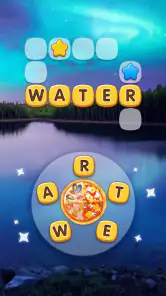
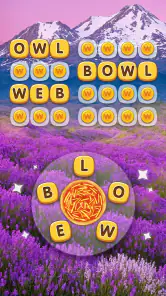
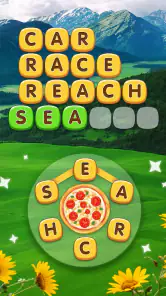
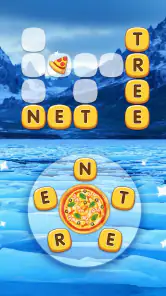
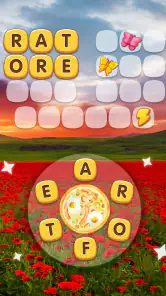
 Word Pizza: Crossword Games Analyzed by the Frivlyz team
I picked up Word Pizza: Crossword Games expecting a light word puzzle, and that is exactly the role it fills best: a casual game for making words from connected letters while uncovering crossword-style answers. It is easy to understand within a few moments, but the better puzzles still ask me to slow down, rearrange possibilities, and notice words I initially overlooked. That combination makes it a comfortable choice for short breaks rather than a game that demands a long, uninterrupted session.
The game comes from Malpa Games and sits in the word-game category. Its presentation is built around solving compact puzzles, so the appeal is less about a large story or complicated progression and more about the small satisfaction of finding the next answer. I can open it when I have only a few minutes, make some progress, and put it down without feeling that I have abandoned an important objective.
How the free model affects the experience
The game is free to download, which makes trying it a low-risk decision. That matters with word games because personal preferences vary so much: some players enjoy discovering answers from a limited set of letters, while others quickly find that format repetitive. I would install it first rather than pay in advance for a similar puzzle experience.
There are in-app purchases ranging from forty-nine cents to ninety-nine dollars and ninety-nine cents per item. That is a very wide range, so I would treat optional spending carefully. The free entry point is the clearest value here; the paid side should be judged by whether a particular purchase genuinely improves your own play rather than by assuming every available item is necessary.
For me, the sensible approach is to play normally before considering any purchase. A word puzzle can become less satisfying if help is used before I have properly worked through the letters. When I am stuck, I first try changing the order in which I inspect the available letters, then look for short connecting words, and only afterward consider assistance. This keeps the solving part meaningful and avoids turning the game into a sequence of purchases.
The age rating is Everyone, which fits the straightforward puzzle format. I would still make a distinction between being suitable for a broad audience and being equally enjoyable for everyone. Younger players may appreciate the simple interaction, while adults looking for advanced vocabulary or demanding cryptic clues may find the puzzles more approachable than challenging.
The core loop is simple, but not mindless
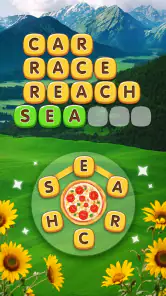
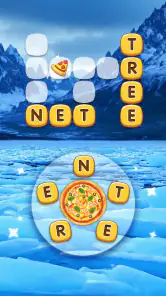
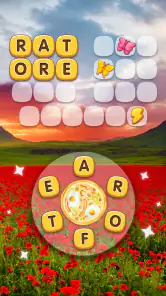
Each puzzle asks me to connect letters and uncover words. The basic action is immediately readable, so there is little learning overhead. I do not need to study a rulebook before beginning, and that makes the game particularly convenient when I want something relaxing rather than a new system to master.
The interesting part is deciding how to search. I often begin with the most obvious longer word, but that is not always the best first move. Shorter answers can reveal the structure of the puzzle and make the remaining letters easier to interpret. This is one of the useful habits the game encourages: instead of staring at the whole arrangement, I break it into smaller possibilities.
Another practical technique is to read the letters in several directions rather than repeatedly trying the same sequence. If I keep forcing one familiar word pattern, I can miss an answer that uses an unusual combination. Taking a brief pause and mentally grouping vowels, common endings, and possible prefixes works better than tapping randomly.
That makes the game more engaging than a pure guessing exercise. It rewards vocabulary, but it also rewards flexible searching. A player who knows many words will have an advantage, yet careful observation can compensate when the answer is not immediately familiar.
Useful in everyday play
I see the strongest use case during small waiting periods: sitting with a coffee, waiting for an appointment, or taking a short break between tasks. The compact puzzle format suits interruptions because progress does not depend on maintaining a complicated chain of actions. If I have to stop suddenly, I can return later and continue thinking about the letters without needing to remember a story or a large map.
It also works as a gentler alternative to scrolling. When I want a little mental activity but do not have the energy for a competitive game, a word puzzle gives me a clear target without creating pressure. The reward is modest but immediate: identify a word, fill part of the puzzle, and move closer to completion.
For language learners, the game may offer occasional vocabulary exposure, although I would not use it as a structured language course. Solving a word in context can make it more memorable than seeing an isolated list, but the game’s purpose is entertainment. Anyone seeking pronunciation practice, grammar lessons, or carefully graded vocabulary should choose a dedicated learning app instead.
Where it compares well with other word games
Compared with a daily guessing game, this offers a broader stream of puzzles rather than making the experience revolve around one shared challenge. That is useful when I want to keep playing after solving a single word. Compared with a traditional crossword, it is more approachable because the letter connection mechanic gives me a visible starting point instead of leaving every clue open-ended.
On the other hand, traditional crosswords are usually better for players who enjoy detailed clues, general knowledge, and a larger grid. This game is a better fit when I prefer direct letter manipulation and short solving steps. It does not replace the depth of a newspaper-style crossword; it provides a lighter route into the same general word-solving pleasure.
It also differs from competitive word games. There is less emphasis on racing another person or building a high-scoring move, so I can play at my own pace. That is a strength for relaxed sessions, but a weakness if I need social competition to stay interested.
Small strategies that make difficult puzzles fairer
When I reach a stubborn puzzle, I avoid spending too long on one imagined answer. I list possible short words first, especially combinations that use common vowels and consonants. Once those are found, the remaining letters often suggest the longer answer. This approach is more reliable than waiting for a single flash of inspiration.
I also treat unfamiliar answers as a prompt to inspect the letter arrangement rather than as proof that the puzzle is unfair. Sometimes the obstacle is not vocabulary but fixation: I have decided that a certain letter must begin the word, and I stop considering other paths. Rotating my attention through different starting points usually produces more progress.
A third tip is to use the game as a deliberate pause instead of filling every spare second with it. Because the central mechanic is repetitive by design, longer sessions can make the puzzles blur together. Short sessions preserve the satisfaction of discovery, while extended play may feel like work for players who need constant variety.
Limits worth considering before installing
The simplicity that makes the game accessible can also limit its appeal. Players who want elaborate clues, rich themes, or a strong narrative may find the experience too narrow. The focus stays on finding words, so there is little reason to expect the kind of variety offered by a full puzzle collection with multiple formats.
Vocabulary difficulty can be subjective as well. A familiar word may feel obvious to one player and completely new to another. That is not necessarily a flaw, but it means the challenge can fluctuate depending on your language background and personal vocabulary. I would not recommend it as the only word game for someone who wants consistently high-level puzzles.
The purchase range is another reason to keep expectations clear. The game is free to access, but optional items can become expensive at the upper end of the listed range. I would avoid assuming that spending is part of the normal route to enjoyment. The strongest value comes from trying the free experience and deciding whether it remains satisfying without buying anything.
Players who dislike hints, interruptions, or any form of monetized assistance should inspect the experience for themselves before committing time. I would especially recommend this caution to someone seeking a completely premium puzzle game. A paid alternative with a single upfront cost may be a better match if predictable spending matters more than free access.
Who will get the most from it
I think it is a good fit for casual word-game fans who want an approachable activity with a clear objective. It suits people who enjoy forming words from a limited set of letters, prefer playing alone, and like progress that arrives in small pieces. It is also a reasonable choice for families looking for a broadly age-rated puzzle, provided each player is comfortable with the vocabulary level.
It may appeal to someone returning to word games after a long break. The rules are not intimidating, and the game does not require specialist crossword knowledge to begin. I can recommend it to a friend who wants something more mentally engaging than a matching game but less demanding than a serious tournament-style word challenge.
I would steer competitive players toward a game with head-to-head matches, rankings, or timed rounds if those elements are essential. I would also suggest a more advanced crossword app to anyone who specifically wants cryptic clues, dense grids, or carefully constructed thematic puzzles. This title earns its place through convenience and accessibility, not through maximum complexity.
Current app details and overall value
The game was released on October thirty-first, two thousand seventeen, and its current version is 5.1.15. It requires Android 8.0 or later, so anyone using an older device should check compatibility before planning around it. Those details make it a mature, established option rather than a brand-new experiment.
Its average rating is 4.9 from around 510 thousand ratings, with roughly 3.9 thousand written reviews, and it has passed 10 million installs. Those figures suggest that the format has reached a large audience, but they do not replace personal testing: a popular word mechanic can still feel repetitive if it does not match your taste.
In practical terms, I see the value as strongest when the free access gives me enough puzzle time to decide whether the loop holds my attention. The game delivers a clean, low-pressure way to exercise word recognition, and its short-session design is genuinely convenient. The trade-off is that the same focused design may feel limited after extended play, especially for people who want varied puzzle types.
My buy-or-skip verdict
I would recommend trying it if you want a free word game for brief, quiet sessions. Start without spending, use the letter-grouping techniques above, and judge the experience by whether solving remains enjoyable when you are not rushing toward help. That is the fairest way to measure its value.
I would skip it if your priority is a premium, one-time-purchase experience, competitive multiplayer, or advanced crossword construction. For those needs, a different kind of word app is likely to serve you better. But if you want an easy-to-start puzzle that turns a few idle minutes into a small mental workout, Word Pizza: Crossword Games is a worthwhile free download. Its best quality is the balance between immediate playability and just enough resistance to make each solved word feel earned.
Word Pizza: Crossword Games Pros and Cons
Pros
- Simple controls make it easy to start playing immediately.
- Works well for short sessions during commutes or breaks.
- Hints can help when a puzzle becomes particularly challenging.
- Bright visuals and animations give the game a cheerful feel.
- Progression provides a clear reason to keep completing levels.
Cons
- Some levels may feel repetitive after extended play.
- Hints and extra assistance can make progress feel less rewarding.
- Difficulty may vary noticeably between consecutive puzzles.
- Frequent rewards and prompts can interrupt the puzzle flow.
- Players seeking advanced crossword clues may find it too casual.
Frequently Asked Questions
What is Word Pizza: Crossword Games?
Word Pizza: Crossword Games is a casual word puzzle app that combines crossword-style challenges with a light cooking and travel theme. You connect letters to form hidden words, complete levels, and progress through different locations. The game is designed for short sessions, making it suitable for players who enjoy vocabulary puzzles, relaxed gameplay, and gradually increasing difficulty.
How do you play Word Pizza: Crossword Games?
Each puzzle presents a group of letters that you must swipe or connect to create words fitting into the crossword layout. Some answers are obvious, while others require experimenting with different combinations or finding less common words. Completing the available words clears the level and lets you continue through the game’s themed stages and destinations.
Can Word Pizza: Crossword Games be played without an internet connection?
Many of the basic word puzzles can generally be played offline after the game has been installed, which is convenient during travel or when you have limited connectivity. However, certain features may depend on an internet connection, including advertisements, cloud-related functions, updates, or promotional content. Availability can also vary by device and app version.
Is Word Pizza: Crossword Games free to download and play?
Word Pizza: Crossword Games is typically available as a free download, allowing you to access its core puzzles without paying upfront. Like many free mobile games, it may include advertising and optional in-app purchases. These purchases can sometimes provide hints, remove advertisements, or offer other conveniences, so reviewing the store listing and purchase settings is recommended before playing.
Is Word Pizza: Crossword Games suitable for all ages?
The game is generally suitable for players who enjoy simple word challenges, including older children, teenagers, and adults. Its controls are easy to understand, and there is no need for advanced gaming experience. Nevertheless, parents should check the current age rating, advertising content, and in-app purchase options on the relevant app store before allowing younger children to use it.