Fill-Ins · Word Fit Puzzles
- Reviews
- 4.7
- Version
- 1.49
- Installs
- 1,000,000+

Screenshots
 Fill-Ins · Word Fit Puzzles Analyzed by the Frivlyz team
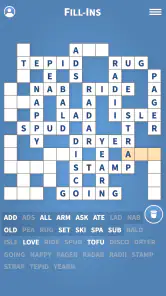
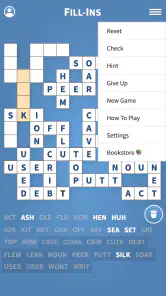
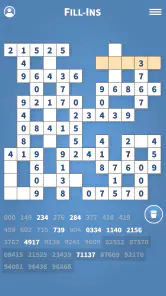
I enjoy word games that give me a clear task without demanding a long explanation, and Fill-Ins fits that mood well. This is a word puzzle game from Razzle Puzzles built around placing words into crossword-style layouts. Instead of solving ordinary clue-based crosswords, I work with a collection of words and fit them into the correct spaces, using crossing letters and word lengths to narrow down each move.
That small change makes the experience feel different from a standard crossword app. I am not mainly searching my memory for an obscure definition; I am comparing possibilities, spotting patterns, and deciding where each word belongs. The result is a calmer kind of concentration that works nicely during a short break, while still offering enough resistance to keep a puzzle from feeling automatic.
Fill-Ins is free, rated for Everyone, and available for Android devices running version 6.0 or later. It has reached over a million installs, with a 4.7 average from around sixteen thousand ratings. Those figures suggest a well-established audience, but the more important question is whether its particular style of wordplay suits you. In my experience, it does best when you want steady, thoughtful progress rather than a dramatic game loop.
How the first puzzles establish a useful goal
A simple objective with more thought than it first appears
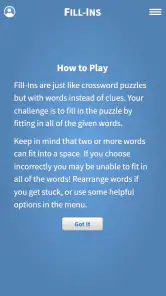
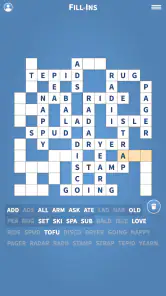
The early goal is easy to understand: complete the grid by fitting the available words into the matching spaces. There is no need to learn a complicated control scheme. I can begin by looking for the longest or most distinctive word, place it where the pattern seems to fit, and then use the letters it creates to guide the next decision.
That opening rhythm is one of the game’s strongest qualities. A blank grid can look intimidating for a moment, but each correct placement gives me more information. The puzzle effectively explains itself through its structure. When a word crosses another, the new letters reduce the number of plausible choices, so progress feels earned through observation rather than random tapping.
The early stages are also useful for learning how to avoid a common mistake: committing to a word simply because it fits one space. A placement may look correct horizontally but create an impossible crossing elsewhere. I quickly learned to treat every move as a small hypothesis. If the surrounding letters do not support it, moving the word or reconsidering the order is usually better than forcing the rest of the grid around it.
Why word length matters more than vocabulary alone
This is not purely a vocabulary test. A player with a large word bank may still hesitate if several words share similar lengths and letter patterns. Conversely, someone who is not confident with every word can often make progress by studying the grid carefully. The spaces, crossings, and repeated letter shapes provide practical clues.
That balance makes it approachable for casual players, but it does not remove the need for attention. I often start with a word that has an unusual letter combination, then return to shorter words after the grid has supplied enough crossing letters. This is more reliable than trying to place every familiar word immediately.
The most satisfying early-game habit
My preferred opening routine is to scan the entire puzzle before making several quick placements. I look for words that have only one plausible location, especially when their length or letter pattern stands out. After placing one or two anchors, I revisit the remaining options instead of continuing from the first area that caught my eye.
This approach makes the game feel less like trial and error. It also creates a modest early goal inside every puzzle: find the first dependable anchor. Once that anchor is in place, the rest of the grid becomes easier to read, and the player can see how one correct decision opens several later moves.
Progress signals, challenge, and the pace of a session
Progress is visible in the grid itself
Fill-Ins does not need an elaborate progression display to communicate progress. The clearest signal is the puzzle in front of me. Empty spaces gradually become connected by confirmed letters, and a section that once looked ambiguous can suddenly have only one sensible answer. That visual change is enough to make each placement feel meaningful.
I particularly like the way progress can be measured in deductions rather than speed. Completing a word after several crossings confirm it feels more satisfying than entering an obvious answer immediately. The game rewards patience, because a difficult section often becomes manageable after I solve an easier area somewhere else.
There is also a useful sense of local progress. I may not be close to finishing the whole puzzle, but filling one corner can reveal letters needed in another corner. This gives me a reason to keep scanning instead of staring at the same stubborn space. When I am stuck, I can change focus and return later with more information.
How the difficulty curve feels in practice
The difficulty is shaped by uncertainty rather than by fast reflexes. A puzzle can become challenging when several words appear to fit the same spaces, when crossings are sparse, or when the remaining choices use similar patterns. The pressure is mental, but it is generally quiet and self-paced.
That curve works well for people who like gradual problem solving. I can make progress through a series of small deductions, and a mistake usually teaches me something about the structure of the grid. The challenge is less about knowing one perfect answer and more about managing possibilities until the correct arrangement becomes clear.
Still, the same design can feel slow if you prefer constant novelty or immediate rewards. There are moments when I know the right group of words but cannot determine their exact positions. That uncertainty is part of the puzzle, yet it can also produce a plateau where several minutes pass without an obvious breakthrough.
A practical way to handle a difficult section
When I reach that point, I stop treating the unresolved words as separate problems. I compare their lengths, inspect the letters already fixed by crossings, and identify which placement would constrain the rest of the grid most strongly. A word with an unusual letter in a crossing position is often more valuable than a common word that could fit in several places.
Another useful habit is to keep a mental distinction between “possible” and “confirmed.” If a word fits, I do not regard it as settled until the crossing letters agree. This prevents a plausible early guess from quietly making the entire puzzle harder. The game’s best moments often come from discovering that one uncertain placement was the source of several apparent contradictions.
Why the pacing suits short and longer sessions
A completed puzzle can provide a natural stopping point, but the individual deductions are small enough to support interrupted play. I can work on a grid during a commute, between household tasks, or while waiting for an appointment, then return to the same mental problem later. The format does not require me to build a large strategy before starting.
For a longer session, the appeal comes from moving between puzzles and adjusting to a new arrangement of words and crossings. The pace is not built around action or surprise. It is closer to settling into a series of compact logic exercises, with the satisfaction coming from steadily reducing uncertainty.
Where retention comes from, and where it does not
The game’s retention strength is the desire to finish an unfinished grid. Once I have solved most of a puzzle, the remaining spaces become difficult to ignore. I often find myself returning not because the app is demanding attention through a loud reward cycle, but because I want to resolve the one relationship I have not understood yet.
That is a healthier kind of pull for me, although it may be less compelling to players who want daily streaks, competitive rankings, timed events, or a strong collection of unlockable rewards. The available experience is centered on solving the puzzles themselves. If your motivation depends on layered progression systems, this may feel intentionally minimal rather than richly structured.
The lack of urgency is both an advantage and a limitation. I can think carefully without being punished for taking time, which makes the game comfortable for relaxed play. On the other hand, players who enjoy the excitement of a countdown or the pressure of competing against a personal best may find the pacing too gentle.
How it compares with familiar word-game alternatives
Compared with a conventional crossword, Fill-Ins asks me to organize known words rather than generate answers from clues. That makes it a better choice when I enjoy pattern recognition but do not want the puzzle to depend heavily on trivia, definitions, or cultural knowledge. It is also easier to pick up when I am mentally tired, because the grid provides direct visual evidence for each decision.
Compared with a word search, the experience is more deliberate. A word search mainly rewards scanning and recognition, while this game asks me to reason about placement and interaction. Compared with an anagram game, it offers less emphasis on rapidly producing words and more emphasis on arranging them correctly. Those differences matter: I would choose this title for a quiet deduction session, not for fast vocabulary drills.
Players who prefer Scrabble-like scoring, competitive word formation, or open-ended clue solving may be happier with another category of word game. Fill-Ins is at its best when the pleasure comes from fitting a system together. It is not trying to be a broad word-game collection, and that focused identity is part of its appeal.
What the current release means for compatibility
The current version is 1.49, and the minimum operating system is Android 6.0. That makes the compatibility requirement relatively modest for people using older Android hardware that still supports the required system version. I would nevertheless check the device’s available storage and general responsiveness before expecting a smooth experience on very old phones, especially if other apps are already struggling.
The game was released on September 27, 2016, so it is not a new experiment in the word category. I see that age as useful context: the core idea has had time to settle into a straightforward format, but anyone seeking modern presentation, frequent novelty, or a highly social layer should set expectations accordingly.
Who should play it and who should skip it
I would recommend it to someone who likes crossword layouts but wants more direct guidance than clues usually provide. It is also a good fit for players who enjoy logic puzzles, have a few minutes at a time, and prefer a challenge that can be paused mentally without losing the thread.
It is less suitable for someone who wants a strong narrative, animated rewards, multiplayer competition, or a constantly changing set of mechanics. It may also frustrate players who dislike revisiting possibilities after a seemingly correct placement turns out to create a conflict. The game asks for careful checking, and that is central to its identity rather than a flaw that can be removed.
A realistic everyday use case
Imagine having fifteen quiet minutes before dinner while the rest of the household is occupied. I can open a puzzle, place a few obvious words, and leave the phone aside when something needs attention. Later, I return to the same grid and use the newly visible crossings to continue. I do not need to remember a story, maintain a timed run, or rebuild a complicated setup.
That scenario captures the game’s practical value. It turns a small amount of idle time into focused play, and the stopping point is naturally defined by the puzzle rather than by an external schedule. If I finish, I can stop feeling satisfied; if I do not, I have a clear problem waiting for the next break.
My progression verdict
As a progression-driven game, Fill-Ins is deliberately restrained. Its early goals are immediate, its progress signals come from the changing grid, and its challenge grows through increasingly uncertain arrangements rather than through a visible character or reward ladder. That design keeps attention on solving, which is exactly why it works for me.
The trade-off is that the long-term motivation depends on whether you enjoy the puzzle loop itself. There is no need to invent extra goals around it: completing a difficult grid, correcting a mistaken assumption, and gradually improving your ability to spot reliable placements are the meaningful milestones. For a focused word game, that can be enough.
My final recommendation is positive, with a clear qualification. If you want a free word puzzle that feels thoughtful, accessible, and easy to fit into ordinary breaks, I think Fill-Ins is worth trying. The 4.7 average and audience of roughly sixteen thousand ratings reflect its broad appeal, while the Everyone age rating makes it approachable for a wide range of players. If you need competition, narrative, constant unlocks, or a faster reward cycle, choose a different style of game. For quiet crossword-like deduction, though, Razzle Puzzles has made a focused experience that earns its place through the quality of its central idea.
Fill-Ins · Word Fit Puzzles Pros and Cons
Pros
- Offline play makes it convenient for travel or low-connectivity situations.
- Simple controls make the game accessible to casual puzzle players.
- Short levels are well suited to quick breaks and daily play sessions.
- Gradually increasing difficulty keeps the challenge engaging over time.
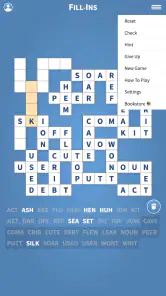
- Hints can help prevent players from getting stuck on tougher grids.
Cons
- Some puzzles may feel repetitive after extended play sessions.
- Hints and extra assistance may be limited without spending in-game currency.
- Small letter tiles can be difficult to read on compact phone screens.
- The game offers little variety beyond its core word-fitting format.
- Ads may interrupt the experience
- depending on the version installed.
Frequently Asked Questions
What is Fill-Ins · Word Fit Puzzles?
Fill-Ins · Word Fit Puzzles is a word puzzle game based on fitting a provided list of words into a crossword-style grid. Instead of solving clues, you study the word lengths and crossing patterns to determine where each word belongs. It is a relaxing but challenging option for players who enjoy vocabulary, logic, and traditional pencil-and-paper puzzles.
How do you play Fill-Ins · Word Fit Puzzles?
Each puzzle presents an empty grid together with a collection of words that must be placed into the correct horizontal and vertical spaces. You can begin with longer or more distinctive words, then use the intersecting letters to narrow down the remaining possibilities. The game is easy to understand, although advanced boards require careful deduction and patience.
Is Fill-Ins · Word Fit Puzzles suitable for beginners?
Yes. The basic rules are simple, making the game accessible even if you have never played a fill-in puzzle before. Early levels generally help you understand how word lengths and crossing letters work, while later puzzles gradually become more demanding. Players who prefer a slower experience can take their time rather than relying on quick reactions or timed gameplay.
Can I play Fill-Ins · Word Fit Puzzles offline?
The core puzzle experience may be available without a continuous internet connection, which makes the game convenient for travel, commuting, or relaxing away from Wi-Fi. However, certain features such as advertisements, updates, synchronization, leaderboards, or optional online content may require internet access. It is best to open the game once while connected before relying on it offline.
Is Fill-Ins · Word Fit Puzzles free to download and does it contain ads?
The app can generally be downloaded for free, but availability, advertising, and optional purchases may vary depending on the platform and current developer settings. Free gameplay may include ads between puzzles or during navigation, while additional options could be offered through in-app purchases. Check the Google Play Store or App Store listing for the latest pricing and purchase details before downloading.