Daily POP Crossword Puzzles
- Reviews
- 4.2
- Version
- 4.2.4
- Installs
- 100,000+

Screenshots
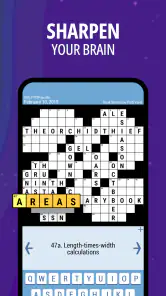
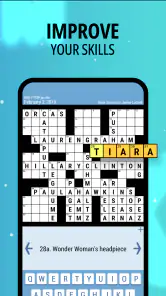
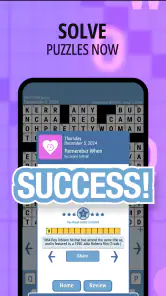
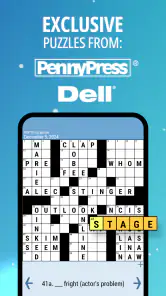
 Daily POP Crossword Puzzles Analyzed by the Frivlyz team
I found Daily POP Crossword Puzzles easy to understand within a few minutes, but its real appeal is more specific than the name first suggests. This is a free word game from Puzzle Nation Apps built around pop-culture crossword solving, so it suits players who enjoy clues connected with entertainment, celebrities, music, television, films, and familiar public references. I would recommend it to someone who wants a relaxed puzzle for short breaks rather than a formal newspaper-style crossword challenge.
What stood out during my time with it was how much the experience depends on recognition. When a clue points toward something I know, the answer can arrive quickly and the board feels satisfying. When the reference is outside my interests or comes from a different generation, the same puzzle can become much less welcoming. That makes the game approachable in one sense, but not universally easy. Its accessibility is strongest when the theme matches the player.
How Daily POP feels to read and navigate
A familiar crossword layout with a casual rhythm
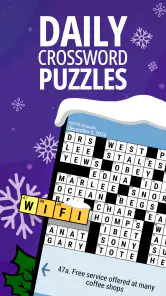
The basic interaction is straightforward: read a clue, select the relevant part of the crossword, and enter letters until the answer takes shape. I did not need to learn a complicated rule set before starting. That matters for casual players, especially anyone opening a word game during a commute, a coffee break, or a few quiet minutes at home.
The crossword format also gives the screen a clear purpose. The grid is the focus, while the clues provide the route through it. I found that less mentally demanding than games that place several competing panels, timers, currencies, and objectives on screen. The experience is still a game, but it does not require me to understand a large system before I can solve the first clue.
For readers who prefer larger visual targets, the grid itself can be easier to follow than a dense list of tiny controls because each answer occupies a defined space. However, crossword cells and clue text still require sustained visual attention. A player with reduced vision may find the experience tiring even when the rules are simple. I would treat the clean puzzle structure as helpful, not as a guarantee that every element will be comfortable to see.
Why clue familiarity matters more than raw vocabulary
This is not simply a general dictionary exercise. The pop-culture angle changes the way I approach clues. I often think less about obscure word definitions and more about names, titles, catchphrases, performers, and cultural references. That gives the game a lighter personality than a traditional crossword, but it also creates a particular barrier: a strong vocabulary does not always compensate for unfamiliar entertainment references.
A useful habit is to work from the crossing letters instead of forcing the first answer that comes to mind. In this game, a clue may feel obvious because I recognize its subject, yet the answer still needs to fit the available spaces. I found it better to enter only the letters I was reasonably sure about, then return to the clue after the surrounding words narrowed the possibilities.
That approach is especially useful for players who process information more slowly. There is no advantage in rushing a clue simply because it looks familiar. Treating the board as a collection of small, manageable decisions makes the game less stressful and helps prevent one uncertain answer from dominating the whole puzzle.
Navigation that works best in short sessions
The game is at its most comfortable when I use it as a focused activity rather than something running alongside several distractions. I can pick up a puzzle, solve a few clues, pause mentally, and continue later when I have more attention available. That makes it a practical companion for waiting rooms, quiet evenings, and routine breaks.
It is less suitable when I need to switch rapidly between the puzzle and another task. Crossword solving depends on remembering clue context and noticing how letters intersect. If I am interrupted repeatedly, I lose the thread more easily than I would in a simple arcade game. Players who need frequent context changes may prefer a word game with individual, self-contained rounds.
Small workflow choices that improve clarity
I recommend starting with the clues that have the clearest answers, even if they are not at the top of the screen. Filling a few dependable entries creates useful crossing letters and reduces the number of possibilities in harder sections. This is more effective than moving linearly through every clue and becoming stuck early.
Another helpful technique is to separate “I do not know this reference” from “I know the reference but cannot find the word.” Those are different problems. The first calls for using crossings and considering alternate cultural associations; the second usually benefits from checking the answer length and the wording of the clue. Recognizing that difference keeps the puzzle from feeling like one large wall of difficulty.
Motor, sensory, and situational considerations
Typing demands and hand comfort
The game does not ask for fast reflexes, which is a meaningful advantage for players who find rapid tapping uncomfortable. Crossword solving is deliberate. I can think before entering a letter, and the main task is accuracy rather than speed. Someone with limited dexterity may therefore find it more manageable than a game built around quick swipes or repeated timed actions.
That said, the experience still involves selecting cells and entering letters repeatedly. Players with hand pain, tremors, or difficulty making precise taps may encounter friction when moving around the grid. A larger device can make the board easier to target, while a phone may be more convenient to hold but less forgiving for precise interaction. I would try the game on the device that allows the most relaxed hand position rather than automatically choosing the smallest screen.
For longer sessions, I found it sensible to pause between sections instead of trying to finish everything in one sitting. The mental effort of scanning clues and the physical effort of repeated tapping can build together. Shorter sessions do not change the game’s rules, but they make the overall experience more comfortable.
Visual load and contrast in everyday conditions
Crosswords are naturally visual. I need to distinguish cells, follow the active answer, read clue text, and notice which letters have already been entered. In bright outdoor light, reflections can make a phone screen harder to read. In a dark room, a bright display can become tiring. These are not problems unique to this title, but they matter because the game offers no escape from reading the board.
I would use it in even lighting and keep the screen at a comfortable distance. Increasing the device’s text size may help with surrounding interface text, although it may not enlarge every part of the puzzle in the same way. Players who rely on screen magnification should test whether the enlarged view still allows them to understand the relationship between clues and grid cells without excessive panning.
The pop-culture theme can also create a sensory and cognitive issue that is easy to overlook. A clue may be short, but understanding it can require recalling a person, show, song, or other reference. That is a memory task as much as a reading task. If names are difficult to retain or if cultural references are unfamiliar, the puzzle may feel harder than its casual presentation implies.
Audio, attention, and shared spaces
I consider this a good choice for quiet play because the central activity is visual and text-based. I can solve clues without needing to follow spoken instructions or react to sound cues. That makes it more practical in places where audio would be inconvenient, such as public transport, a library, or a shared bedroom.
Silent play does not mean distraction-free play. A busy environment can still make the game difficult because I need to hold clue wording in mind while comparing crossing letters. If I am in a noisy queue or trying to supervise another task, I may prefer to solve only the easiest entries and return later. The game rewards concentration, even though it does not demand speed.
Who is likely to enjoy the format
I think the strongest audience is anyone who likes word puzzles but wants a more conversational, entertainment-focused theme. It can work for a casual crossword player, a pop-culture fan, or someone looking for a low-pressure way to exercise recall. The Everyone content rating also makes the presentation broadly approachable for general audiences, although individual comfort will still depend on the references used in a particular puzzle.
I would be more cautious recommending it to a player who wants strictly factual vocabulary practice, advanced cryptic clues, or a large competitive challenge. The pop-culture identity is the reason to choose it, not a minor decoration. Someone who dislikes celebrity and entertainment references may find the central clue style less rewarding than a conventional crossword app.
Using it during real daily routines
Imagine having ten minutes before an appointment. I would open a puzzle, solve the clues that immediately make sense, and use the resulting letters to make progress on the less familiar entries. If the appointment begins, I can stop without having committed to a long match or a complicated campaign. Later, I can return with a clearer mind and continue from the partially completed grid.
That same pattern works well during a lunch break, but I would avoid playing while walking, crossing a road, or handling something that needs attention. The game is slow-paced, yet it still draws the eyes to the screen. Its relaxed design should not be confused with being safe to use during every activity.
Remaining barriers and practical trade-offs
Free to start, but purchases change the equation
The game can be downloaded and played for free, which makes it easy to test without an upfront commitment. Optional purchases range from under a dollar to amounts reaching fifty dollars per item. That spread is important for families and anyone managing a strict budget. I would check the purchase flow carefully before handing the device to a child or allowing unsupervised play.
The free entry point is useful because the best way to judge this title is personal: do the clue themes feel familiar, and is the board comfortable to read and operate? If the answer is no, paying for additional content or assistance would not solve the basic mismatch. I would first establish that the core style suits me before considering any optional spending.
Help can support access, but it can also reduce satisfaction
Crossword assistance is a trade-off. When I am stuck because a reference is outside my experience, help can keep the session moving and prevent frustration. When I am only one crossing letter away from solving the clue, using help too quickly removes the most satisfying part of the puzzle. My preference is to wait until I have filled the surrounding answers and genuinely exhausted my guesses.
This matters for players with different abilities. A person with memory difficulties may use assistance as a way to remain involved rather than abandon the puzzle. Another player may find repeated help distracting or may prefer a completely independent solve. The right approach is to treat support as a pacing tool, not as a measure of skill.
Where alternatives may be better
Compared with a classic newspaper-style crossword, this game is more approachable when entertainment references are your strength, but less dependable if you want broad general knowledge or formal clue construction. Compared with a word-search game, it asks for more recall and inference because the answer must be deduced from clues and crossings. Compared with a fast daily word challenge, it gives me a calmer board but can require more time on a single puzzle.
I would choose a traditional crossword app for serious vocabulary practice, a word search for a simpler visual task, and a quick guessing game when I only have a minute or two. I would choose this one when I want the subject matter to feel familiar and conversational. That distinction prevents disappointment: it is not trying to be every kind of word game at once.
Device support and keeping expectations realistic
The current version is 4.2.4 and requires at least operating system version 9, so compatibility should be checked before installation, particularly on an older device. A supported operating system does not automatically mean the puzzle will feel comfortable on every screen. Display size, touch accuracy, and the way a player holds the device all affect readability and control.
The game has been available since November 15, 2017, and Puzzle Nation Apps has built a recognizable audience around it. It has passed one hundred thousand installs, with an average rating of 4.2 from about five thousand seven hundred ratings and around one thousand seven hundred written reviews. Those figures suggest that many players find the format worthwhile, but they cannot predict whether the particular pop-culture mix will suit an individual reader.
My inclusive verdict after using the puzzle
I see Daily POP Crossword Puzzles as a friendly, focused word game with a clear identity. Its strongest accessibility quality is the lack of time pressure in the solving itself: I can think, pause, and return to a difficult clue without needing quick reactions. The familiar crossword structure also keeps navigation understandable, while the text-based format works well in quiet spaces and does not depend on audio.
Its limitations are equally specific. Reading the grid for long periods can be tiring, precise tapping may not suit every player, and pop-culture clues can exclude anyone who does not share the expected references. The game is therefore inclusive in its casual pace, but not universally inclusive in its content or visual demands. I would recommend trying it on the intended device before investing in optional purchases.
My practical advice is to use a larger screen when possible, play in even lighting, begin with the clues you recognize, and let crossing letters guide uncertain answers. Keep sessions short if visual concentration or hand movement becomes uncomfortable. Those habits make a noticeable difference without changing the character of the game.
For me, the best reason to choose it is the combination of crossword structure and entertainment recall. It gives a pop-culture fan a pleasant way to fill spare time, and it remains simple enough to share as a casual recommendation. I would skip it if I wanted cryptic complexity, competitive speed, or references that stay entirely within traditional vocabulary. For everyone else, the free starting point makes it a sensible experiment, provided the theme and screen experience feel right.
Daily POP Crossword Puzzles Pros and Cons
Pros
- Fresh crossword puzzles are added regularly for ongoing daily entertainment.
- Helpful hints make difficult clues more manageable without revealing every answer.
- Clean
- colorful interface is easy to navigate on both phones and tablets.
- Short puzzles fit well into quick breaks
- commutes
- or morning routines.
- Puzzle progress is saved
- letting you return later without losing your work.
Cons
- Some puzzles may feel too easy for experienced crossword enthusiasts.
- Hints and other helpful features may be limited unless you watch ads or pay.
- An internet connection may be required for new puzzles and certain features.
- Repeated clue styles can make the experience feel less varied over time.
- Small screens can make entering answers or reading clues uncomfortable for some users.
Frequently Asked Questions
What is Daily POP Crossword Puzzles?
Daily POP Crossword Puzzles is a casual word game built around themed crossword challenges inspired by pop culture, entertainment, celebrities, television, music, and current trends. After trying the app, I found the format approachable for both occasional players and regular crossword fans. Each puzzle is designed to be completed in a relatively short session, making it suitable for playing during a break or while commuting.
Is Daily POP Crossword Puzzles free to download and play?
The app is generally free to download, allowing users to access its core crossword experience without paying upfront. However, free gameplay may include advertisements, limited access to certain puzzles, or optional purchases depending on the current version and platform. Some features or additional puzzle content can require a subscription or in-app payment, so checking the store listing is recommended before subscribing.
Does the app require an internet connection?
Daily POP Crossword Puzzles may need an internet connection for downloading new puzzles, synchronizing progress, displaying advertisements, validating subscriptions, and accessing online features. Previously loaded puzzles may sometimes remain playable offline, but this should not be assumed for every challenge. If you plan to play while traveling, open the desired puzzles beforehand and confirm that they remain available without a connection.
Is Daily POP Crossword Puzzles suitable for beginners?
Yes, the game is suitable for beginners, especially users who enjoy entertainment-related clues more than traditional newspaper-style crosswords. The pop-culture themes can make familiar answers easier to recognize, while hints and assistance options help when a clue becomes difficult. Nevertheless, some questions depend on knowledge of celebrities, shows, music, or current events, so difficulty can vary considerably between puzzles.
Are there advertisements or in-app purchases in Daily POP Crossword Puzzles?
The app can include advertisements and optional in-app purchases, which is common for free-to-download puzzle games. Ads may appear between puzzles or during other parts of the experience, while purchases can provide extra hints, remove advertising, unlock content, or grant access through a premium plan. Before completing any transaction, review the pricing, renewal terms, and cancellation options shown in the app store.