Charades Guess Game — Guessly
- Reviews
- 4.7
- Version
- 1.5.0
- Installs
- 1,000,000+

Screenshots


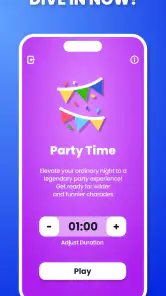
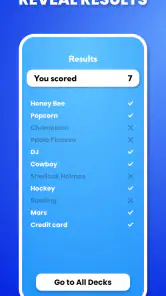
 Charades Guess Game — Guessly Analyzed by the Frivlyz team
I found Charades Guess Game — Guessly most enjoyable when I treated it as a social spark rather than a complete party platform. It is a free word game from smak apps built around the familiar challenge of getting someone to guess a word while the group watches, reacts, and usually gets louder. That simple setup is its biggest strength: people can understand the idea almost immediately, so a mixed group does not need a long explanation before playing.
My overall view is favorable, but with an important qualification. This is best when several people are already together and want a quick activity, not when you are looking for a deep solo word game with a long progression system. The current release is version 1.5.0, and the game has attracted a 4.7 average from around 34 thousand ratings, which fits my impression that its main appeal is easy, repeatable group fun rather than complexity.
How Guessly works when the room is ready to play
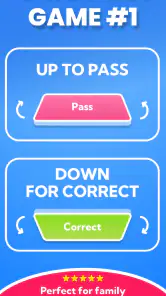
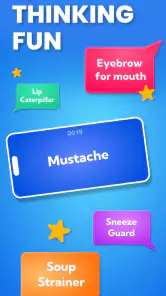
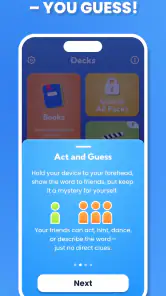
The basic rhythm is straightforward. One person becomes the guesser, another person or the group helps communicate the answer, and everyone enjoys the pressure created by a limited moment of confusion. The fun comes less from difficult vocabulary than from interpretation: a clue that seems obvious to one person can become hilariously unclear to everyone else.
I like that this format works across different kinds of gatherings. It can fill an awkward pause at a family event, give friends something to do after dinner, or add structure to a party that has started to lose energy. Because the rules are familiar, the app does not need to compete with a complicated board, a pile of cards, or a carefully prepared host.
That convenience changes how I would use it. I would open it after people have already arrived, explain the turn in plain language, and begin with a relaxed round rather than presenting it as the main event. The first few turns help everyone learn the group’s style. Some players give precise hints, others act dramatically, and a few discover that they are much better at guessing than explaining.
The game belongs firmly in the word game category, but its real identity is social. A traditional word puzzle asks me to solve something privately. Guessly asks me to read another person’s clues, timing, gestures, and assumptions. That makes the same word feel different depending on who is playing, which is why a familiar group can return to it without needing a new rule set every time.
The strongest reason to keep it installed
The strongest part of the experience is the low setup cost. I do not need to prepare prompts, divide teams with equipment, or find a host who already knows a large collection of words. The phone acts as the prompt source, while the people in the room provide the personality. In practice, that means the app gets out of the way quickly.
That matters especially in groups with different ages or attention spans. Younger players can join because the goal is visible, while older relatives do not have to learn a modern multiplayer system. The Teen content rating is worth keeping in mind for parents and hosts, but the social format itself is broad enough to suit friends and family gatherings where everyone is comfortable with the selected material.
A useful way to get more from it is to change the role of the host. Instead of letting one person control every turn, I would rotate who starts the round and who keeps the group moving. This prevents the most confident player from dominating the session. It also exposes a subtle strength of the format: the game becomes more entertaining when the clues reflect different personalities rather than one person’s preferred style.
Another practical tip is to begin with a short session. Charades-style play can be energetic, but the same pattern can become tiring if every round feels identical. I would use it in bursts of roughly a few turns, then switch activities while the group is still enjoying it. That is not a flaw in the app so much as a realistic way to protect the joke from becoming repetitive.
Where it compares well with cards and familiar party games
Compared with a physical charades card deck, Guessly is more convenient because I do not have to carry, shuffle, or store a separate set of prompts. The phone is also easier to bring to an unplanned gathering. On the other hand, a physical deck can feel more communal because everyone sees the cards and the device does not become the center of attention.
Compared with a classic word puzzle, this game is more accessible to people who do not enjoy solving clues alone. The answer is a shared target, and a wrong guess can be funny instead of simply incorrect. If your group prefers quiet concentration, crosswords, or anagrams, a solo word app will probably offer more satisfying mental depth. Guessly is designed for reaction and interaction first.
It also differs from more elaborate party games that depend on scoring systems, character progression, or a large collection of modes. Those alternatives may hold a group’s attention for longer if players want strategy or variety. Guessly’s advantage is that it can start quickly; its trade-off is that the entertainment depends heavily on the people around the phone.
Small choices that improve a real session
I found three habits particularly useful. First, set the expectation that clues should be brief and understandable rather than technically perfect. This keeps one player from turning every answer into a long explanation. Second, let the group agree on whether acting, describing, or a mixture is most comfortable before the first serious round. That avoids arguments once the pressure begins.
Third, use the app as a transition between activities instead of forcing it to carry an entire evening. For example, after dinner I would start a few rounds while people are still settling in, then move to another game once the group’s energy changes. This makes the short-form design feel intentional and gives the game a clear job.
There is also a social trade-off that is easy to overlook. A phone-based prompt can make turns feel organized, but it may also cause players to look down at the screen instead of at one another. I would hand the device to the person managing the round and keep the guesser focused on the room. That simple arrangement preserves the face-to-face quality that makes this type of game work.
The main weakness: the group supplies most of the variety
My biggest reservation is that the app’s lasting appeal depends more on the group than on the software. If the people playing are quiet, reluctant to perform, or already tired, the game cannot create much momentum by itself. Likewise, if the same players use it frequently, the familiar rhythm may lose its surprise even when the prompts remain useful.
This is the point where a buyer should be realistic about the free model. The game costs nothing to start, but in-app purchases range from $7.99 to $49.99 per item. I would not spend on extras simply because a first session went well. I would first see whether the free experience fits my group, then decide whether additional content or convenience would genuinely solve a problem for the way we play.
The presence of purchases also means the app is not identical to a traditional card box that you buy once and pass around indefinitely. For some players, that difference will be minor. For others, especially families trying to keep party games completely free after installation, it may be a reason to prefer physical cards or another word game with a clearer one-time model.
There is another limitation in the audience fit. A group that wants careful competition may find the format too dependent on acting ability, confidence, and shared humor. Someone who gives expressive clues can appear much stronger than someone who understands the words but dislikes performing. I would not use Guessly as a serious test of vocabulary or intelligence; it rewards communication under social pressure more than private knowledge.
Who should try it, and who should choose something else
I would recommend it to friends who want a fast party activity, families looking for a simple way to involve several people, and hosts who do not want to prepare materials in advance. It is particularly suitable when the group includes players with different gaming experience. The rules are familiar enough for newcomers, while the people involved can create their own tone.
It is also a good fit for someone who wants a word game that encourages talking rather than tapping alone. If you enjoy watching people interpret clues, exaggerate gestures, and recover from spectacularly wrong guesses, the app has the right kind of energy. The fact that it has passed one million installs suggests that this easy social format has found a substantial audience, though popularity alone does not guarantee that every group will connect with it.
I would skip it if I mainly play on my own, want a long campaign, or expect a carefully balanced competitive system. I would also choose another option for a gathering where phones are unwelcome or where the group prefers strategy over performance. A physical deck is better when you want a screen-free table, and a dedicated puzzle game is better when the goal is sustained individual thinking.
For parents, the Teen rating deserves attention before handing it to younger children. I would make the decision based on the age and comfort level of the actual group rather than assuming that a family setting automatically makes every round suitable. For adults hosting a mixed gathering, agreeing on the tone beforehand is a sensible way to avoid an awkward surprise.
What the developer’s release suggests in everyday use
smak apps has kept the product focused on its central idea rather than turning it into an overloaded game. That focus is helpful when I want something I can explain in a sentence. It also means I should not expect the app to replace every kind of party entertainment. The experience lives or dies by the quality of the interaction around it.
The minimum operating-system requirement is Android 7.0, which makes the game accessible on a broad range of older Android devices. That is useful for family gatherings where not everyone carries a recent phone. Still, the person bringing the device should test it before the event, keep the battery in mind, and decide who will hold it during turns so the session does not stall over basic logistics.
One question many people have is whether the game is suitable for a spontaneous evening. In my view, yes, provided the group is willing to participate. It is not a quiet background app that entertains everyone automatically. The best results come when at least a few players are ready to give lively clues and laugh at mistakes.
Another likely question is whether it replaces a dedicated party collection. I would say no, and that is not necessarily a criticism. It is better viewed as one reliable activity in a rotation. Its convenience makes it valuable when you need something immediately, while a larger collection remains preferable for a full night with players who want constant changes in rules and strategy.
It is also worth asking whether paying is necessary. I would begin with the free version and judge the actual group response. Since the purchase range is wide, I would avoid treating any paid option as essential without first understanding what the group needs. If the basic turn structure already gives you several enjoyable sessions, there is no reason to rush that decision.
My verdict after weighing the fun against the friction
Guessly works because it turns a familiar word-guessing idea into an easy invitation to interact. I appreciate that it does not demand a tutorial-heavy commitment, and I can imagine opening it at a family gathering or casual party when conversation needs a playful push. The best moments come from the people playing, but the app makes those moments easier to organize.
Its limitations are just as clear. It is not the deepest word game, it cannot rescue an unwilling group, and the in-app purchase range makes it sensible to evaluate the free experience before spending anything. Players who want solo progression, screen-free play, or strategic competition should look elsewhere.
For me, the recommendation is specific: install Charades Guess Game — Guessly if you want a convenient social icebreaker that can begin within minutes and work with a varied group. Keep your sessions short, rotate the host role, and treat it as part of a wider evening rather than the only activity. Used that way, it is a friendly, practical party game from smak apps with enough immediate charm to earn a place on the phone.
Charades Guess Game — Guessly Pros and Cons
Pros
- Quick rounds make it easy to play during parties or short breaks.
- Simple controls let new players join without a lengthy tutorial.
- Supports lively group interaction instead of solo screen time.
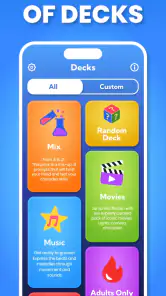
- A broad range of prompts helps keep repeated games varied.
- Suitable for different ages when players choose appropriate categories.
Cons
- Some prompts may feel repetitive after frequent play sessions.
- Requires a group nearby
- so its appeal is limited for solo users.
- Background noise can make spoken clues difficult to understand.
- Certain categories may not suit younger players or every audience.
- The experience depends heavily on players’ creativity and participation.
Frequently Asked Questions
What is Charades Guess Game — Guessly?
Charades Guess Game — Guessly is a party game in which players guess words, people, animals, actions, and other prompts while one participant holds the phone and acts or gives clues. It is designed for groups, making it a convenient choice for family gatherings, parties, and casual game nights. The app focuses on quick rounds and simple rules that most players can understand immediately.
How do you play Charades Guess Game — Guessly?
To play, choose a category or deck, place the phone where the guessing player can see it without revealing the prompt to the actor, and begin the round. The actor uses gestures, descriptions, or other permitted clues while the team tries to guess the displayed word. Depending on the selected mode, you can usually mark correct answers, skip difficult prompts, and continue until the timer ends.
Is Charades Guess Game — Guessly suitable for children and families?
The game can be suitable for children and families, especially when you select age-appropriate categories and supervise younger players. However, the suitability of individual prompts may vary between decks, languages, and updates. Before starting, it is a good idea for an adult to review the available categories and establish rules about gestures, shouting, and acceptable clues so everyone can participate comfortably.
Does Charades Guess Game — Guessly require an internet connection?
The basic gameplay may work without a continuous internet connection once the necessary content is available on the device, which is useful for parties in places with weak reception. Nevertheless, some features, advertisements, updates, additional categories, or purchases may require internet access. Availability can also depend on the version installed, so checking the app-store description and testing it before an event is recommended.
Is Charades Guess Game — Guessly free to download?
Charades Guess Game — Guessly may be available as a free download, but the exact pricing model can depend on the Android or iOS store, region, and current version. Free access may include advertisements, limited categories, or optional in-app purchases. Review the store listing carefully before downloading, particularly the sections covering subscriptions, paid content, advertising, and any permissions requested by the application.