

The Longing
- Reviews
- 4.3
- Version
- 1.10
- Installs
- 1,000+

Screenshots
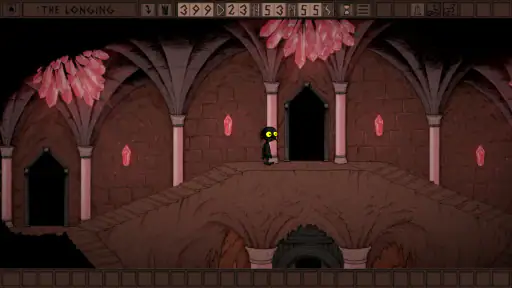
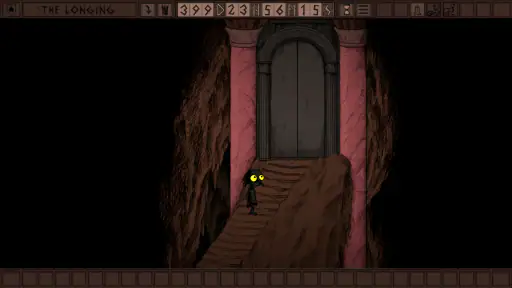
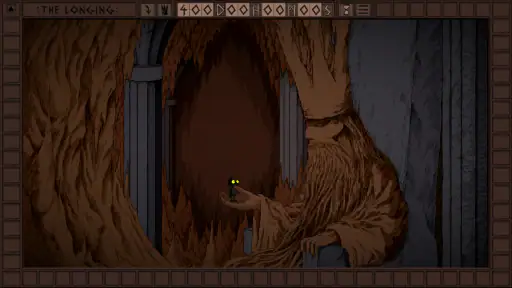
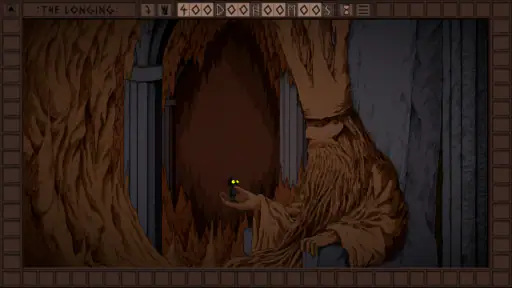
 Analysis by Frivlyz
If you want a game that steps away from the usual rush of mobile play, The Longing is a curious choice. Its appeal is less about constant action and more about deciding what to do with the quiet stretches in between. I found that shift refreshing, though it takes a particular mood to enjoy it: this is a game to visit patiently, not one that rewards a quick burst of attention.
A first move in a world that keeps its own time
The premise makes the first action feel unusually small and unusually important. You play as a Shade, a solitary servant in an underground kingdom, waiting for a sleeping king to awaken. That wait lasts 400 real-time days, and the clock continues while you are away. Rather than asking me to clear a level immediately, the game asks whether I want to explore, settle in, or simply leave the world to carry on.
That choice changes how I would fit it into an ordinary day. If I have a few minutes before dinner, I can check the caverns and make a little progress without needing to commit to a long session. If I am looking for a game to fill a commute with rapid challenges, though, the slow pace may feel like a poor match. The central action is not constant input; it is choosing when to intervene and what kind of visit I want to make.
Feedback that rewards attention, not speed
The feedback rhythm is deliberately gentle. The passage of time is part of the experience, while exploration gives me reasons to look more closely at the underground spaces. Finding a hidden room or an item can feel satisfying precisely because the game does not shower me with rewards every few seconds. Its muted visuals and ambient soundtrack reinforce that quieter mood rather than pushing me toward a high-energy loop.
That restraint is also a trade-off. Someone accustomed to bright prompts, frequent upgrades, and obvious objectives may wonder whether they are making enough progress. I would approach it with a different expectation: take one small action, notice what has changed, and stop when the visit feels complete. The game is at its best when I am willing to treat observation as part of playing, not as a pause before the “real” gameplay begins.
A practical tip is to avoid turning every visit into a checklist. The caverns are meant to invite curiosity, so I would pick one nearby direction or one object to investigate rather than trying to map everything in a single sitting. That keeps the discoveries personal and prevents the long timeline from becoming a chore. It also suits a short daily check-in: a modest goal gives the session a shape without pretending that the whole experience can be hurried.
Why the slow loop works—and when it doesn’t
The game’s developer is Application Systems Heidelberg Software GmbH, and its combination of adventure and idle play is unusual within mobile gaming. Many adventure games build their appeal around a steady chain of encounters, puzzles, or missions; many idle games lean on repeated collection and optimization. This title places more weight on atmosphere, waiting, and the meaning you bring to a visit. I would choose it over a conventional idle game when I want a reflective world, but choose a more goal-driven adventure when I want clear tasks and frequent action.
Gaming Stories You May Enjoy

Dancing Road Turns Short Breaks Into a Test of Rhythm and Timing

Super Stylist Makes Every Outfit a Test of Taste and Patience

Dominoes on Your Terms: Who Should Play and Who Should Pass

Pokémon GO Makes the Familiar World Feel New

Chess.com Turns Rematches Into Rivalries, but Community Has Its Costs

Archery Battle 3D Review: Sharp Aiming, Unclear Feedback
Small discoveries as the reward
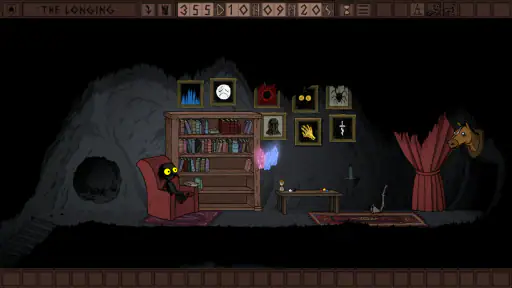
The strongest rewards are not just items. Exploring can reveal new areas, while objects can help make the Shade’s cave feel more personal. The in-game library offers another way to spend time, and sitting still is a valid choice rather than a failure to play. I like that these activities let the player set the tone: a session can be about searching, arranging, reading, or simply listening to the atmosphere.
There is a useful distinction between leaving the game running in the background of your life and actively exploring it. The long wait can make the world feel persistent, but it does not mean every minute needs supervision. I would check in when I genuinely feel curious, then leave again without worrying that I have failed to optimize the experience. If you enjoy monitoring timers and squeezing maximum output from an idle game, that hands-off approach may feel too loose; here, the lack of urgency is part of the point.
How it fits into a real routine
Imagine opening it after a quiet evening meal, when you have a few minutes but do not want another stream of alerts or a demanding challenge. You can wander a little, see whether a passage or object catches your eye, and close the game once you have had enough. The real-time wait means the next visit does not have to begin with a fresh level or a reset; the world’s larger timeline continues between visits. That makes it easy to return casually, though players who prefer self-contained sessions may find the open-ended waiting less satisfying.
It is also worth thinking about what “progress” means here. In a typical mobile adventure, I expect a clear sequence of objectives and a quick sense of completion. In a familiar idle game, I may expect numbers to climb as I return and collect rewards. This experience is less direct: exploration, atmosphere, and the passage of time share the work. If you need a frequent, unmistakable payoff to stay engaged, a puzzle adventure or a more conventional progression-focused game will probably suit you better.
Who should give it time
I would recommend it to players who enjoy quiet worlds, slow discovery, and games that leave room for their own thoughts. It may also appeal to someone who likes checking in briefly rather than scheduling a long play session, provided they are comfortable with the fact that the main wait cannot be rushed. The lonely underground setting is a deliberate part of its identity, so it is a better fit for a reflective mood than for casual social play or lively competition.
I would skip it if you want continuous challenges, quick wins, or a story that advances at the pace of a conventional adventure. The same goes if a long real-time premise sounds more frustrating than intriguing. The game’s patience is not a minor feature that can be ignored; it shapes the whole experience. Knowing that before paying matters, because the asking price is $4.99 and the slow structure will not suit every player.
For context, the game was released on November 29, 2023, and version 1.10 is the current version. It is rated Everyone 10+, with a minimum operating-system requirement of 10. Those details make it easier to check whether it fits your device and household, but the more important choice is personal: are you happy to let a game unfold over time, even when a visit produces only a small discovery?
A measured recommendation
The game has an average rating of 4.3 from around 90 ratings, with about a dozen written reviews, and it has over 1,000 installs. I see those figures as context, not a substitute for knowing your own taste. Its niche is clear: an adventure shaped by waiting, solitude, and small acts of exploration. It is not trying to compete with a fast action game, and judging it by that standard would miss what it is doing.
My advice is to approach each visit with a modest intention: explore one area, look for one detail, or spend a little time in the cave before leaving. That gives the slow feedback loop a satisfying shape without turning it into a daily obligation. The reason to begin another session is not a promise of constant rewards; it is the chance that your curiosity will pull you back into a place that has been quietly waiting.
The original appeal, still intact
The Longing takes place in a mysterious underground kingdom. You play as a Shade, a lonely servant waiting for 400 days to awaken a sleeping king. Yes, you read that right—400 real-time days! The game continues even when you’re not actively playing, which makes it a fascinating experiment in real-time gameplay.
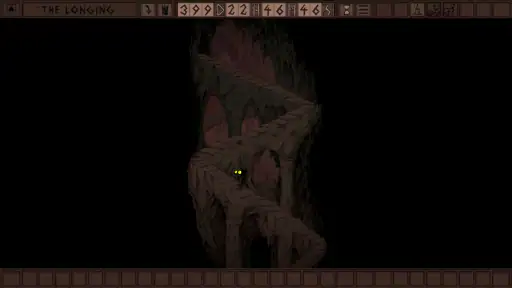
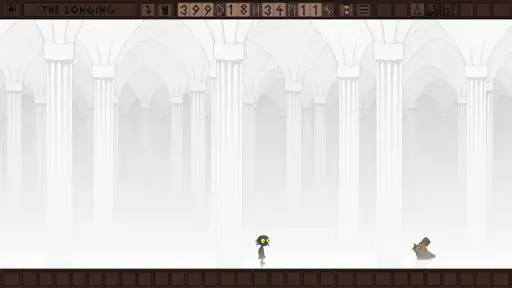
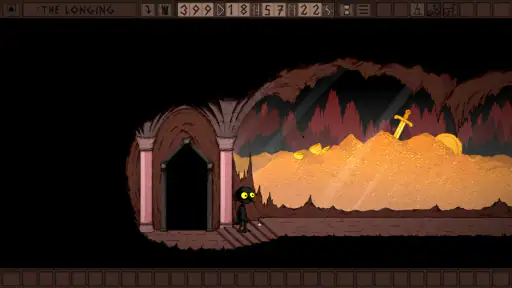
As the days tick by, you’re left to explore the dark caverns, find hidden rooms, and collect items that might help pass the time. The graphics are beautifully melancholic, capturing the solitude and stillness of this underground world. The ambient soundtrack enhances the experience, making you feel every second of those 400 days.
The art of waiting and discovering
Patience is not just a virtue in this game, it’s a requirement. This game is not for those looking for instant gratification. Instead, it invites you to sit back, relax, and let time do its thing. I found myself checking in occasionally, curious to see what my Shade had been up to. It’s like having a Tamagotchi, but way more existential.
What’s truly fascinating is how the game encourages you to embrace the slow pace. As you explore, you unlock different areas and find items to decorate your cave. You can read books from an in-game library or simply sit and watch time pass. It’s an unusual kind of freedom, one where doing nothing is part of the experience.
Exploration and a final verdict
Exploration in this game is both rewarding and challenging. The caverns are vast and filled with secrets. Each new discovery feels like a small victory, a testament to your perseverance. I won’t spoil too much, but there are several endings based on your actions, adding a layer of depth to an already intriguing game.
One of the most engaging aspects is the feeling of loneliness that permeates every aspect of the game. It’s reflective and introspective, offering a stark contrast to the hyper-connected world we live in. I found myself pondering life’s bigger questions while wandering through the silent halls.
This is not for everyone. It’s a slow burn, a game that asks you to invest time and patience. But if you’re willing to embrace its unique premise, you’ll find a deeply rewarding experience. It’s a game that challenges conventional gaming norms and offers something genuinely unique.
For those who enjoy games that make you think and reflect, this is a must-try. So, if you’re up for the challenge, look for it in your app store. After all, 400 days might be longer than you think, but it promises a journey like no other.
The Longing Pros and Cons
Pros
- Unique 400-day real-time gameplay.
- Beautiful hand-drawn art style.
- Engaging and meditative experience.
- No in-game purchases or ads.
- Encourages patience and reflection.
Cons
- Gameplay can be too slow for some.
- Limited interactions and actions.
- Requires long-term commitment.
- May not appeal to all players.
- Lack of immediate rewards.
Frequently Asked Questions
What is the main objective in The Longing?
The Longing is a unique game that combines elements of adventure and idle gaming. The main objective is to wait for 400 real-time days to awaken the king of an underground kingdom. Players control a character called the Shade, who must explore, solve puzzles, and manage loneliness during this extended waiting period.
How does time progression work in The Longing?
In The Longing, time progresses in real-time, meaning that one day in the game is equivalent to one day in the real world. The game continues to run even when it's not actively being played. Players can influence time progression by engaging in activities like reading books or exploring, which can sometimes speed up time in specific scenarios.
Can The Longing be played offline?
Yes, The Longing can be played offline. The game does not require an internet connection for its core gameplay mechanics. Players can enjoy exploring the underground kingdom and managing the Shade's activities without needing to worry about being connected to the internet.
What platforms is The Longing available on?
The Longing is available on multiple platforms, including Windows, macOS, and Linux for PC users. Additionally, it can be played on Nintendo Switch. However, as of now, it is not available for Android or iOS devices, so mobile gamers will need to wait for a potential future release.
Is there any combat in The Longing?
No, The Longing does not feature any combat. The game is designed around exploration, puzzle-solving, and time management rather than fighting. Players will need to use their wits to navigate the underground world and make decisions that impact their experience, focusing on the journey rather than battles.


