

LIMBO
- Reviews
- 4.5
- Version
- 1.20
- Installs
- 1,000,000+

Screenshots
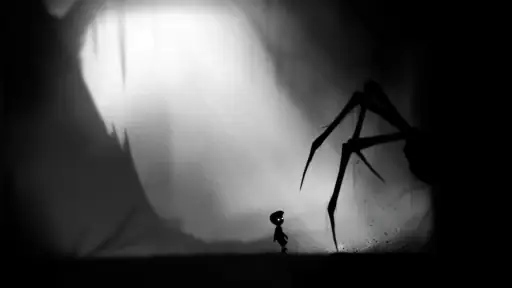


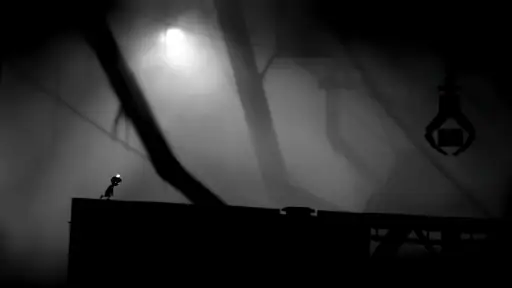




 Analysis by Frivlyz
I usually reach for a puzzle-platformer when I want a game that asks me to pay attention rather than simply keep moving. LIMBO suits that mood: I guide a small boy through a stark, dangerous world, and each new obstacle makes me work out what the surroundings are telling me. It is an adventure from Playdead, but its appeal is less about a long list of activities and more about the tension of acting, seeing what happens, and deciding whether I understand the situation yet.
That focused approach is useful on a phone. I can play a little, stop after a puzzle, and return when I have the patience to think through the next one. It is also a paid game, priced at $3.99, so I would choose it for its distinctive atmosphere and carefully paced challenges rather than expect an endless stream of content. The Teen age rating is worth noting for anyone choosing a game for a younger player, especially because the danger and imagery can feel unsettling even without much spoken explanation.
The Atmospheric Experience
From the moment you start LIMBO, you’re thrust into a shadowy, monochromatic landscape that’s as mysterious as it is captivating. The absence of color isn’t just a stylistic choice; it’s a deliberate decision that enhances the eerie and suspenseful atmosphere. You’ll find yourself wandering through dark forests, crumbling cityscapes, and treacherous industrial environments, each more haunting than the last. The sound design is equally impressive, with subtle ambient noises that pull you deeper into the game’s world. It’s not just a game; it’s an experience that plays with your emotions and keeps you guessing at every turn.
The visual restraint also changes how I read the screen. With no bright interface competing for attention, shapes, movement, and contrast become clues. I learned to pause at the edge of a new space and scan it before moving: a safe-looking path may be hiding a timing problem, while a small change in the scenery can hint at how a mechanism works. That habit is more useful here than rushing forward. If you play in a noisy room, headphones can help you notice the quiet environmental cues, though the game’s visual language still does much of the work.
The mood will not be right for everyone. Its bleak palette and moments of danger are central to the experience, not decoration that can be switched off. I would skip it if I wanted a cheerful game to play while half-watching a show, or if repeated failure in a tense setting tends to spoil the fun. On the other hand, if you like stories that trust you to infer meaning and enjoy being left alone with an eerie image, this atmosphere is a major reason to stay with it.
Gameplay and Mechanics
Now, let’s talk about the gameplay. At its core, LIMBO is a puzzle-platformer, and it nails the balance between challenging and rewarding. The puzzles are cleverly designed, requiring you to think outside the box and often catch you off-guard when you least expect it. There were moments when I found myself stuck, scratching my head in bewilderment, but the satisfaction of finally solving a tricky puzzle is second to none.
The action-feedback-reward rhythm is the clearest way to describe why I kept going. I try a movement or interact with something, the world responds immediately, and that response tells me whether I have understood the danger or the puzzle. A failed attempt can cost progress, but it also gives me information: perhaps I moved too soon, overlooked a cue, or treated a hazard as harmless. When the pieces finally click, the reward is not a pile of prizes; it is the feeling that I have read the scene correctly and earned the next stretch of the journey.
Gaming Stories You May Enjoy

Dancing Road Turns Short Breaks Into a Test of Rhythm and Timing

Super Stylist Makes Every Outfit a Test of Taste and Patience

Dominoes on Your Terms: Who Should Play and Who Should Pass

Pokémon GO Makes the Familiar World Feel New

Chess.com Turns Rematches Into Rivalries, but Community Has Its Costs

Archery Battle 3D Review: Sharp Aiming, Unclear Feedback
That makes experimentation worthwhile, but it also means patience matters. I found it more effective to change one thing at a time rather than repeat the same attempt quickly. If I am unsure whether timing or positioning is the issue, I adjust just one of those on the next try. It keeps the setback informative instead of turning it into random button pressing. The game does not spell out every solution, so players who prefer explicit objectives or a steady stream of prompts may find this hands-off style frustrating.
The controls are intuitive and responsive, which is crucial in a game that requires precise timing and quick reflexes. Although the game doesn’t overwhelm you with tutorials or hand-holding, it allows you to learn through trial and error. This approach might be frustrating for some, but I believe it’s what makes the game so engaging. You’re constantly learning, evolving, and adapting to new challenges.
On a touchscreen, I would give myself a moment to get comfortable with movement before treating every mistake as a puzzle failure. A missed input and a misunderstood obstacle can feel similar at first, so I found it helpful to test a simple movement in a safe stretch and notice how the character responds. When a sequence calls for careful timing, steady, deliberate inputs are preferable to frantic tapping. This is a small practical adjustment, but it makes the learning curve feel fairer.
Compared with many adventure games that divide attention among combat, collecting, dialogue, and optional errands, this one keeps the focus narrow: read the space, solve the immediate problem, and move onward. That concentration is a strength when I want a self-contained challenge, but it is not the best fit if I want character builds, a large quest log, or lots of side activities. Its puzzles ask for observation more often than broad planning, so I would choose a more expansive adventure if exploration and customization were my main priorities.
A Story Told Through Silence
What struck me most about LIMBO is its ability to tell a compelling story without uttering a single word. You play as a young boy searching for his sister, but the narrative is left open to interpretation. This ambiguity is part of what makes the game so intriguing. As you progress, you piece together snippets of the story, leaving much to your imagination. It’s like reading a novel where you’re the co-author, filling in the blanks with your own ideas and emotions.
That storytelling style makes it easy to pick up after a break: I do not have to remember a complicated cast of names or catch up on a chain of conversations. I can return by looking at the scene and working out what is happening in front of me. A realistic way to fit it into an ordinary day is to play during a quiet commute or after dinner, then stop when I reach a point that feels complete. Because the narrative leaves space for interpretation, a short pause does not necessarily break the thread; the visual mood carries much of it.
Still, the silence is a real trade-off. I would not recommend it to someone who wants a detailed plot explained through dialogue, frequent character interaction, or a clear account of every event. The story gives me room to form my own reading rather than confirming one answer, which I find memorable, but that can feel vague if I want firm explanations. It works best when uncertainty is part of the pleasure rather than a gap I expect the game to fill.
The ending, without giving too much away, is both satisfying and thought-provoking. It’s the kind of conclusion that sticks with you long after you’ve put down your device, leaving you to ponder the game’s deeper meanings and themes.
When I Return for Another Session
The reason I begin another session is simple: the last obstacle leaves a question I have not answered. The game’s loop does not depend on daily rewards or a checklist of chores; it depends on curiosity and the desire to see what is beyond the next stretch. That makes it easy to stop when I need to, though the suspense can tempt me to continue just a little longer. I would set a natural stopping point before starting if I only have a short break, rather than assume every puzzle will take the same amount of time.
It is also a better choice for focused play than for multitasking. If I am checking messages every few seconds, I can miss a visual cue or lose track of a timed action and then mistake distraction for difficulty. In a calm moment, the sparse presentation lets me concentrate; in a busy setting, that same quietness can be easy to overlook. I would keep the volume at a comfortable level and give the screen my attention, especially when a new environment seems to be introducing a different kind of challenge.
The game’s audience is reflected in its strong player response: it has a 4.5 average from around 78,000 ratings, and more than a million installs. Those figures do not mean every player will enjoy its deliberate pace, but they help explain why this relatively focused adventure continues to attract attention. It was released on February 11, 2015, and version 1.20 supports Android 4.4 and later, useful details if I am checking whether an older device can run it before paying.
For a brief, self-contained adventure, the price makes more sense to me than it would for someone seeking a game to revisit indefinitely. I would think of the purchase as paying for a complete, authored experience rather than a recurring hobby with new tasks to chase. If I tend to replay games for alternate routes or ongoing variety, I might get more value from a different kind of title. If I value mood, compact puzzle design, and a story that lingers after the screen goes dark, the cost is easier to justify.
There are also practical reasons to choose something else. Players who dislike dark imagery, want frequent guidance, or need a game that works well as background entertainment may be happier with a brighter, more forgiving adventure. Anyone shopping for a younger child should consider the Teen rating and whether the unsettling tone suits them. I would recommend this to a friend who enjoys attentive, slightly demanding play, but I would not present it as a universal pick for every mobile gamer.
In conclusion, LIMBO isn’t just a game; it’s an artistic masterpiece that challenges your mind and captivates your senses. Whether you’re a seasoned gamer or a casual player looking for something different, I’d highly recommend giving it a try. Just be prepared for a few sleepless nights as you navigate its hauntingly beautiful world.
LIMBO Pros and Cons
Pros
- Stunning monochrome art style.
- Engaging and mysterious storyline.
- Simple yet challenging puzzles.
- Smooth and intuitive controls.
- Immersive sound design.
Cons
- Relatively short gameplay duration.
- Some puzzles can be frustrating.
- Limited replay value.
- No in-game hints or tips.
- High battery consumption.
Frequently Asked Questions
What is the main objective of LIMBO?
LIMBO is a puzzle-platformer game that takes players on a haunting journey through a dark, monochromatic world. The main objective is to navigate through various levels filled with obstacles, puzzles, and traps. Players control a young boy searching for his sister and must use problem-solving skills to overcome challenges and progress through the eerie environment. The game's atmosphere and minimalistic design are key elements that enhance the overall experience.
Is LIMBO suitable for all ages?
LIMBO is generally suitable for older children and adults due to its dark themes and challenging gameplay. The game features subtle horror elements and intense sequences that might not be appropriate for very young players. It's important for parents to be aware of the game's content and themes, as these contribute to its mature atmosphere. The game is rated for ages 12 and up, so discretion is advised when allowing younger audiences to play.
What platforms is LIMBO available on?
LIMBO is available on multiple platforms, making it accessible to a wide range of players. Originally released on Xbox 360, the game has since been ported to PlayStation, PC, macOS, iOS, Android, and even Nintendo Switch. This wide availability allows players to experience the game on their preferred device, whether it's a console, computer, or mobile device. Each version retains the game's signature eerie aesthetic and challenging puzzles.
How long does it take to complete LIMBO?
The duration to complete LIMBO can vary based on a player's skill level and familiarity with puzzle-platformer games. On average, it takes approximately 3 to 5 hours to finish the game. However, players who take time to explore and fully engage with the environment might experience a longer playthrough. The game's design encourages exploration and experimentation, which can affect the overall completion time.
Are there any in-app purchases in LIMBO?
LIMBO does not include any in-app purchases, providing a complete experience upon purchase. Once players buy the game, they have access to all levels and features without the need for additional transactions. This one-time purchase model is appreciated by players who prefer a straightforward gaming experience without the interruption of microtransactions. The focus remains on the gameplay and immersive atmosphere, enhancing the overall player experience.


