

 Article about Acrylic Nails!
Acrylic Nails! Finds the Finish Line in Casual Simulation
Acrylic Nails! understands a small but important truth about casual simulation: the pleasure is not in managing a salon so much as watching a rough nail become a finished little object. That puts the game in a category moving beyond simple one-tap distractions. Players still want immediate, tactile actions, but they increasingly expect those actions to build toward visible craft, personal choice, and a reason to start another round. Acrylic Nails! makes a persuasive case for that shift, even as its compact loop exposes how quickly a satisfying routine can become a repetitive one.
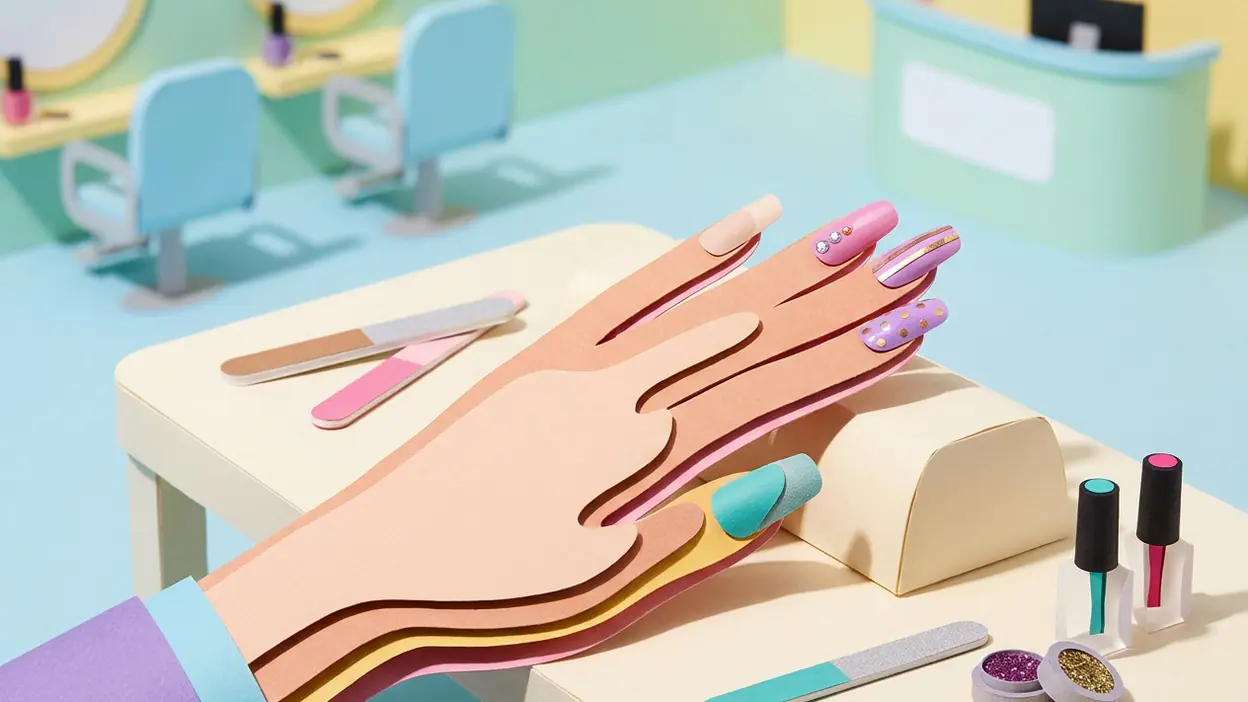
The appeal is easy to grasp. A hand arrives, the nails become the work surface, and the player shapes and decorates them through a sequence of salon-style tasks. The hook is the transformation: a plain starting point gives way to a polished finish through filing, applying color, and adding decorative touches. Each action has a clear purpose and a visible result. There is no complicated economy to learn before the first satisfying moment, and no sprawling menu between the player and the next set of nails.
That directness is the current baseline for casual simulation. A game in this lane needs to explain itself through touch, make each interaction feel responsive, and offer a clear before-and-after payoff. It should also let a player understand the rhythm almost immediately: take the job, perform a short chain of actions, enjoy the reveal, then move on. Acrylic Nails! gets that rhythm right. Its rounds are brief enough for a spare minute, and the work has a pleasing physical logic. Filing changes shape; color changes mood; decoration gives the result a personal stamp.
From satisfying actions to meaningful choices
The strongest signal in Acrylic Nails! is its confidence in process. It does not need a large world or a complicated character story to make the task feel playable. Instead, it breaks a beauty routine into small gestures and makes the player responsible for the finish. That approach belongs to a wider mobile design trend: the best short-form simulations increasingly turn familiar manual work into a series of tactile decisions. Players are not merely watching an animation of a manicure. They are the hands doing it.
That distinction matters because casual simulation has spent years leaning on the same easy formula: a task appears, a tool is selected, and a meter or animation confirms completion. Acrylic Nails! follows that convention, and the clarity is useful. The game does not make a player hunt for the right control or decode a dense interface. Yet the genre's old shortcuts are visible too. When an action is mostly a gesture followed by an automatic reward, repetition can set in before the player has made a genuinely interesting choice.
Here the strongest moments come when the work feels connected to the appearance of the final set. A shape is not just a progress step if it changes how the nail reads; a color choice is not just a button press if it helps establish a look. That is where the game comes closest to turning a routine into authorship. The player gets a small creative brief, even if the simulation keeps the scope deliberately narrow. Its satisfying finish is less about winning than seeing a design take form under your control.
The convention Acrylic Nails! challenges is the assumption that more systems automatically make a simulation deeper. It does not ask players to build a sprawling salon, juggle staff, or master a long progression tree before the core activity works. The single craft is the point. That restraint feels refreshing in a market where upgrades and unlocks can bury the tactile appeal beneath menus. But simplicity has a cost: once the player knows the sequence, the game needs variety in the work itself, not merely another round of the same actions.
Related games show how broad the category has become. Woodturning builds its appeal around a material that visibly changes under a tool, making the act of shaping wood the spectacle as well as the objective. Tie Dye similarly relies on a satisfying physical transformation, but its color combinations make the result feel like an individual experiment. Acrylic Nails! shares that hands-on pleasure, while placing more emphasis on the finish as a styled object. These games point toward a baseline expectation: a simulation should make the player feel the material changing, not just tell them a job is done.
Other peers clarify the limits of the approach. Decor Life - Home Design Game expands creative work into arranging a space, where choices accumulate across a larger scene. Craftsman: Building Craft asks for sustained construction and exploration, giving players a much broader sense of agency. Neither is a direct template for a manicure game, but both demonstrate what longer-term ownership can look like. Acrylic Nails! is strongest in the immediate gesture and the close-up reveal; it has less room to make players care about a persistent world or a project that develops across sessions.
Even 2 3 4 Player Mini Games, despite being built around quick competitive activities rather than craft, offers a useful contrast. Its variety comes from changing the rules and social situation. That matters because short sessions do not have to mean identical sessions. Casual players may accept a tiny task, but they still benefit when the next round asks for a different kind of attention, a new visual goal, or a choice that changes the outcome. Variety is not a luxury added after the core loop; it is what keeps a compact loop from wearing thin.
The emerging standard, then, is not simply “make it satisfying.” That is now the entry ticket. A strong casual simulation should pair tactile feedback with legible choices and enough variation to make repetition feel like practice rather than duplication. It should also let the final result carry some weight: through a gallery, a personal collection, a client reaction, or a visible progression in the player's taste. Acrylic Nails! has the tactile core and the transformation payoff. The category's next step is to connect those moments into a stronger sense of ownership.
That is where the game still lags. The narrow scale keeps it accessible, but also leaves limited room for strategy or self-expression once the basic sequence is familiar. A sequence of salon actions can feel satisfying without becoming meaningfully different from one client to the next. The reviewer's central reservation is not that the game needs a complicated business simulator bolted onto it. It is that the craft would benefit from more consequential choices: different nail shapes with distinct visual effects, combinations that reward experimentation, or a collection that makes a player's style feel remembered.
For users, the consequence is a clean trade-off. Acrylic Nails! works well as a low-pressure, short-session game: it offers a clear task, a gratifying transformation, and no steep learning curve. It is less convincing as a long-term creative hobby, because its strongest pleasure is concentrated in the first few repetitions. Players looking for a small burst of tactile satisfaction will understand the appeal quickly. Those hoping to build a lasting salon identity may find the experience too contained.
Casual simulation is not outgrowing simplicity; it is outgrowing empty repetition. Acrylic Nails! shows why a focused action can still feel good on a phone, and why the category's best ideas often start with a material that responds clearly to touch. Its next challenge is to make each set feel like more than another clean finish. The future belongs to games that preserve this quick, tactile pleasure while giving players more ways to make the result their own.


