

 Article about Car Parking Multiplayer
Car Parking Multiplayer After the Update: How Android and iOS Shape Every Drive
In Car Parking Multiplayer, a phone’s operating system is not just the thing that launches the game. It shapes how quickly a parking challenge starts, whether a social session survives an interruption, and how comfortably a long drive fits between messages, errands, and battery warnings. Recent Android and iOS changes have made those everyday details more visible: tighter privacy controls, more deliberate background behavior, and stronger expectations around controller support and smooth performance. The game’s core appeal has not changed, but the conditions around it have. That makes this a useful moment to judge not only how well it drives, but how well it lives on a modern phone.
The update is bigger than a graphics setting
There is no single operating-system switch that transforms the game overnight. Android and iOS roll out changes on different schedules, and a game update can arrive separately from a system update. The practical shift is cumulative. Newer versions of both platforms are more guarded about permissions, more aggressive about managing background activity, and more capable of handling high-refresh displays and modern input devices. Car Parking Multiplayer has to operate inside that changing environment, even when its streets and cars remain familiar.
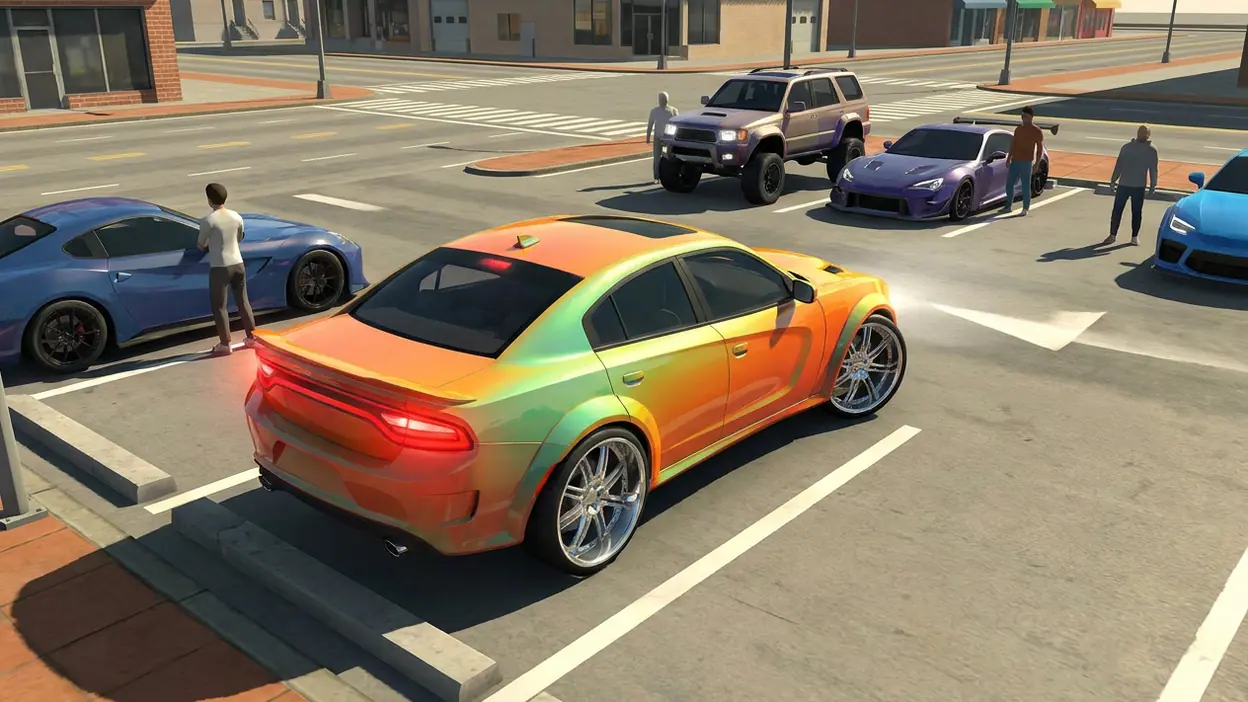
That matters because this is not a tightly scripted racer that asks for five minutes of uninterrupted attention. It is a sprawling driving sandbox. You can practise a reverse park, tune a vehicle, roam the map, or join other players and turn a quiet car meet into a rolling convoy. Each activity has a different tolerance for interruptions. A short solo task can survive a notification; a multiplayer session is less forgiving if the game reloads or the connection drops while you switch apps.
What the platforms give the game
Modern phones bring real advantages. Faster storage and stronger graphics hardware reduce the wait between launching the game and getting back to a vehicle. High-refresh screens can make steering corrections and camera movement feel more immediate, while newer processors have more room to handle busy scenes with several cars in view. These benefits vary by device, and they are not a promise that every Android phone or iPhone will run the same way. Still, the hardware ceiling has risen, giving a large driving environment more breathing room than it had on older handsets.
Operating-system privacy changes also put more control in the player’s hands. Permission prompts are less likely to feel like a blank check, and players can review what an app is allowed to access through system settings. That is a welcome baseline for a game with online features. It does not tell you everything about how a particular session works, and it cannot replace clear in-game explanations, but it makes the phone’s own privacy controls part of the relationship.
What players notice first
The first test is still simple: tap the icon and see how long it takes to get moving. On a capable, up-to-date phone, loading can feel brisk, and the game’s many activities are close at hand. Then the familiar friction appears. Car Parking Multiplayer has a lot going on, and its menus, vehicle options, and online spaces can feel denser than the tidy surfaces of newer mobile games. The driving itself is the draw; the route into it can take a little patience.
Touch controls remain central to the experience. Steering, braking, camera movement, and gear changes compete for screen space, particularly when you are trying to place a car precisely in a tight bay. On a larger phone, the controls have more room to breathe. On a compact screen, fingers can obscure the view just as you need to judge a curb or another car’s bumper. A high-refresh display may make motion feel smoother, but it does not fix a crowded layout or make careful parking automatic.
Performance is also more personal than a single review score can suggest. A recent flagship may keep a crowded session fluid, while a budget phone may need lower graphics settings or a cooler, shorter play session. Heat and battery use become obvious during extended online driving. The game invites players to linger, but the phone may make the session’s limits clear before the game does.
The daily rhythm changes around interruptions
On a phone, a driving game is always one call or message away from being paused. Android and iOS have improved how they manage notifications, app switching, and background work, but neither platform can guarantee that an online game will remain connected while another app takes priority. The result is a split personality: solo parking practice fits neatly into spare minutes, while multiplayer is best treated as a deliberate session.
That distinction gives the game an appealing rhythm. You can dip in to work on a manoeuvre, then return later for a longer cruise or a meet-up. The parking challenges reward repeated attempts: approach too wide, correct the angle, reverse again, and learn how much steering input the car needs. Online play adds a looser loop. Cars become conversation starters, and a simple drive can turn into an informal parade. The replay value comes less from a single finish line than from the freedom to invent another reason to take the wheel.
There is a cost to that freedom. The game’s broad range can make its first hour feel unfocused, especially if you expect a polished campaign that points from one race to the next. A new player may need to decide what kind of session they want before the game’s structure becomes satisfying. The phone’s fast app switching helps with short visits, but it cannot make every mode equally easy to understand.
New ecosystem strengths, with caveats
Modern mobile ecosystems are better suited to games that follow players across different habits. System-level audio controls, accessibility settings, and wireless controllers can make a phone more comfortable for longer play. A controller may help with smooth steering, though support and configuration can differ by device and game version; touch remains the dependable default. Likewise, a larger screen or tablet can make the roads easier to read, but it does not guarantee that every interface element scales perfectly.
Android’s broad device range is both a strength and a complication. Players can choose from inexpensive phones, gaming-focused models, and devices with very different screen shapes and performance profiles. That variety expands access, but it also means the same update may feel polished on one handset and uneven on another. iOS offers a narrower hardware family, which can make performance more predictable, yet older supported devices still have limits. On either platform, keeping the game and operating system current is sensible, but an update should not be assumed to improve every device equally.
Privacy and account habits deserve a little attention, too. Before granting permissions or linking accounts, check what the prompt actually requests and whether it is needed for the feature you want. If you play online, a stable connection matters more than background tricks. System updates can make notifications and app controls clearer, but they cannot rescue a weak signal or prevent every server-side interruption.
Compatibility is the quiet weak spot
The most noticeable friction is fragmentation: different phones, graphics settings, connection quality, and system versions all shape the experience. On Android, a device may have plenty of storage but a modest graphics chip; on iOS, an older phone may run the game yet struggle during a crowded session. Players should leave free storage for updates, close unusually demanding background tasks if performance dips, and lower visual settings before assuming a control problem is caused by the operating system.
There is also a practical tension between a rich online world and the casual way people use phones. A session can be interrupted by a call, a low-battery warning, or a switch to another app. A game built around shared spaces cannot make those interruptions disappear. Better connection handling and clearer recovery would help, but players should still expect multiplayer to be less forgiving than solo practice.
What rival games reveal
Comparisons are useful only when they clarify the kind of attention a game asks for. UNO!™ is built around quick rounds and clear turn-taking; 3D Bowling makes its action immediately legible. Ludo suits a social visit that can pause between turns. Real Guitar - Music Band Game is closer to a practice tool, where a short session can still feel complete. Car Parking Multiplayer is different: its strongest moments emerge from time spent driving, adjusting, and sharing space with other players.
That design makes the game more vulnerable to mobile interruptions than a short round-based rival, but it also gives it a distinct identity. A parking attempt can be brief; a good multiplayer evening can stretch. The game does not need to copy the quick-session structure of UNO! or Ludo to fit a phone. It does need to respect the fact that mobile players may be pulled away without warning.
A glimpse of mobile gaming’s direction
The larger lesson is that mobile quality now depends on more than visual fidelity or a list of modes. Players expect a game to behave sensibly around privacy settings, notifications, changing networks, different screen sizes, and a battery that is already serving everything else. Operating systems are taking more responsibility for how apps use a device, while players have become more accustomed to controlling that relationship themselves.
For a sandbox such as Car Parking Multiplayer, that creates a specific challenge. Its appeal comes from freedom and persistence: there is always another car to try, another manoeuvre to perfect, or another player to meet. Its mobile future depends on making those open-ended sessions resilient without stripping away their spontaneity. Better performance is welcome, but reliable returns after interruptions may matter more than another layer of shine.
Who benefits most, and what comes next
This version of the mobile experience suits players with a reasonably recent phone, enough storage to keep updates comfortable, and a taste for self-directed play. It is especially rewarding if you enjoy the tactile puzzle of parking and the social oddness of meeting strangers in a driving sandbox. Players who want a tightly guided campaign or a guaranteed five-minute online round may find the loose structure less compelling. Those on older or entry-level devices should be ready to adjust graphics and keep sessions mindful of heat and battery drain.
What I would watch next is not just whether the roads look sharper. I want clearer recovery when a connection falters, dependable behaviour after switching apps, and interface choices that remain comfortable across small and large screens. Controller support and accessibility options should also be easy to understand rather than left for players to discover by trial and error. These improvements would acknowledge the real conditions in which people play.
The best reason to return is still the drive itself: the tiny correction that finally slots a car into place, or the unplanned convoy that forms when other players join the road. Android and iOS updates cannot supply that character, but they can either protect it or get in its way. Car Parking Multiplayer remains a compelling mobile sandbox when the device keeps pace; its next step should be making the open road feel just as dependable as it feels free.


